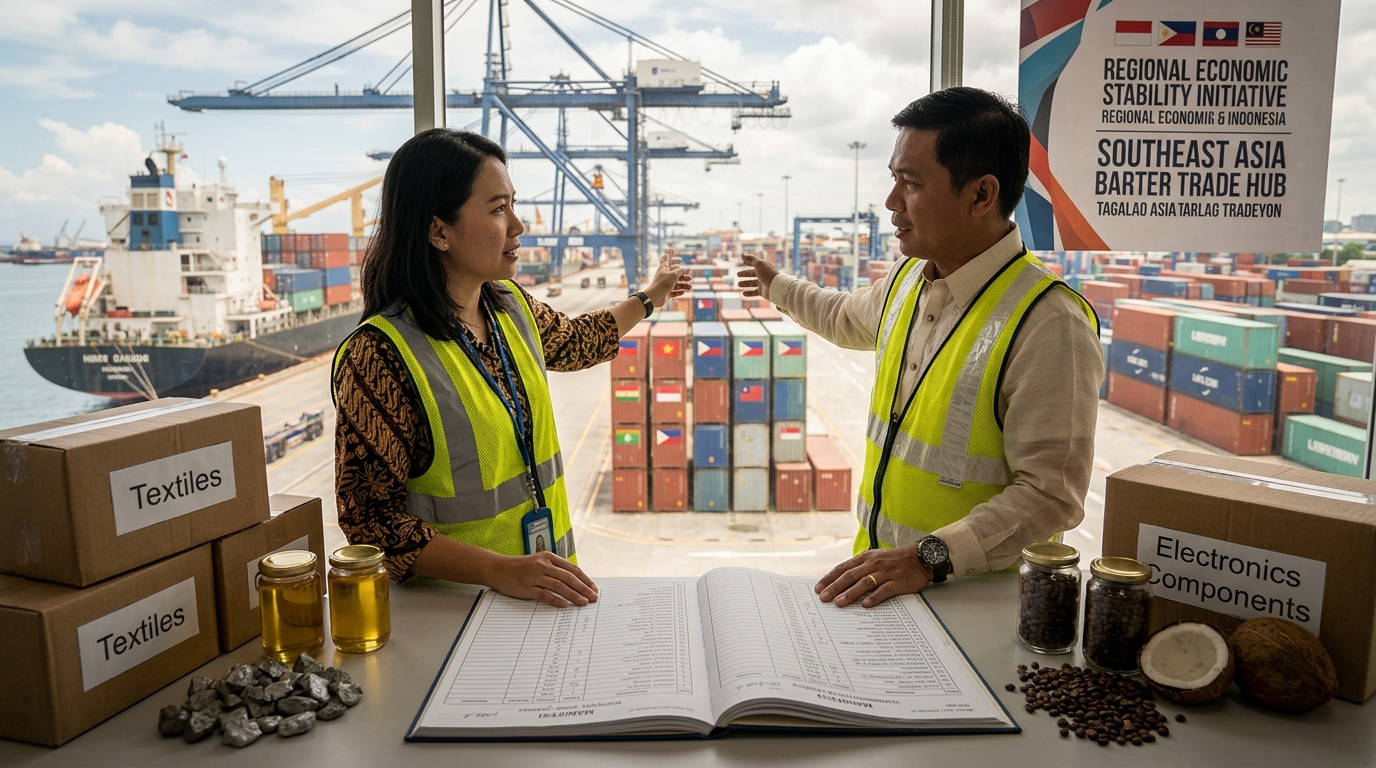
A notable economic trend is emerging in Southeast Asia, with companies in the Philippines and Indonesia reportedly turning to barter trade as a means to reduce their dependence on the US Dollar for international transactions. This development, highlighted by the Jakarta Globe, signals a strategic pivot by businesses seeking greater stability and resilience amidst global economic uncertainties.
Bypassing Bilateral Settlement Currencies and Structuring Multi-Sector Commodity Pools
The shift towards direct exchange of goods and services, bypassing traditional currency conversion, represents a significant departure from established trade practices. For Philippine firms, this move could be driven by a desire to insulate themselves from the volatility of the US Dollar, which can impact import costs, export competitiveness, and overall operational expenses. By engaging in barter, these companies aim to create more predictable and cost-effective trade routes within the region, fostering stronger bilateral economic relationships.
Mitigating External Sovereign Shocks and Advancing Regional De-Dollarization Frameworks
This reported increase in barter trade carries substantial implications for the broader Philippine economy. Reducing reliance on the US Dollar could, in the long term, contribute to greater stability for the Philippine Peso by lessening exposure to external currency shocks. For local industries, particularly those heavily involved in regional trade, this could translate into more stable pricing for raw materials and finished goods. While the immediate scale of this shift is not detailed, it signals a proactive approach by businesses to adapt to a changing global financial landscape, potentially influencing future trade policies and economic agreements. This could also be seen as part of a wider regional effort to de-dollarize trade, promoting the use of local currencies or direct commodity exchanges.
Re-Anchoring Domestic Purchasing Power and Safeguarding Household Remittance Inflows
For Filipinos, particularly the millions of overseas Filipino workers (OFWs) whose remittances are a cornerstone of the national economy, this trend warrants close observation. While the direct impact on remittances might not be immediate, a more stable and less dollar-dependent domestic economy could indirectly influence the purchasing power of their earnings within the Philippines. If local businesses find more cost-effective ways to trade, it could potentially contribute to more stable prices for essential goods and services. Furthermore, a resilient and diversified trade environment could create new opportunities or safeguard existing jobs within the Philippines, impacting families directly supported by OFW earnings. Filipinos are encouraged to stay informed about these evolving economic dynamics, as they reflect a strategic reorientation that could shape the nation's financial future.