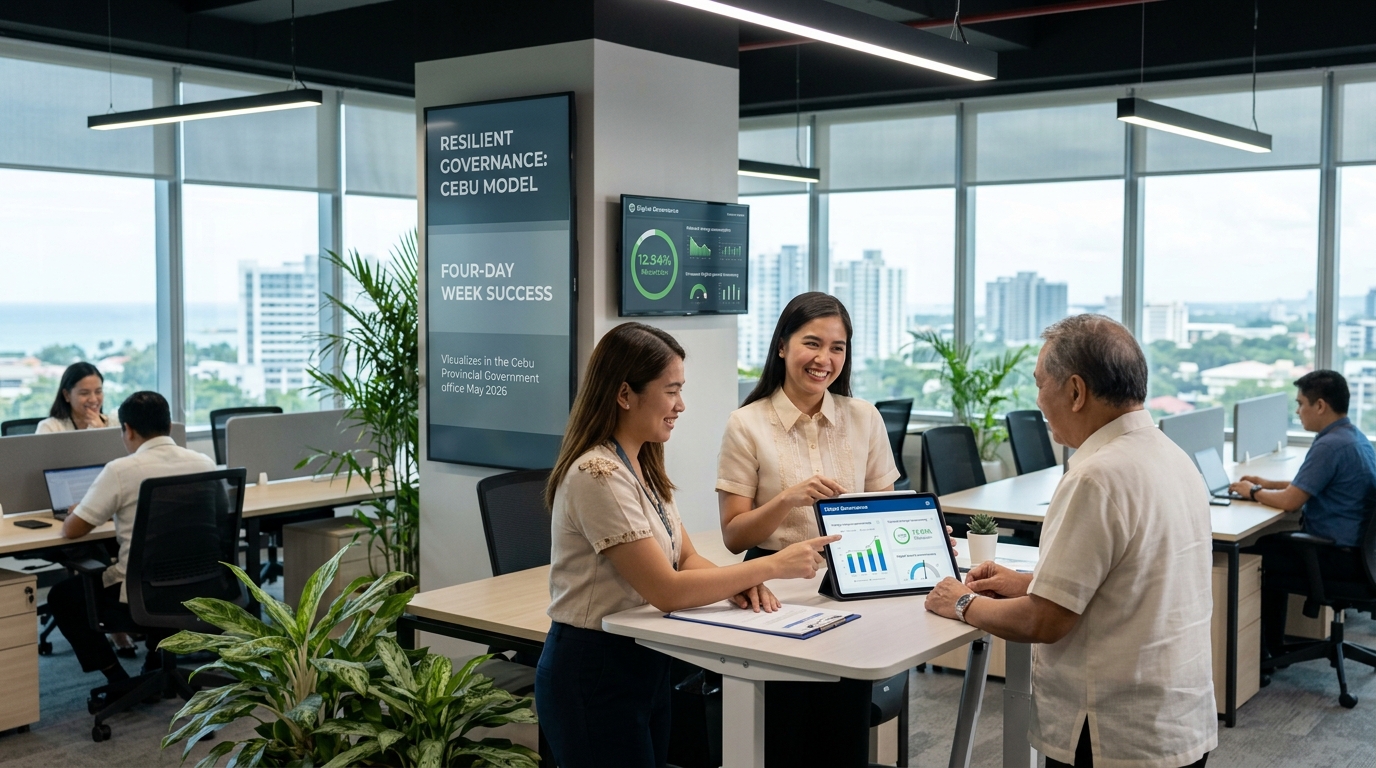
Cebu is currently serving as a national laboratory for "Resilient Governance" as thousands of provincial and regional government employees officially embrace a four-day workweek. As of May 6, 2026, the Department of Science and Technology (DOST-7) and various provincial offices reported significant success in their "energy conservation push," which mandates a condensed on-site schedule. By allowing employees to work from home on the fifth day, the government has recorded a 12.94% reduction in electricity use and a nearly 10% decrease in fuel costs compared to the same period last year. This is a tactical response to the global energy shocks of 2026, proving that a smarter schedule can lead to massive fiscal and environmental dividends.
Maximizing Output with Minimal Energy
The implementation of this "Compact Workweek" is not just about saving power; it is about proving that productivity can remain high with a smaller physical footprint. Throughout the first week of May, government offices have been utilizing "Digital First" protocols to ensure that public services remain uninterrupted despite the reduced on-site presence. This "Digital Governance" approach has allowed citizens to process permits and documents online, reducing the need for travel and further lowering the province’s collective carbon footprint. It is a high-energy move that turns a crisis-response measure into a permanent, efficient standard for the 2026 bureaucracy.
A Personal Win for the Modern Public Servant
For the employees involved, the move has provided a significant boost in "Life Harmony," allowing for a three-day weekend that many are using to support local tourism. By freeing up Fridays, the government is inadvertently pumping more "lifestyle revenue" into southern and northern resorts, where families are now spending their extended breaks. This "Wellness Dividend" is being cited as a primary reason for the high morale currently felt across the regional offices. It effectively turns the public workforce into a primary consumer of the city's own leisure products, creating a circular economic boost during the mid-year season.
Setting the Stage for Private Sector Adoption
As the results of this energy audit go public this May 8, many private firms in the Cebu IT Park are beginning to evaluate similar "Conservation-First" schedules for their own operations. The data proves that the "Immediate Solutions" needed to combat rising utility costs are often found in how we organize our time rather than just how we source our power. By leading with hard data, the provincial government is providing the confidence needed for the entire city to modernize its labor laws. For anyone looking at the 2026 "Cebu Model," it is clear that the future of work is flexible, efficient, and deeply green.