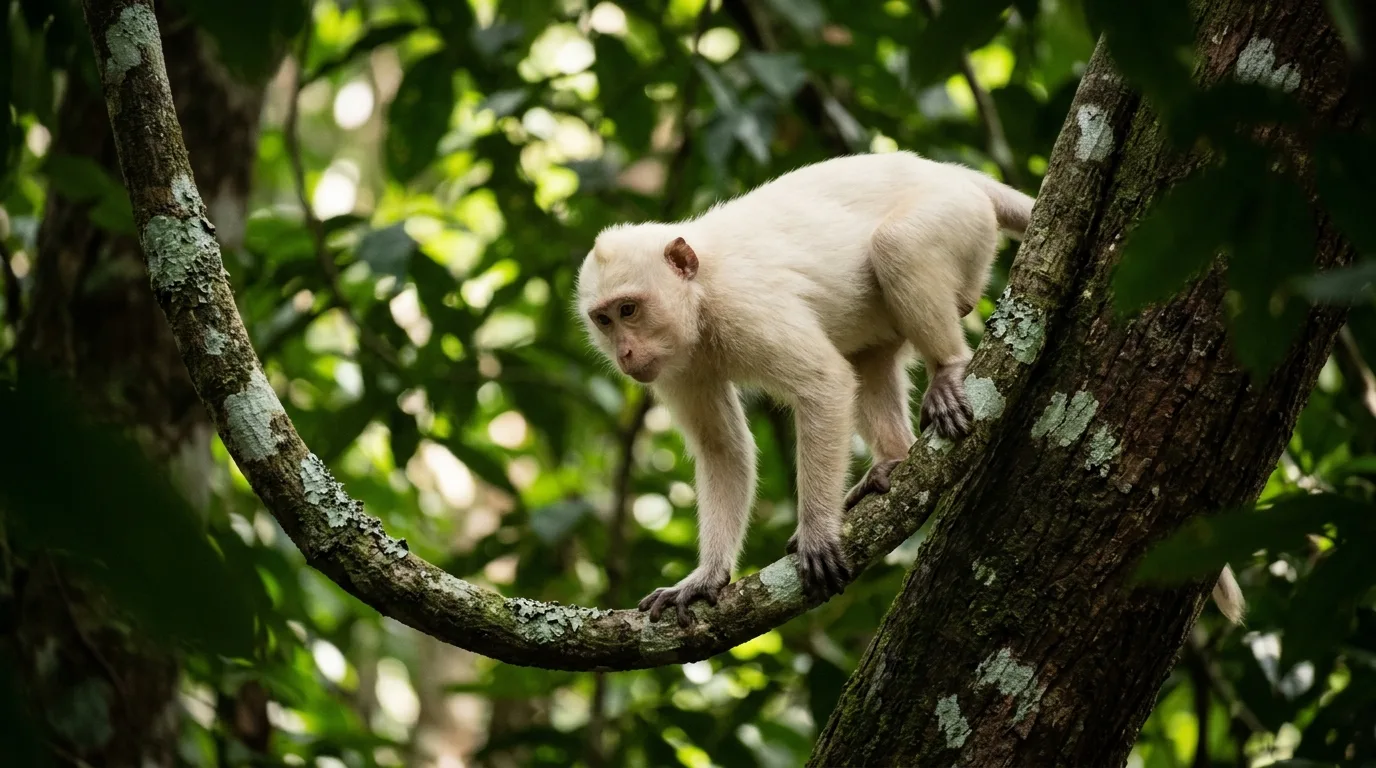
Davao — The forests of Senator Ninoy Aquino, Sultan Kudarat, have become the center of intense wildlife interest following the viral sighting of a rare white monkey. Initially thought to be an albino, the creature—believed to be a Philippine long-tailed macaque (Macaca fascicularis philippensis)—has captivated both locals and wildlife experts since footage of it climbing trees in Sitio Tudog, Barangay Bugso, began circulating on July 1, 2026. While the sight of such a unique animal has brought excitement to the area, it has also triggered immediate protective measures from the government to prevent poaching and habitat disturbance.
A Pigmentation Mystery Unveiled
While initial reports identified the monkey as an albino, field validations by the Department of Environment and Natural Resources (DENR) Region XII have cast doubt on this classification. Experts observed that the macaque possesses brown to dark brown eyes, which suggests that the animal may instead be experiencing leucism or a similar pigmentation anomaly rather than full albinism. Regardless of the exact genetic condition, wildlife biologists emphasize that such sightings are exceptionally rare worldwide. The macaque has reportedly been observed in the area by residents since 2016, but the recent high-definition video captured by an indigenous tour guide has provided the first definitive proof that has sparked global scientific interest.
Locking Down the Habitat for Safety
Recognizing the immense danger that human curiosity poses to such a vulnerable animal, the municipal government of Senator Ninoy Aquino has taken swift, decisive action. Upon the recommendation of the DENR, the area where the monkey is frequently observed has been temporarily closed to the public to prevent illegal hunting, poaching, and the risks associated with wildlife trafficking. Authorities have issued a stern reminder to vloggers, photographers, and tourists to avoid disclosing the exact location of the sighting or sharing geotagged content that could lead poachers directly to the animal. This move is not just about the monkey itself but is part of a broader commitment to upholding the Wildlife Resources Conservation and Protection Act (RA 9147), which prohibits any unauthorized capture or disturbance of native wildlife.
The Path to Long-Term Protection
The government's strategy now shifts toward institutionalizing long-term safeguards for both the macaque and its secondary forest home. Barangay officials are currently drafting ordinances to formalize these protective measures, while the DENR is intensifying information campaigns to educate the community on the ecological importance of keeping the species undisturbed. Plans for habitat restoration and ongoing monitoring are already in motion to ensure that the forest remains a suitable sanctuary for the macaque and other indigenous wildlife. As the region balances the pride of this rare discovery with the responsibility of stewardship, the case serves as a powerful reminder of the fragility of Philippine biodiversity and the vital role of local communities in acting as the primary guardians of our natural heritage.