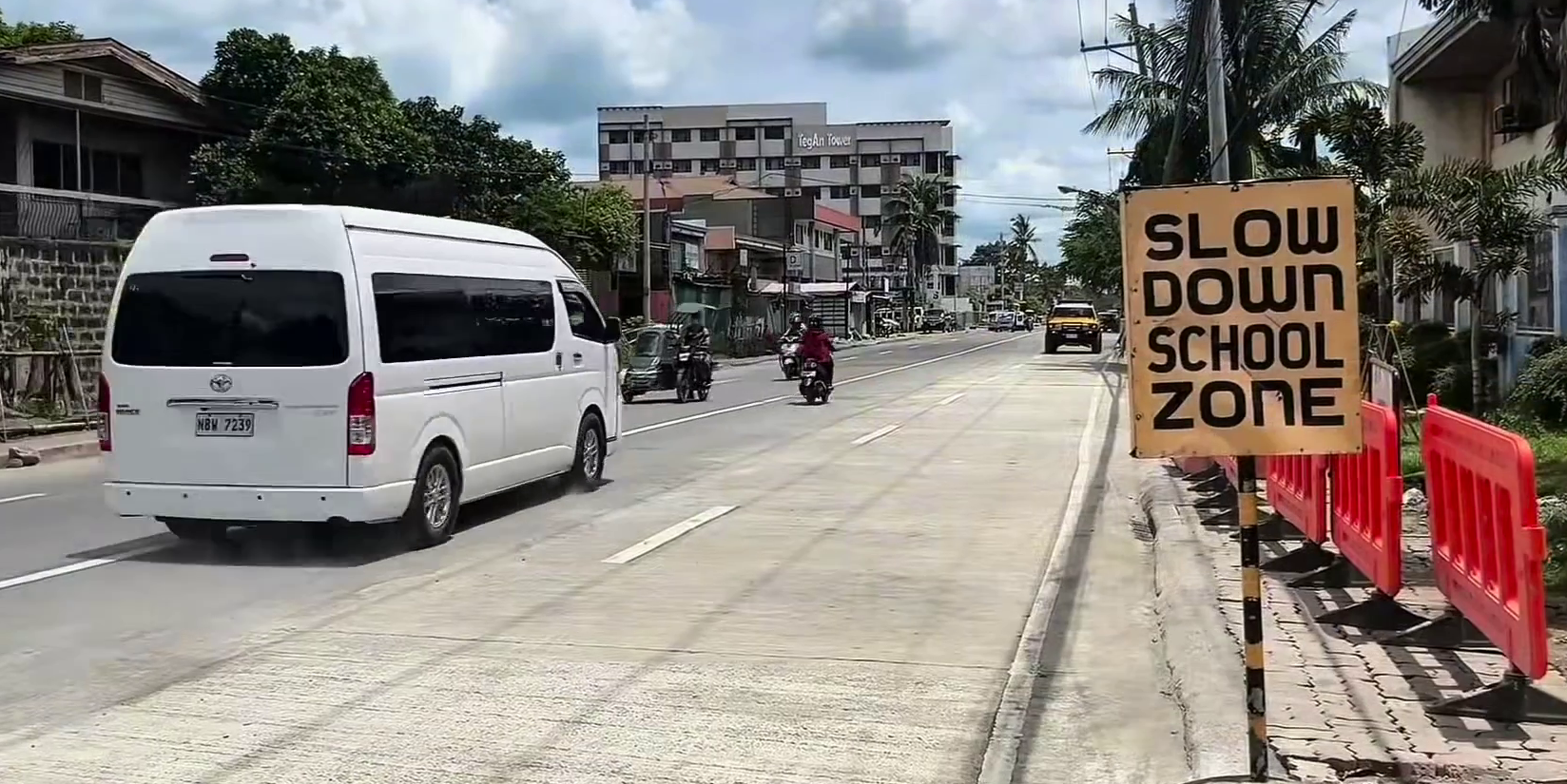
ILOILO CITY — The long‑stalled East Timawa Road in Molo District finally opened to motorists on June 19, 2026, just two months after a direct intervention by Public Works Secretary Vince Dizon. The 477‑meter rehabilitated stretch, integrated with a vastly expanded drainage system, promises to ease flooding, decongest traffic, and lift the appeal of surrounding residential and commercial properties.
A Critical Artery Reconnected
East Timawa Road links West Avenue to the interior of Molo, serving as a vital access point for three major institutions. The University of the Philippines Visayas main campus, Iloilo Doctors’ Hospital, and Iloilo Doctors’ College all front the corridor, generating daily foot and vehicle traffic. Taal Elementary School adds to the density of users reliant on this short but strategic stretch.
For years, the road’s poor condition and chronic flooding turned a five‑minute commute into a frustrating ordeal. The upgraded road now offers a smooth, all‑weather passage that restores convenience for students, medical workers, and residents. In real estate terms, restored accessibility directly translates into renewed buyer and tenant interest in adjacent barangays.
Flood‑Proofing Through Bigger Drainage
The project’s centerpiece is a network of reinforced box culverts five times larger than the old drainage pipes. These expanded channels now route stormwater efficiently to the main outfall, preventing the knee‑deep floods that used to paralyze the area during heavy rains. Flood mitigation is a powerful selling point for any neighborhood.
The improved drainage also protects property foundations and reduces maintenance costs for homeowners and landlords. Areas once stigmatized as flood‑prone can now shed that reputation, opening the door to higher appraisal values. Developers and brokers are already noting the shift in buyer sentiment toward Molo.
Accountability and a Faster Government
Secretary Dizon openly acknowledged that the Department of Public Works and Highways was primarily liable for the two‑year delay. The original drainage package, awarded to Noe’s Builders under a ₱9.78‑million contract, had missed its July 2025 completion target due to poor inter‑agency coordination and unresolved utility conflicts with Metro Pacific Iloilo Water.
The turnaround began in April 2026 when Mayor Raisa Treñas‑Chu escalated the stalled project directly to Secretary Dizon. With a clear directive from President Ferdinand Marcos Jr. to eliminate infrastructure backlogs, the DPWH enforced 24/7 work shifts under revised district leadership. The contractor completed the remaining work in two months—even finishing a month ahead of the revised July 2026 deadline.
A Model for Future Infrastructure Delivery
The success of the East Timawa fast‑track is already shaping how other delayed projects are handled. Dizon committed to extending drainage improvement funds into the 2026 and 2027 fiscal budgets, with active plans to repair roughly one kilometer of adjacent pedestrian sidewalks in Molo. This signals a sustained government presence that investors value.
The project involved three separate contracts, all managed by the same contractor, and included 462 linear meters of box culverts plus a 15‑linear‑meter double‑barrel high‑density polyethylene pipe crossing. These technical upgrades, though largely invisible once paved over, form the hidden backbone of the area’s renewed livability and marketability.