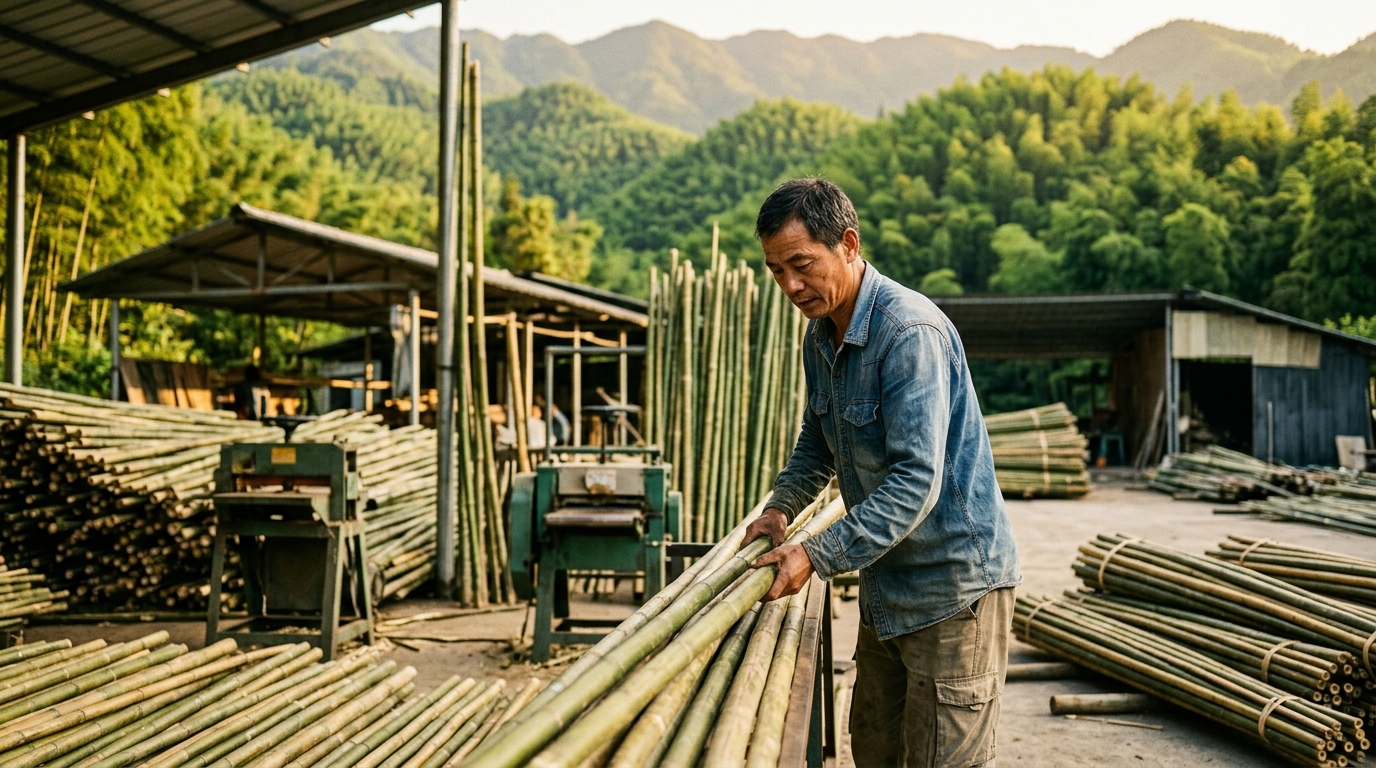
ILOILO CITY — Long before the first Spanish galleon dropped anchor, Iloilo was already trading. Sugarcane later anointed it the "Queen City of the South," its ports heavy with the sweet weight of an empire's demand. Now, in 2026, the province is sketching the blueprint for its third and perhaps most unlikely economic dynasty—one built not on the slow maturation of timber or the volatility of fossil fuels, but on a hollow, jointed grass that can grow a meter in a single day. The Iloilo Bamboo Industry Development Council has begun mapping out an aggressive growth strategy that establishes nurseries, protects existing plantations, and trains a new generation of skilled craftsmen, all timed to culminate this September during Philippine Bamboo Month.
This is not a speculative venture. It is a coordinated, multi-agency mobilization grounded in the province's audacious goal, championed by the Iloilo Economic Development Foundation (ILEDF), to position Iloilo as Southeast Asia's "bamboo powerhouse" by 2030. The roadmap is being drawn to ensure that the celebrations this September—anchored by the Artesanias Trade Fair from September 15 to 21 and a ceremonial bamboo planting in the town of Leon on September 19—serve not merely as a cultural showcase, but as a public launchpad for a full-scale industrial revolution.
Nurseries, Protection, and the Science of a Super-Grass
At the heart of the Council's plan is a fundamental recognition: you cannot export engineered bamboo cladding to the United States without a reliable, high-quality stock. To build a base, the provincial government, in partnership with the Department of Environment and Natural Resources (DENR), is pushing for the establishment of more community-based nurseries. This builds on the success of towns like Lemery, which already hosts 150 hectares of bamboo plantation under a DENR project, and Maasin, Iloilo’s official "Bamboo Capital," which boasts a staggering 3,000 hectares of bamboo cover accounting for roughly 20% of the country’s total species diversity.
However, the province is not just planting more bamboo; it is protecting what already exists. The integration of bamboo into Governor Arthur Defensor Jr.’s grassroots agenda means looking at the 9,000 hectares of land under the Integrated Social Forestry Projects not as idle land, but as a protected, productive asset. By securing these areas against slash-and-burn farming and instead training farmers in sustainable harvesting and clump rehabilitation, the Council is ensuring the supply chain remains robust. This is akin to a real estate land banking strategy—except the value lies not in the property's potential for a subdivision, but in its standing crop of "green gold".
Weaponizing September: A Month of Market Momentum
The Iloilo Bamboo Council is engineering Philippine Bamboo Month this September to be more than a celebration—it’s designed as a commercial catalyst. Building on the success of previous years where artisans from Alimodian and Maasin sold thousands of items at festivals, the Council is layering skills training directly onto the trade calendar. With the DTI activating a shared service facility for bamboo processing in Dingle and opening a showroom in Maasin, the month will feature intensive technical workshops for Bamboo Production NC II certification, focusing on nursery operations and modern treatment techniques.
This push to professionalize a sector that already sells over 10,000 raw poles a month from Alimodian alone is set to explode during the trade fair. Beyond the typical home furnishings, the DTI is preparing to launch innovative food products like bamboo shoot tocino and siomai, alongside a dedicated Kawayan Cook-Off—transforming the plant from a mere handicraft material into a culinary staple. It’s a showcase meant to prove to international buyers and local cooperatives alike that bamboo is not just a tradition, but a future-proof industry.