ILOILO CITY — The Iloilo provincial government is exploring ways to convert the estimated 80,000 metric tons of rice husks generated annually across the province into value-added products. Governor Arthur Defensor Jr. led a delegation to meet with Asian Development Bank and TESDA officials on June 10 at the TESDA Central Office in Taguig City. The talks focused on rice husk valorization.
Rice husks account for roughly a fifth of palay weight and accumulate in massive quantities across the province. The initiative supports Iloilo's goal of becoming a zero‑waste province. Officials presented five potential utilization pathways: rice husk ash pozzolan production for construction, composting and vermiculture, briquetting for fuel, animal bedding, and particle board manufacturing.
A Proven Technology Ready to Scale
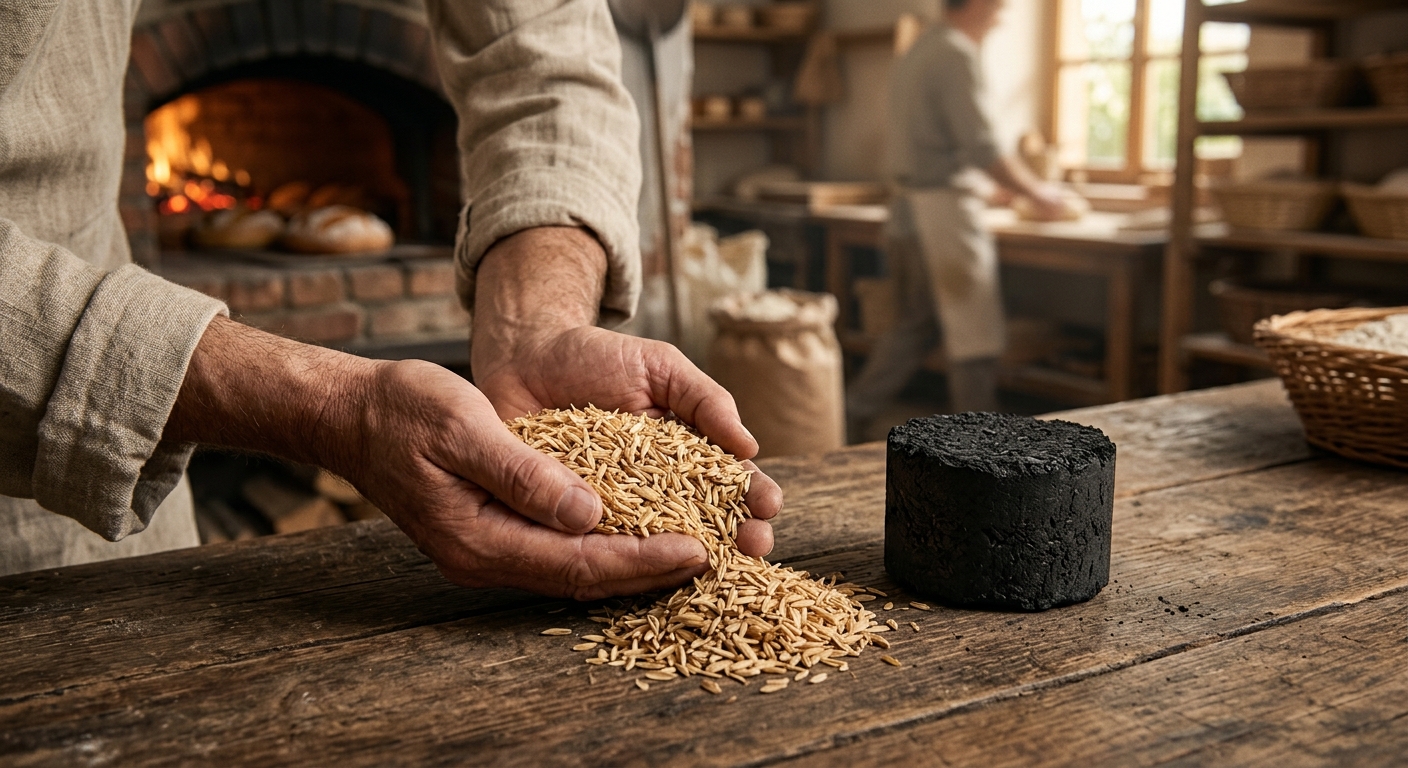
A working model already exists in Iloilo City. Gil Cordon, a baker from Jaro, operates a rice husk gas burner for his bakery ovens. The technology, developed at Central Philippine University's Appropriate Technology Center, uses two dual‑fuel reactors that switch from LPG to rice husk gas after startup. The system saves the baker roughly PHP 25 per hour compared to pure LPG.
The investment cost for the gas burner was PHP 30,000, with annual savings reaching over PHP 115,000. The payback period was just three months, and the return on investment exceeds 385 percent. The carbonized rice husk byproduct serves as composting material. This local success demonstrates that rice husk valorization is commercially viable and ready for wider adoption.
TESDA-ADB Partnership Builds the Workforce
The collaboration aligns with the SIPTVETS Project, a nationwide reform backed by a USD 100‑million ADB loan to modernize the technical and vocational education system. The project establishes 17 Regional TVET Innovation Centers across the country. For the TESDA Regional Training Center‑Iloilo, priority sectors include metals and engineering, particularly agricultural machinery.
A PHP 144.28‑million regional TVET innovation center broke ground in Iloilo City in February 2026. The three‑floor facility will feature a smart factory, multi‑disciplinary workshops, co‑working spaces, and business incubation rooms. TESDA Secretary Kiko Benitez said the centers are meant to be demand‑driven, industry‑led, and future‑ready. The skills training will prepare local workers for emerging rice husk‑based enterprises.
From Agricultural Waste to Economic Engine
Governor Defensor expressed confidence in the province's readiness to support investments. "We have the funds, and we have the raw materials," he said. The meeting included Provincial Environment Officer Caesar Emmanuel Buyco, Acting Provincial Agriculturist Felina Grace Basco, LEDIP Head Aulynn Yue Sin, and PESO Head Cynthia Dario.
The initiative connects to Iloilo's broader circular economy framework, which includes the Advanced Solid Waste Management Facility and the province's Tanum Iloilo campaign. For the rice‑producing municipalities of Iloilo, the valorization program promises to convert a disposal problem into multiple revenue streams, creating jobs in processing, manufacturing, and green construction.