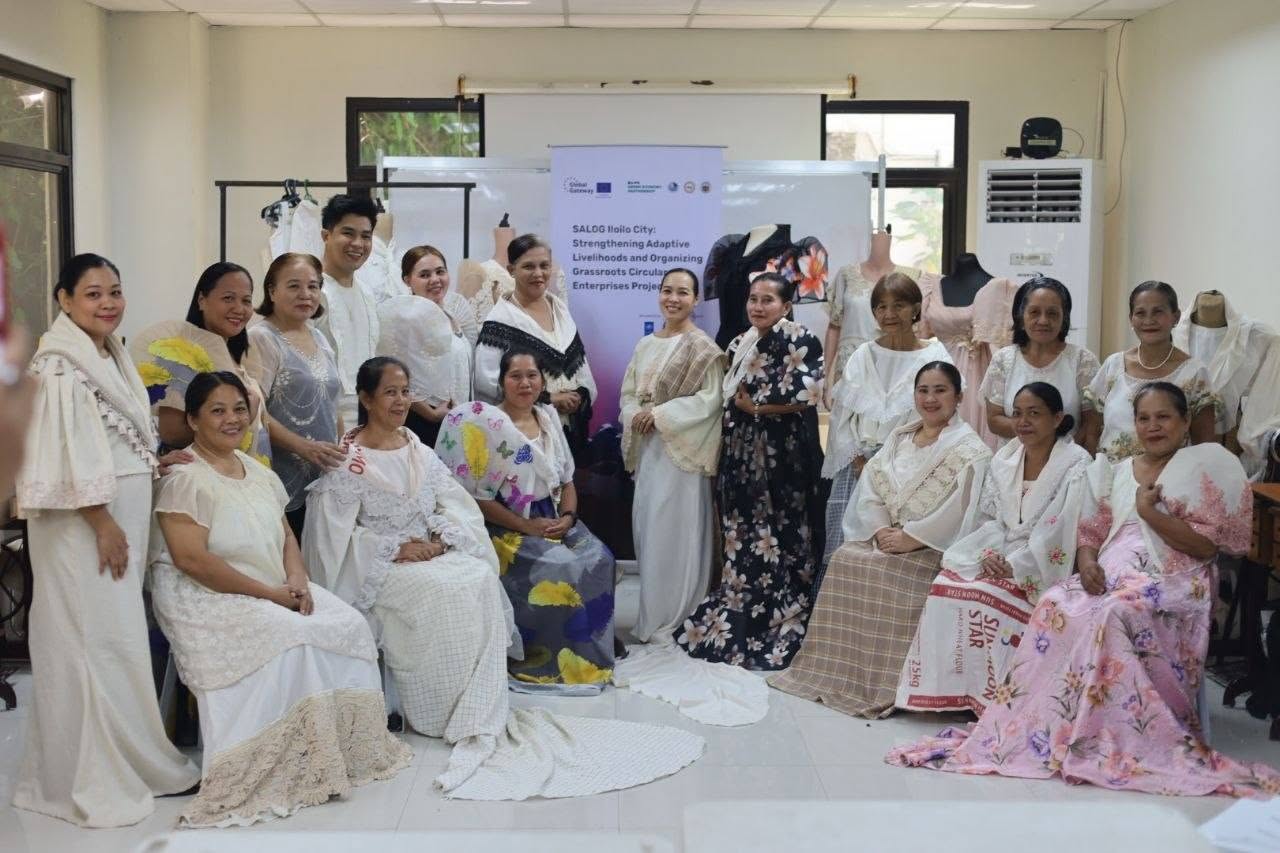
ILOILO CITY — Women who once sorted through waste in Iloilo’s barangays have now stitched their way into the world of high-end circular fashion. The SALOG project culminated in a showcase of Filipiniana and Barong garments crafted entirely from pre-loved fabrics, proving that discarded materials can be reborn as cultural masterpieces.
From Waste Pickers to Artisans
Many of the beneficiaries from Brgy. Lanit, Jaro, previously worked as informal waste pickers. Their days were defined by collecting and sorting refuse, a vulnerable livelihood with little security. The Women in Iloilo City for Sustainable Economy (WISE) program offered them a different path.
The six-day intensive training was designed to shift their role from waste handlers to creators. Under expert guidance, they learned to see discarded clothing not as trash but as raw material for elegant garments. This transformation in perspective was as important as the technical skills they acquired.
Six Days of Intensive Mentorship
Renowned designer PJ Arañador led the training, assisted by associate designers Faith Desamparado, Edison de Mateo, and Bryan Diaz. The curriculum covered color trends, stitching precision, and product line development. Each participant practiced turning scraps into structured, market-ready attire.
The sessions were hosted at the Iloilo City Business Center, now a free innovation hub for micro-entrepreneurs. The environment itself encouraged creativity, surrounded by other startups and supportive local government staff. By the end, the women had produced stunning garments that rival boutique quality.
Circular Fashion Meets Cultural Heritage
The garments—ranging from formal Barong to elegant Filipiniana—carry the distinct identity of Ilonggo artistry. Arañador emphasized that the project stitches not just dresses but resilience and cultural preservation. Using pre-loved fabrics and zero-waste manufacturing, they avoided adding to landfills.
Each piece tells a story of transformation. A discarded curtain becomes a sleeve; an old gown finds new life as a collar. The circular fashion approach ensures that high value is extracted from materials that would otherwise be wasted. This model protects the environment while sustaining livelihoods.
A Coalition for Green Livelihoods
Project SALOG, which stands for Strengthening Adaptive Livelihoods and Organizing Grassroots Circular Enterprises, is co-led by the Department of the Interior and Local Government and implemented by the United Nations Development Programme. It is funded by the European Union through the EU-Philippines Green Economy Programme.
Partner organizations included the Angat Buhay Foundation and the Iloilo City Government’s Local Economic Development and Investment Promotion Office. This coalition ensured that the training was not a standalone event but part of a broader push toward climate-resilient local jobs. The goal is to replicate such models across other barangays.
Iloilo City’s Zero Waste Vision
Iloilo City’s status as a recognized UN Zero Waste City aligns perfectly with SALOG’s objectives. By diverting textile waste from dumpsites and turning it into high-value products, the city addresses both poverty and pollution. The WISE beneficiaries now have the skills to build their own circular enterprises.
Beyond economic gain, the women gained confidence and a new sense of identity. They are no longer defined by the waste they once collected but by the beauty they now create. As they begin marketing their Filipiniana and Barong pieces to local and tourist buyers, they carry forward a legacy of sustainable fashion and community pride.