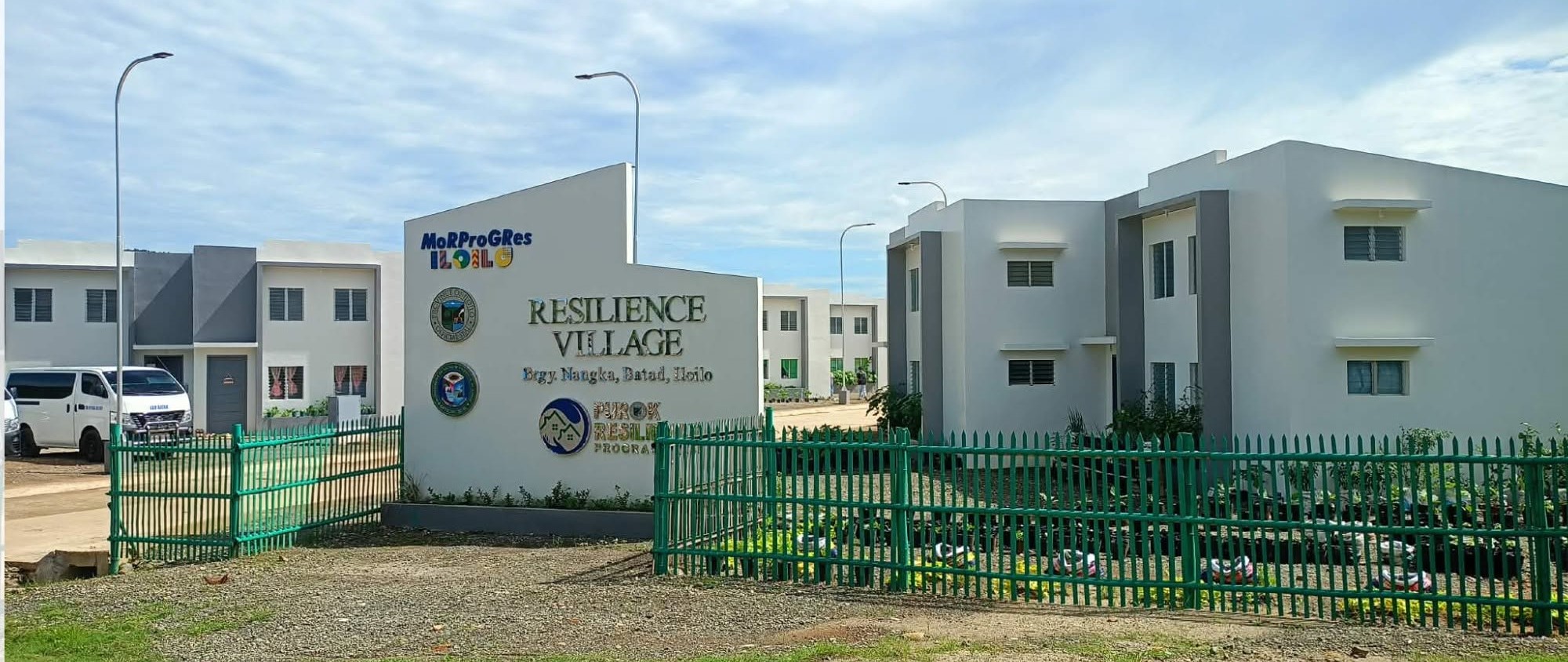
ILOILO — Three months after moving into the Purok Resilience Village, families gathered with provincial officials to share their experiences in a community consultation. The follow‑up visit revealed a housing model that not only protects lives but also demonstrates how resilient design can strengthen property values and attract further investment.
A Model for Climate‑Ready Living
The 30 families who relocated to Barangay Nangka in March 2026 previously lived in constant fear of landslides triggered by a dangerous mountain crack above their old community. Now, they occupy fully livable 36‑square‑meter homes equipped with kitchens, bathrooms, and structural provisions for future expansion. The permanent address replaced a cycle of emergency evacuations that once defined every typhoon season.
The ₱36‑million development sits on a 5,000‑square‑meter lot donated by the local government. Solar‑powered streetlights illuminate the village, while a dedicated water system and rainwater harvesting facilities ensure reliable utilities. Underground electrical lines add an extra layer of safety, and the entire settlement was deliberately built within an existing agrarian reform community so residents could keep their farming livelihoods.
Investment in Resilience Pays Off
Disaster‑resilient infrastructure is increasingly recognized as a driver of real estate value. Homes that withstand extreme weather events command higher buyer confidence and lower insurance costs. The Purok Resilience Village proves that socialized housing can incorporate these features without sacrificing affordability, creating a template that private developers could adapt for broader markets.
Provincial officials used the consultation to assess what additional interventions would further improve livability. Feedback gathered from residents will guide future phases of the program, ensuring that the community continues to evolve and meet real needs. The province also built an adjacent ₱7‑million rice processing and storage warehouse, anchoring the local economy and making the village a more self‑sustaining settlement.
From Relief to Roots
The follow‑up visit concluded with a tree‑growing activity under the Tanum Iloilo Program, with fruit‑bearing and native seedlings planted throughout the village perimeter. The greening effort aims to increase canopy cover, combat soil erosion, and create a more pleasant microclimate for residents. For a community that once lived in a barren danger zone, each sapling represents a long‑term investment in the land.
The success of the Batad site has already earned national recognition, including an Excellence in Disaster Preparedness award from the Department of the Interior and Local Government. The framework is now being replicated in other high‑risk municipalities like Pototan, Oton, and Concepcion. As the pilot village matures, it strengthens the case that climate‑resilient communities are not just safe—they are desirable places to live and own property.