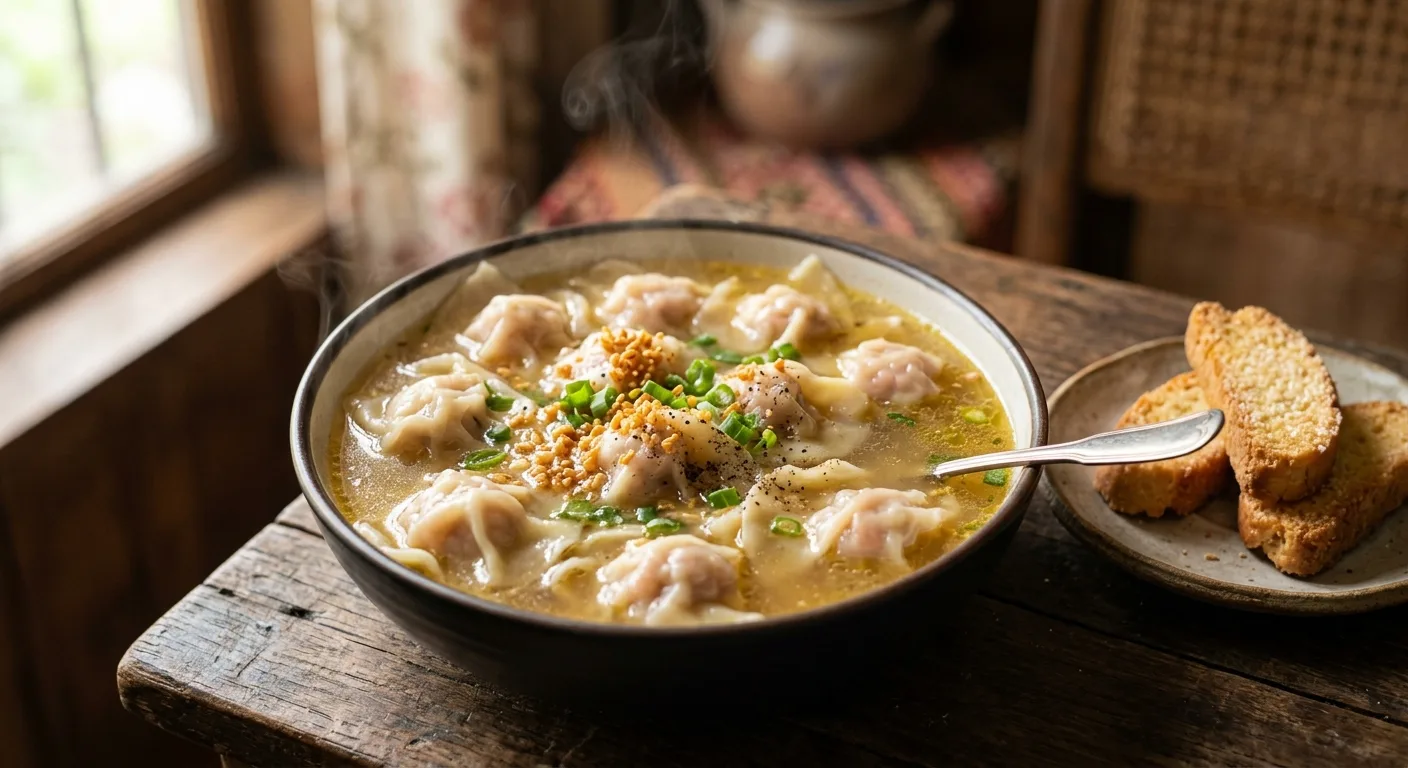
ILOILO CITY — In a city crowned a UNESCO Creative City of Gastronomy, few dishes capture the soul of Ilonggo identity quite like Pancit Molo. The steaming bowl arrives filled with delicate dumplings floating in a golden broth, yet contains not a single noodle strand, a beautiful puzzle born from centuries of cultural fusion.
A Soup Born of Chinese and Ilonggo Fusion
The dish traces its roots to the Molo District, once the Chinese trading enclave known as the Parian during Spanish rule. Hokkien immigrants brought their wonton soup traditions, which local cooks gradually transformed using native ingredients. The very name pancit derives from the Hokkien term for wonton, not for noodles, explaining the beloved absence of long strands.
Over generations, the recipe absorbed Filipino, Spanish, and coastal influences to become something entirely new. Shrimp shells replaced pork bones for umami depth, while fried garlic—a Spanish legacy—added crunch and aroma. What emerged was a distinctly Ilonggo comfort food that speaks of trade, migration, and adaptation.
The Art of Making Pancit Molo
Crafting an authentic bowl demands patience and a two‑step process that home cooks guard fiercely. The broth begins with chicken and aromatics, enriched by a concentrated shrimp extract pressed from sautéed shells. This coastal essence gives the soup its signature depth and light amber color.
The dumplings themselves encase a mixture of ground pork, minced prawns, shredded chicken, and finely chopped water chestnuts for a refreshing crunch. Each square wrapper is folded into a bonnet‑shaped pouch and dropped into the simmering stock until they float. The finished soup is garnished heavily with toasted garlic and spring onions, then served with crunchy biscocho or galletas on the side.
Where Heritage Meets Flavor
For those eager to taste history, Molo’s food institutions offer distinct experiences. Kap Ising’s Pancit Molo, a family recipe since the 1920s, serves a richly concentrated broth that locals insist must be eaten with giant puto dipped straight into the bowl. At Panaderia de Molo, founded in 1872 beside the historic church, delicate dumplings pair with heritage biscuits baked from the bakery’s century‑old ovens. Tita Paz, a cozy neighborhood diner, presents a cleaner broth that allows its heavily seasoned pork and prawn filling to shine, accompanied by soft pandeciosa bread.
A Dish That Brings Families Together
Because folding dozens of dumplings is labor‑intensive, Pancit Molo naturally transforms kitchens into spaces of conversation and bonding. It remains a fixture on holiday tables during Christmas, Easter, and town fiestas. More than a meal, it represents Ilonggo resilience and creativity—the ability to take a foreign idea, reshape it with local hands, and create a timeless symbol of home.