CAGAYAN DE ORO CITY — The local government has activated a comprehensive dry spell response, releasing over ₱113.8 million in assistance to cushion the impact on the agricultural sector. While the headline relief is for farmers, real estate analysts are spotlighting a critical but less obvious consequence: prolonged crop damage weakens the purchasing power of rural families, directly suppressing demand for affordable housing—a segment already under strain.
With a task force now monitoring reservoirs and irrigation systems, the LGU's intervention is doing more than saving harvests; it is helping preserve the economic foundation of the city's entry-level property market.
Government Response: Numbers and Mechanisms
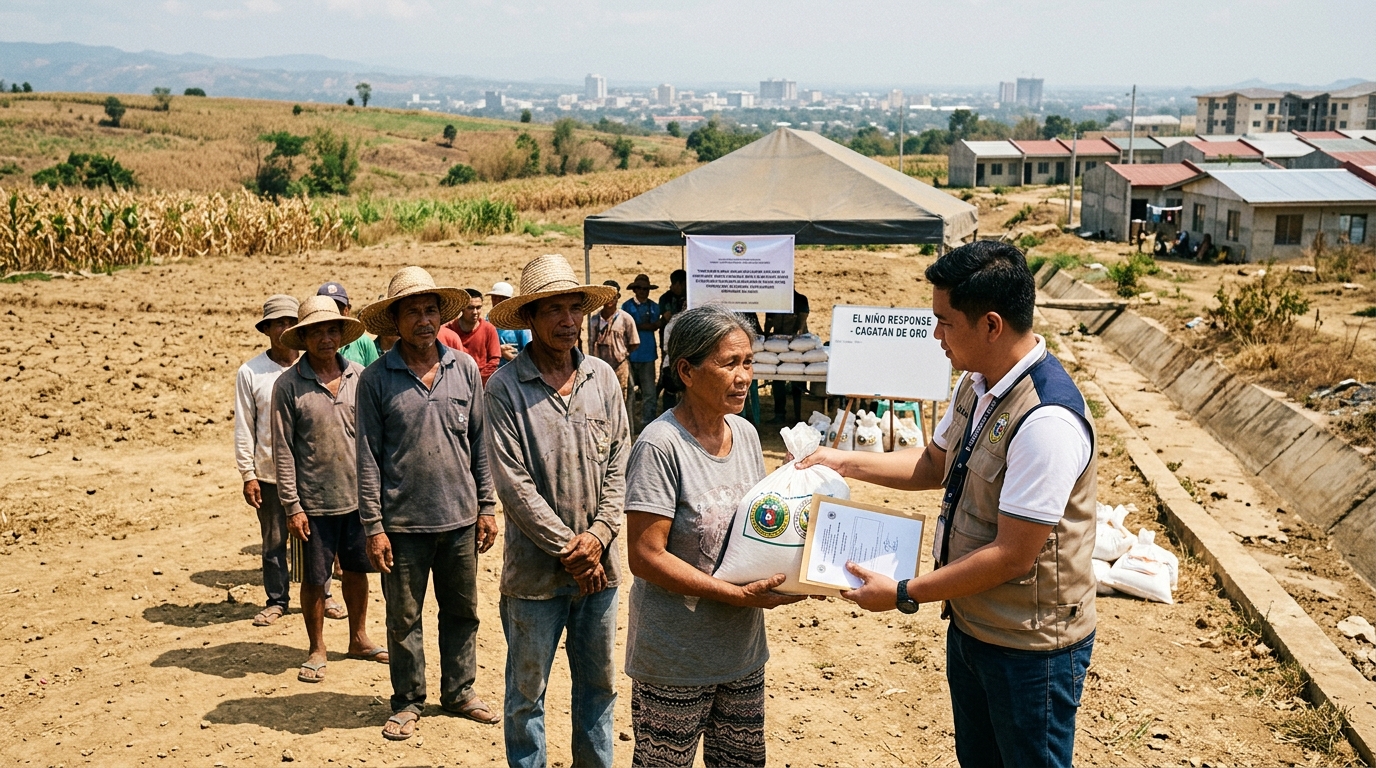
To date, the Department of Social Welfare and Development (DSWD) has provided ₱113,898,750 in assistance to 11,476 farmers and fisherfolk in Cagayan de Oro. The city has formed a dedicated El Niño task force to monitor water levels, irrigation supply, and the health of crops and livestock. The DSWD is also preparing an Emergency Cash Transfer (ECT) program for affected families and communities.
"The fund comes from the DSWD and was turned over to the city government for distribution to our beneficiaries," said City Administrator Atty. Roy Hilario Raagas during a recent briefing. The Memorandum of Agreement regarding the fund was signed on April 9, 2024, but the rollout, validation, and distribution of aid to thousands of beneficiaries have been actively implemented in 2026 as the dry spell intensified.
The Real Estate Connection: How Agriculture Sustains Housing
In Cagayan de Oro, the agricultural sector is not isolated from the property market. Farmers and agri-workers represent a significant portion of the target market for socialized and economic housing—segments where buyers rely on steady income from harvests to qualify for loans and amortizations. When crops fail because of drought, those income streams dry up, and so does the ability to purchase homes. "The damage to crops and livestock is irreversible. We really need to focus on how we can help them cope," said City Councilor Joyleen Mercedes Balaba, chair of the committee on agriculture.
The Department of Agriculture (DA) reported that El Niño had already caused over ₱138 million worth of damage to the province's rice, corn, and high-value crops as of April 2026, with Cagayan de Oro's corn-producing upland barangays among the hardest hit. The El Niño Task Force is actively monitoring water levels and irrigation supply, while the Department of the Interior and Local Government (DILG) has placed the city on "blue alert" status to ensure rapid response to emergencies.
A Market to Watch
For real estate developers focused on affordable housing, the health of the agricultural sector is a leading indicator. When farmers can recover quickly—through aid, better irrigation, or drought-resistant crops—the demand for low-cost housing remains stable. When they struggle, developers see higher rates of loan defaults and slower take-up in peripheral areas where agri-workers typically buy homes. The LGU has also allocated a budget for cloud-seeding operations to induce much-needed rain, offering a glimmer of hope for crop recovery and, by extension, housing market stability.
The Bottom Line
The ₱113.8 million in aid is a direct intervention to preserve livelihoods. For the real estate industry, it is also an investment in preserving a crucial buyer demographic. Without a healthy agricultural base, the affordable housing segment risks losing one of its core pillars. As the city continues to attract major real estate players, maintaining the economic health of its rural workforce is not just a social responsibility—it is a market necessity.