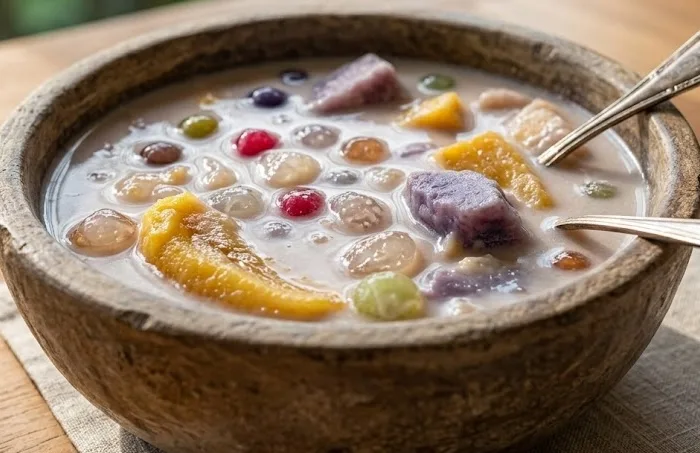
A Celebration of the Harvest in Every Bowl
GENERAL SANTOS CITY - Unlike desserts that rely on elaborate presentation, Binignit showcases the natural flavors of locally grown ingredients. Sweet potatoes, taro, saba bananas, glutinous rice balls, jackfruit, and coconut milk come together in a recipe that highlights the agricultural diversity of Mindanao. Each ingredient contributes its own texture and flavor, creating a dessert that feels both hearty and satisfying. Rather than masking the freshness of local produce, the recipe allows every component to stand out. It is a reminder that some of the country's most memorable dishes are rooted in the harvests cultivated by farming communities.
The Dish That Brings People Back to the Table
Binignit is more than a dessert—it is often associated with togetherness. Preparing it usually involves peeling root crops, shaping rice balls, and slowly simmering ingredients until the flavors blend into a rich, creamy mixture. These shared kitchen moments have helped make the dish part of many family traditions. In General Santos City, where people from different cultural backgrounds have influenced the local food scene, Binignit continues to bring generations together through a recipe that values patience, generosity, and the simple joy of sharing food with others.
Why Traditional Desserts Deserve a Place on Every Food Trip
Travelers often search for signature seafood dishes or grilled specialties when visiting General Santos City, but traditional desserts provide another meaningful way to understand the region's culinary identity. Binignit offers a taste of local ingredients prepared through techniques that have remained relevant for generations. Its creamy texture and naturally sweet flavors introduce visitors to a side of Mindanaoan cuisine that feels familiar without being ordinary. Choosing a bowl of Binignit is not simply ending a meal with dessert—it is experiencing a recipe that quietly preserves the traditions and agricultural heritage of Southern Philippines.