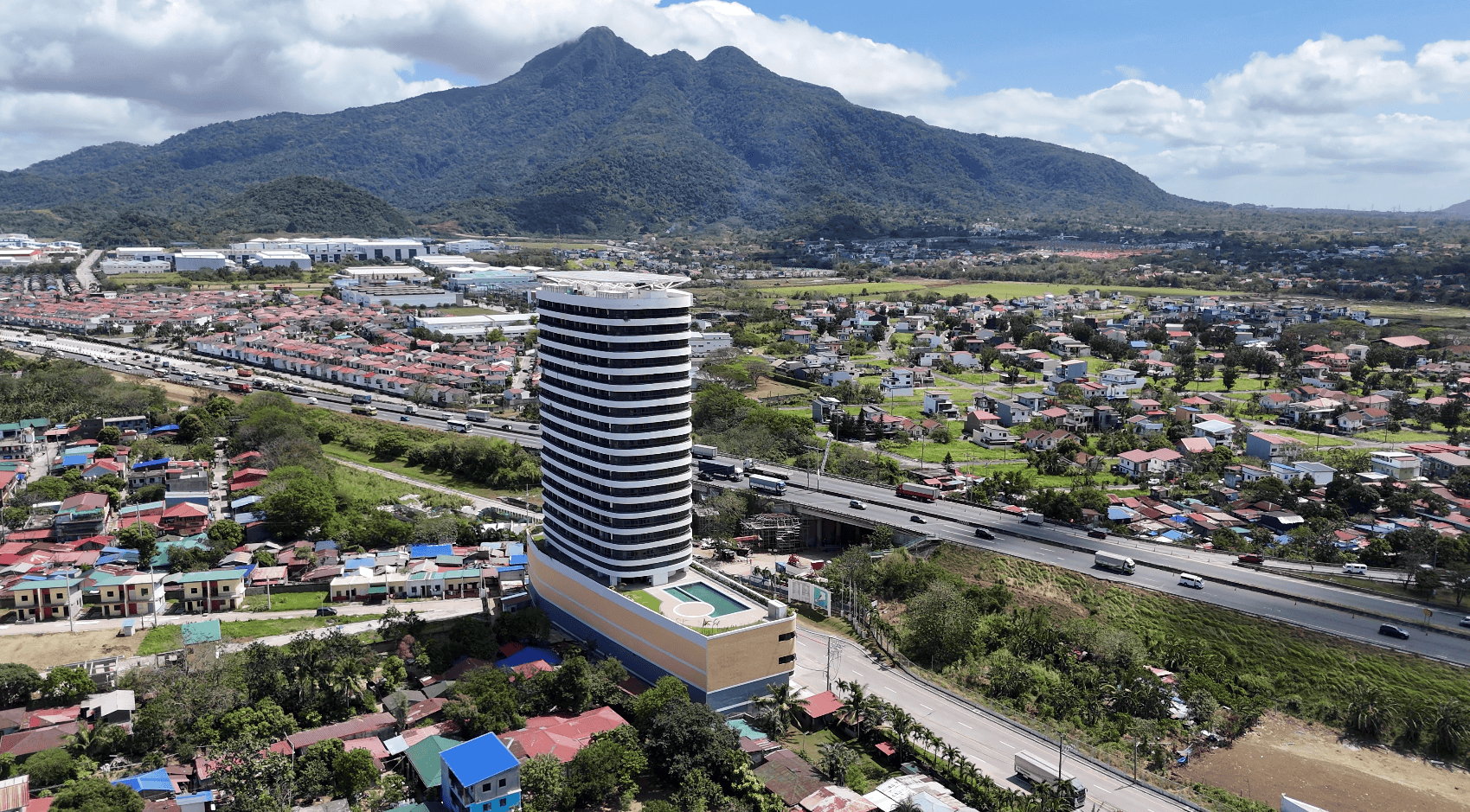
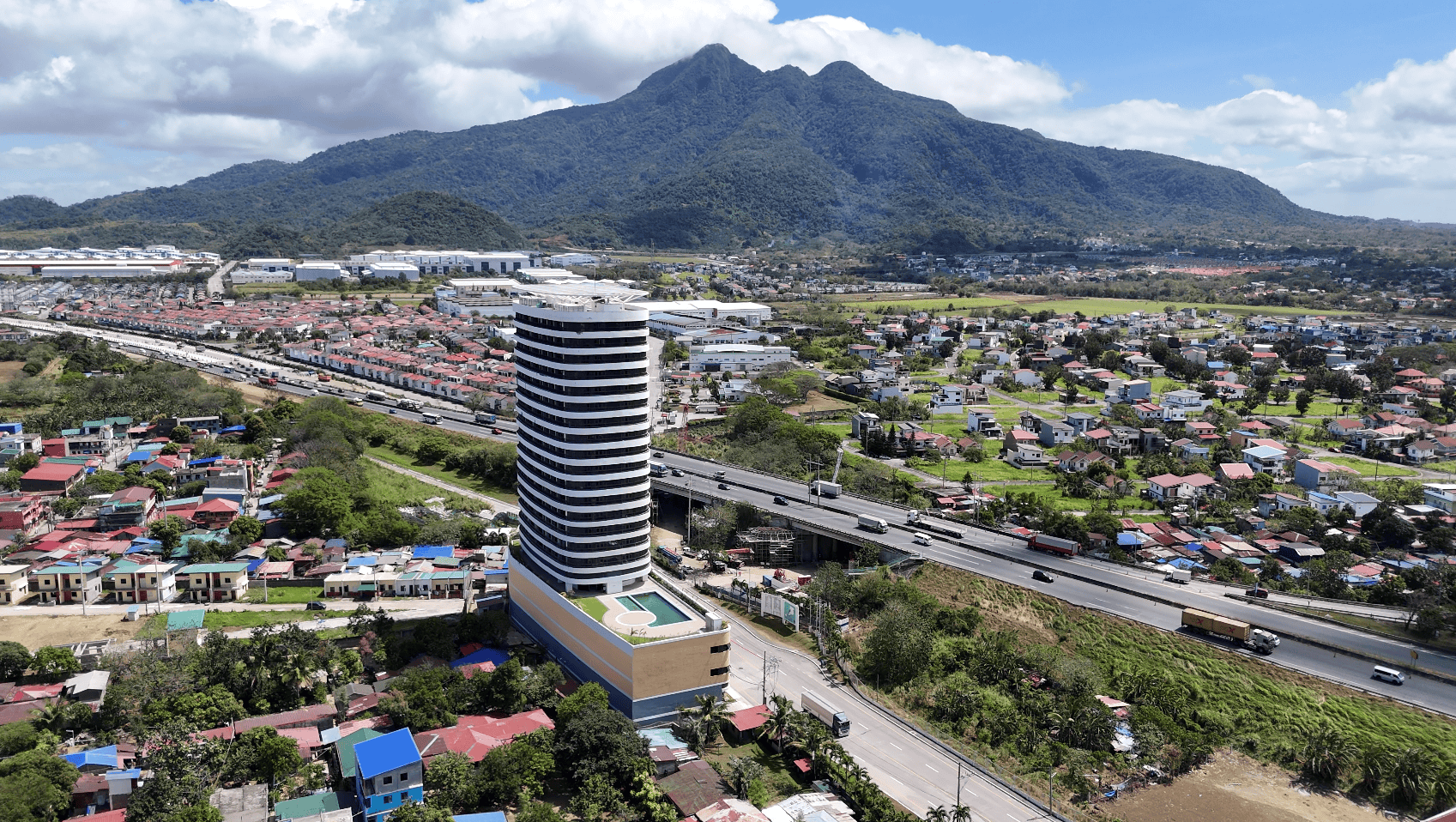
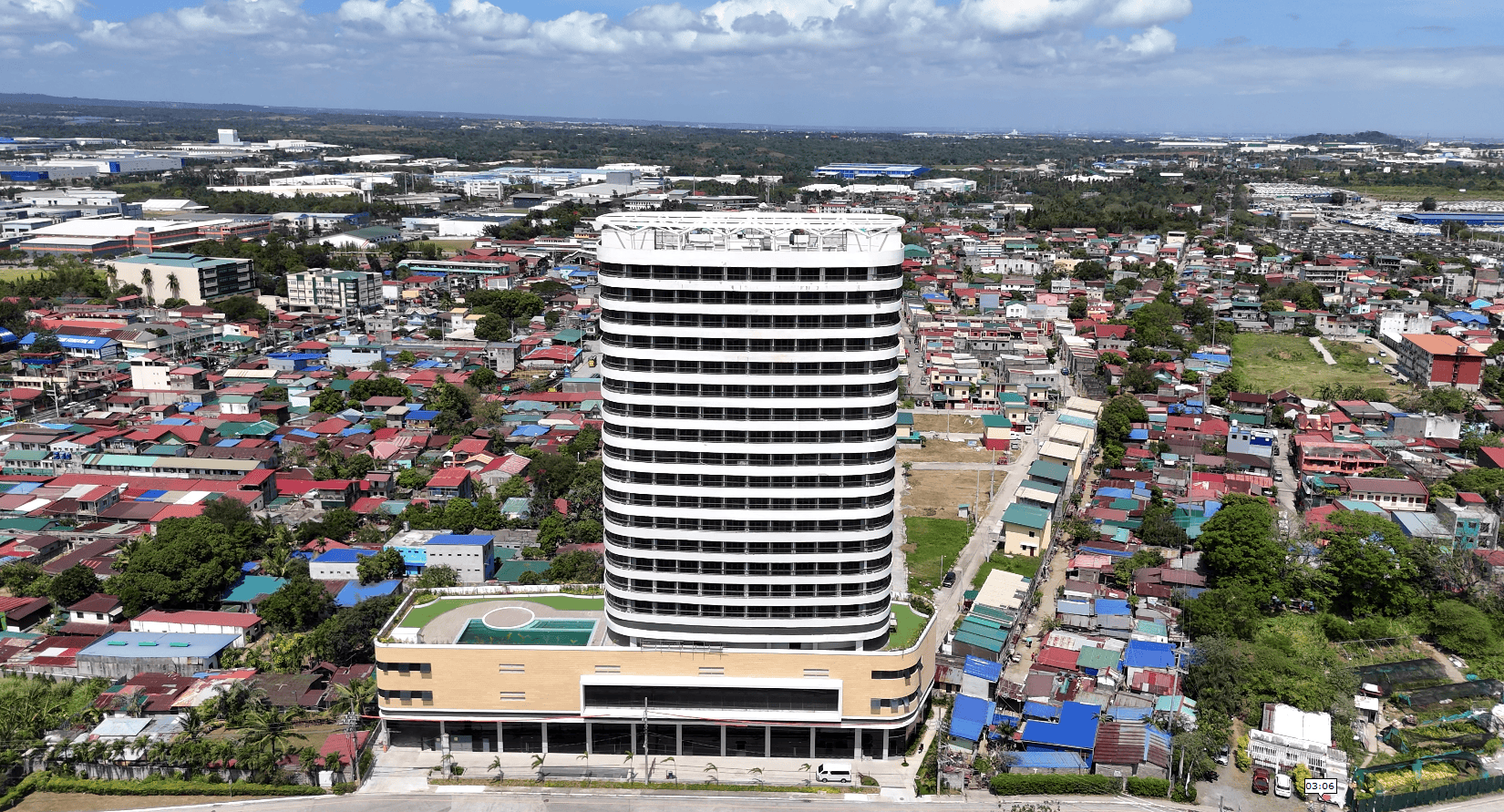
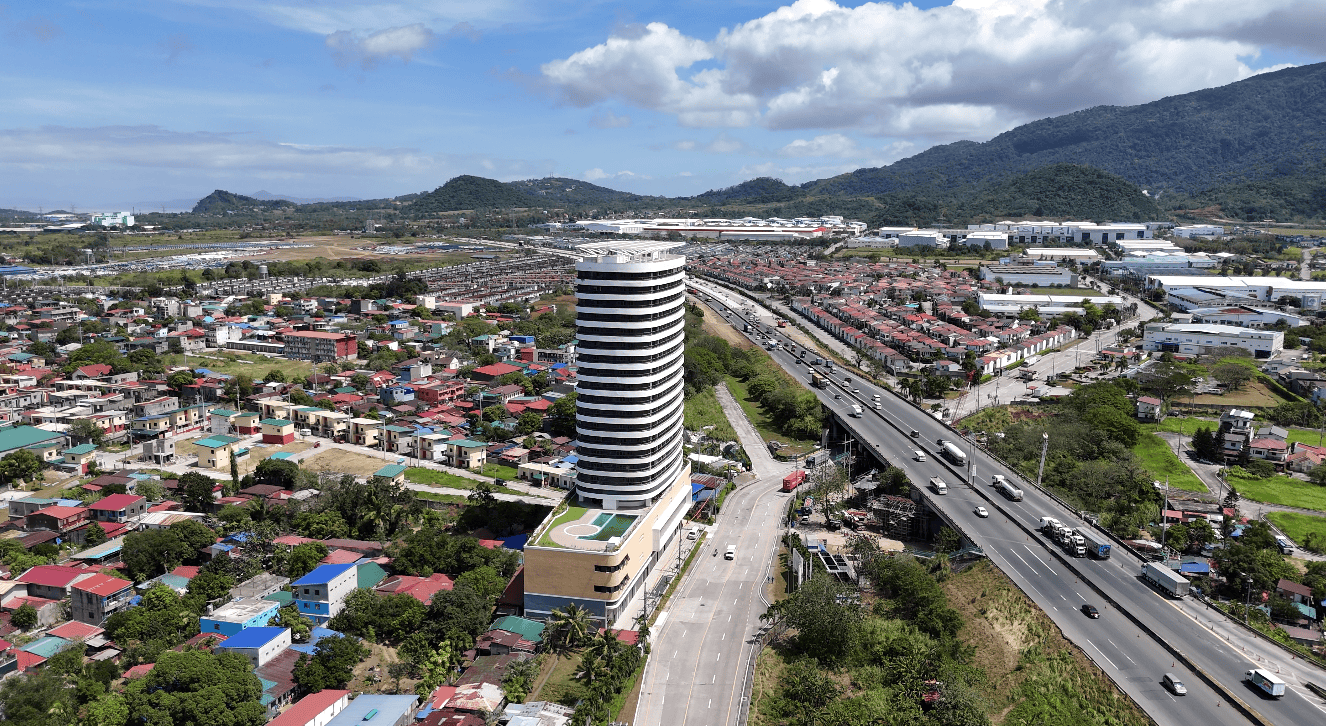
STO. TOMAS, BATANGAS — Rising 21 stories above the Light Industry & Science Park III, Miramonti Green Residences cuts a distinctive silhouette against the sprawling green mass of Mount Makiling. Its name, derived from the Italian phrase meaning "look at the mountain," tells the story: every design decision, from the orientation of its three towers to the dimensions of its balconies, was made in conversation with the landscape. As Italpinas Development Corporation prepares to formally inaugurate the community on May 16, 2026, with an afternoon gathering themed around wine, warmth, and Tuscan-inspired style, the project stands as a case study in how sustainable architecture can be both technically rigorous and visually compelling.
Interiors Designed for Efficiency and Flexibility
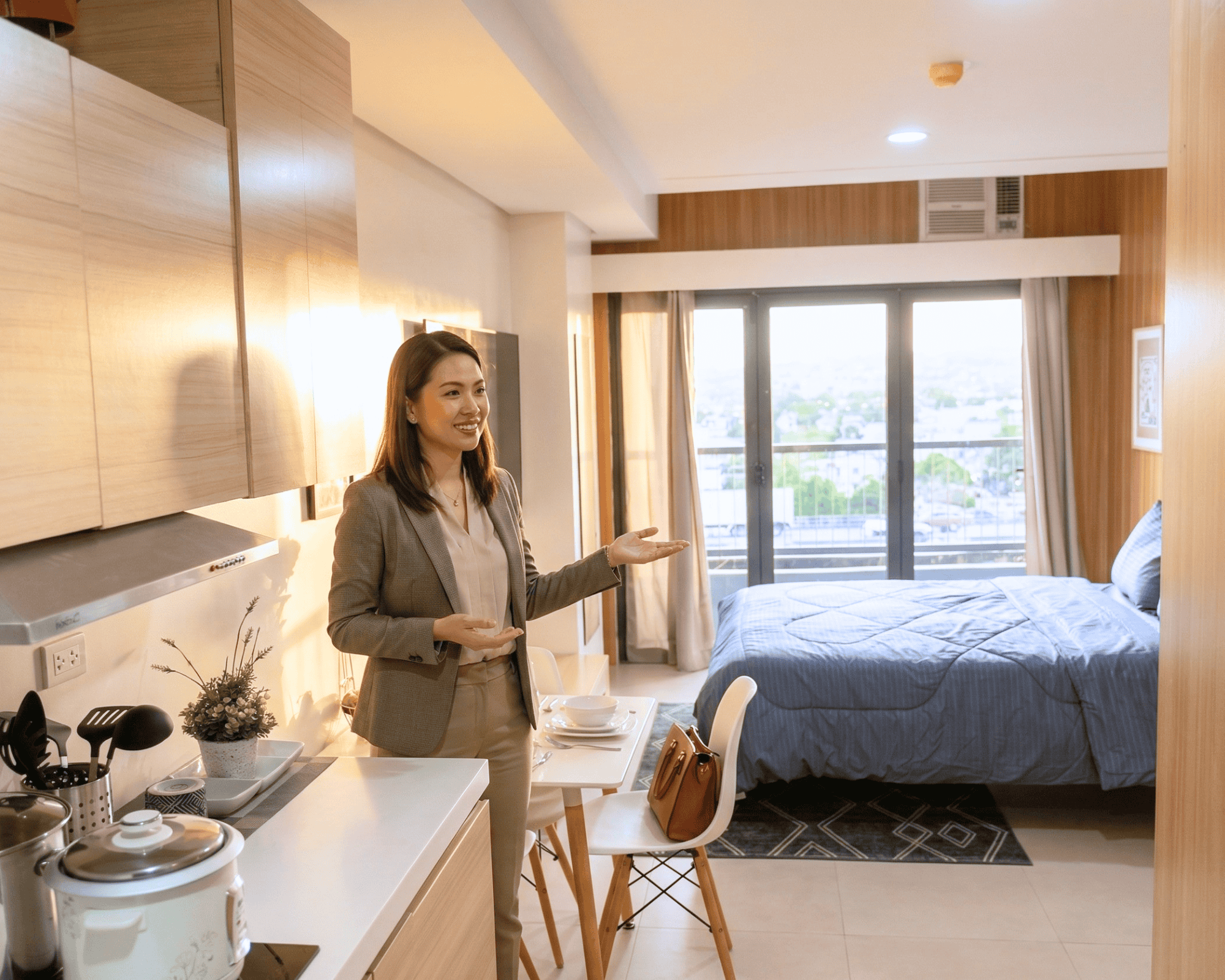
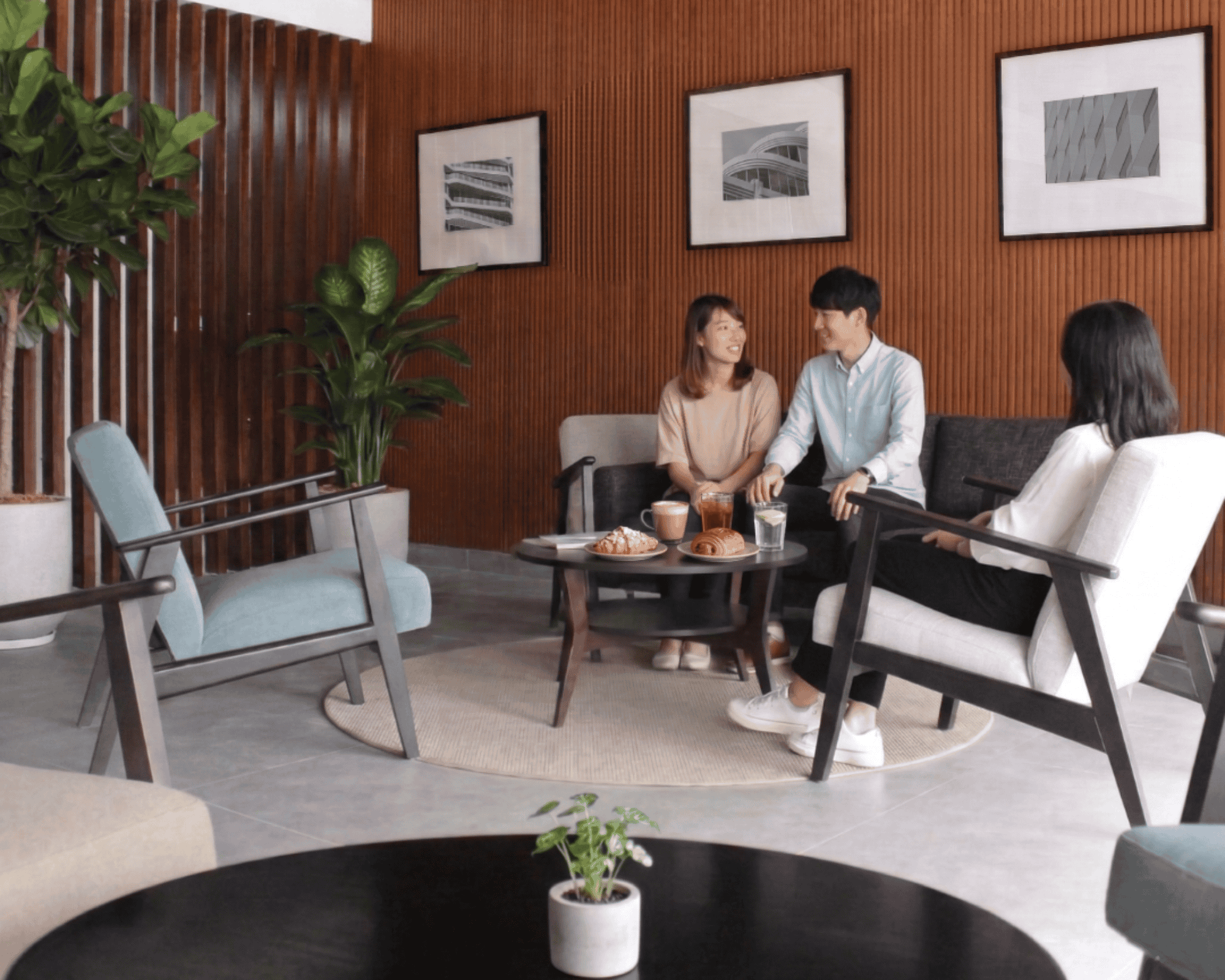
Inside the units, the design philosophy continues with a focus on compact functionality. Studio units range from 22 to 28 square meters, while one-bedroom configurations offer approximately 39 to 44 square meters of floor area. Each unit features a modern kitchen with built-in fixtures, air conditioning, and layouts that prioritize natural light and ventilation. The interiors employ clean, unfussy lines and neutral finishes that create a sense of openness despite the efficient floor plates. The Italian-inspired design elements appear in the proportion and detailing rather than in overt decorative statements—cabinetry hardware, door profiles, and the relationship between living and sleeping zones all reflect a European sensibility toward how space is used.
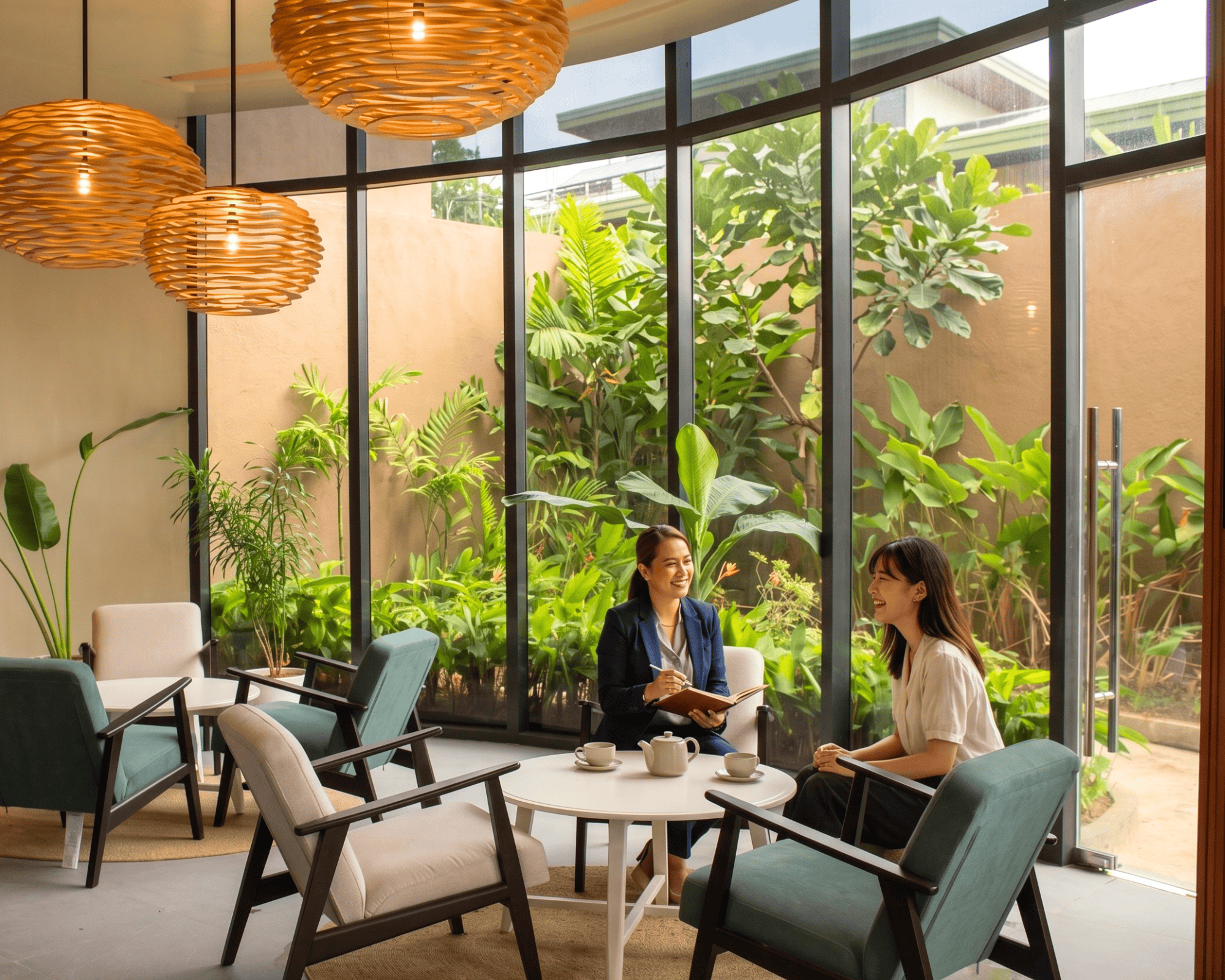
The building's green systems are integrated into the interior experience rather than layered on as afterthoughts. A water recycling system reduces overall water consumption by 52 percent compared to a standard building, feeding into plumbing that residents use without needing to think about the engineering beneath. Solar photovoltaic panels installed on the rooftop generate power for shared amenities, directly lowering the building's operational costs and, by extension, residents' association dues. Wi-Fi connectivity is standard in common areas, and the development includes CCTV security throughout. The EDGE certification—granted by the International Finance Corporation after a third-party audit—confirmed that Miramonti Phase 1 achieves a 39 percent reduction in energy use and a 41 percent reduction in embodied energy in materials compared to a local base case. For residents, these percentages translate into monthly savings on utility bills and a quieter living environment with less mechanical cooling.

A Tower That Works with the Climate, Not Against It
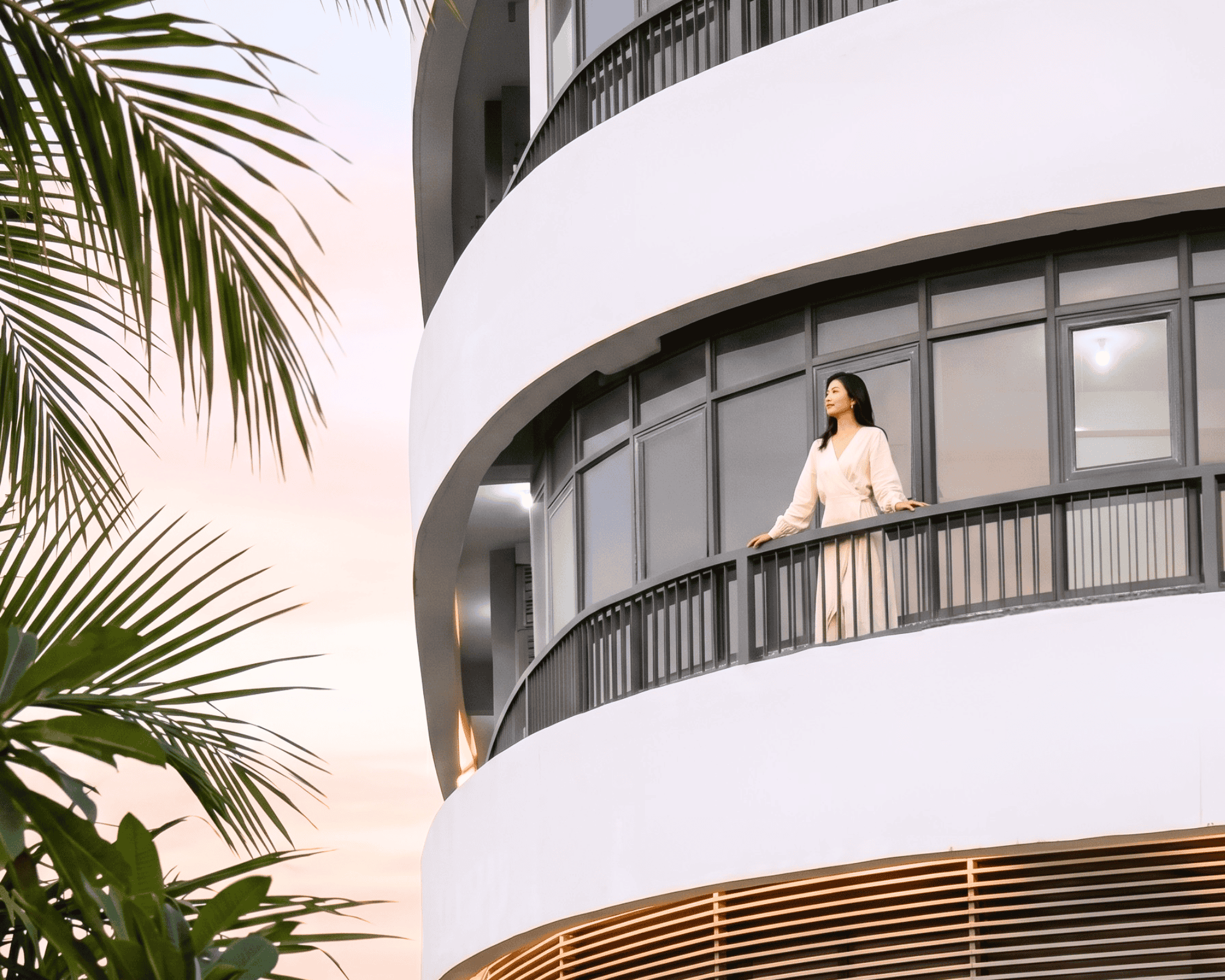
The exterior of Miramonti is defined by what it does before it is defined by how it looks. The 21-story tower employs a passive cooling strategy that shapes the building envelope: external louvers and strategically placed shading devices wrap the facades, blocking direct solar heat while channeling prevailing breezes through the structure. The towers sit on a podium base that houses commercial spaces at ground level, with the residential floors above positioned to maximize cross-ventilation. This is not ornamentation; it is engineering that reduces the need for air conditioning by keeping indoor temperatures several degrees cooler than a conventional building of equivalent height.
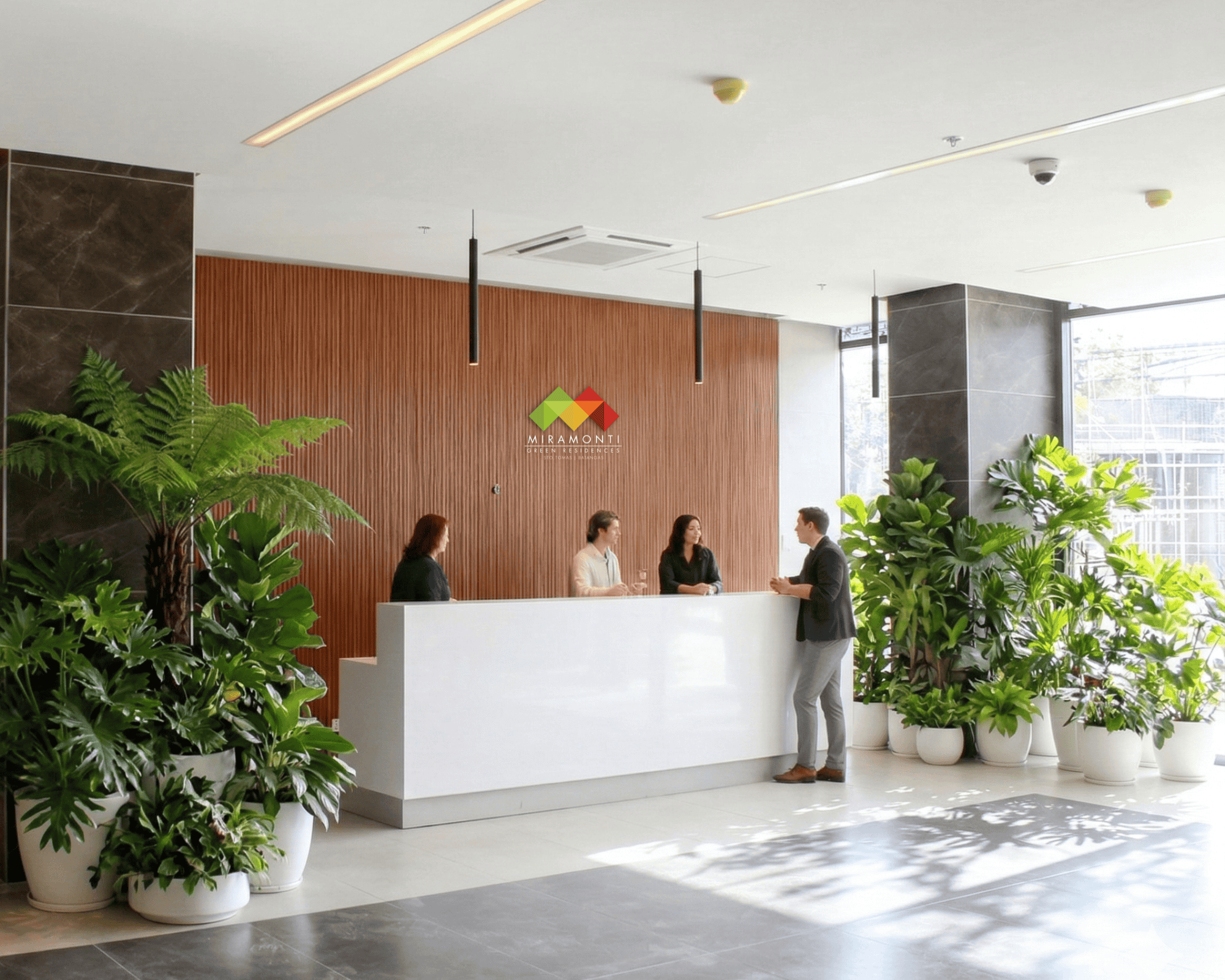
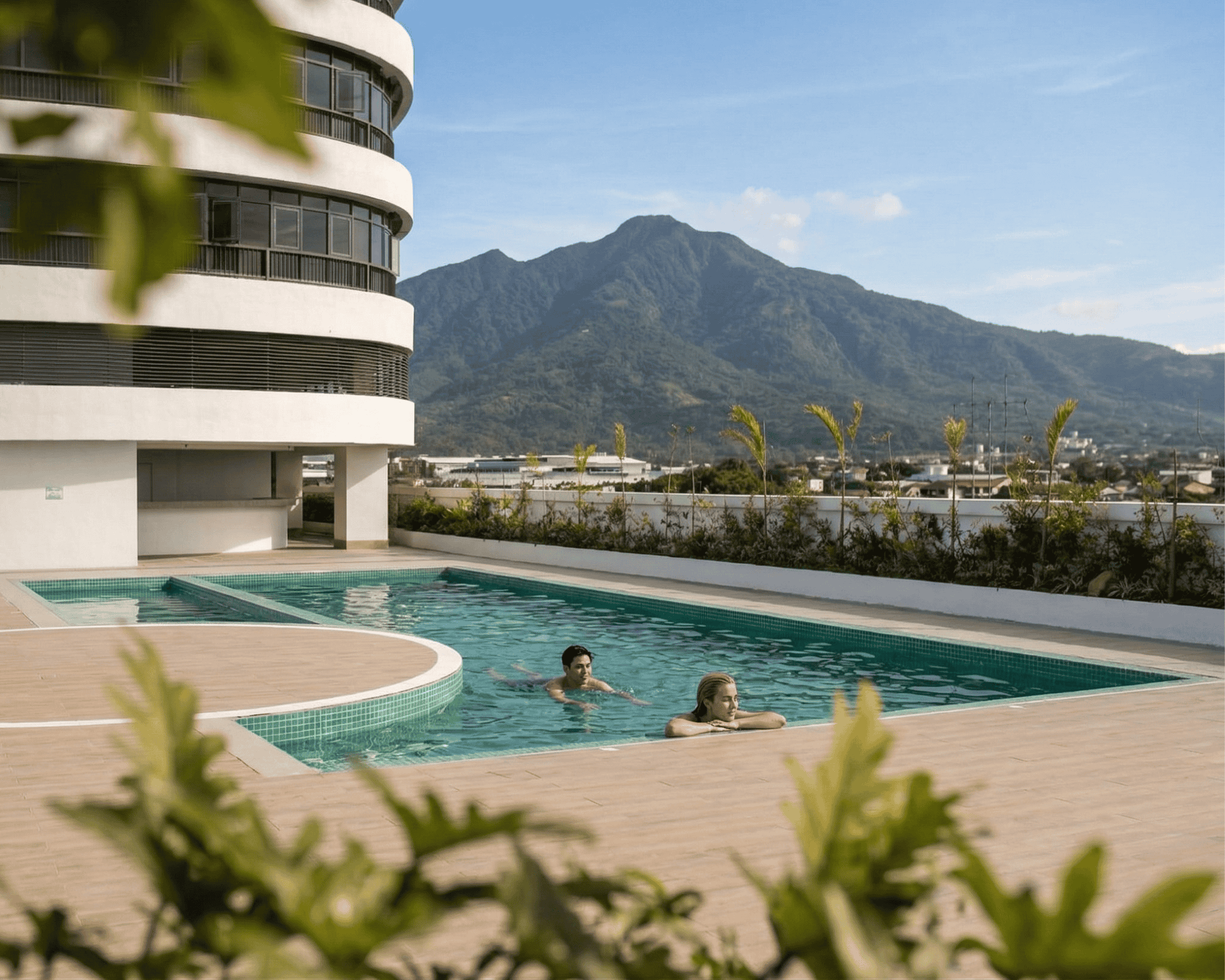
The architectural language draws from Architect Romolo V. Nati's Italian training, evident in the clean vertical lines, the balanced proportion of solid surfaces to openings, and a restrained earth-toned palette that anchors the buildings in their foothill setting. Each residential unit opens onto a private balcony, a deliberate choice that extends living space outward and frames views of Mount Makiling. The balconies double as shading devices for the floors below, performing an environmental function even as they provide residents with outdoor space. The top of the podium structure hosts the project's amenity deck, where a swimming pool, fitness gym, children's playground, and function room are arranged in a secure, residents-only environment. The 24-hour serviced lobby on the ground floor provides controlled access and reception services, reinforcing the sense of arrival.
A Community Set Against a Mountain, Connected to a Corridor
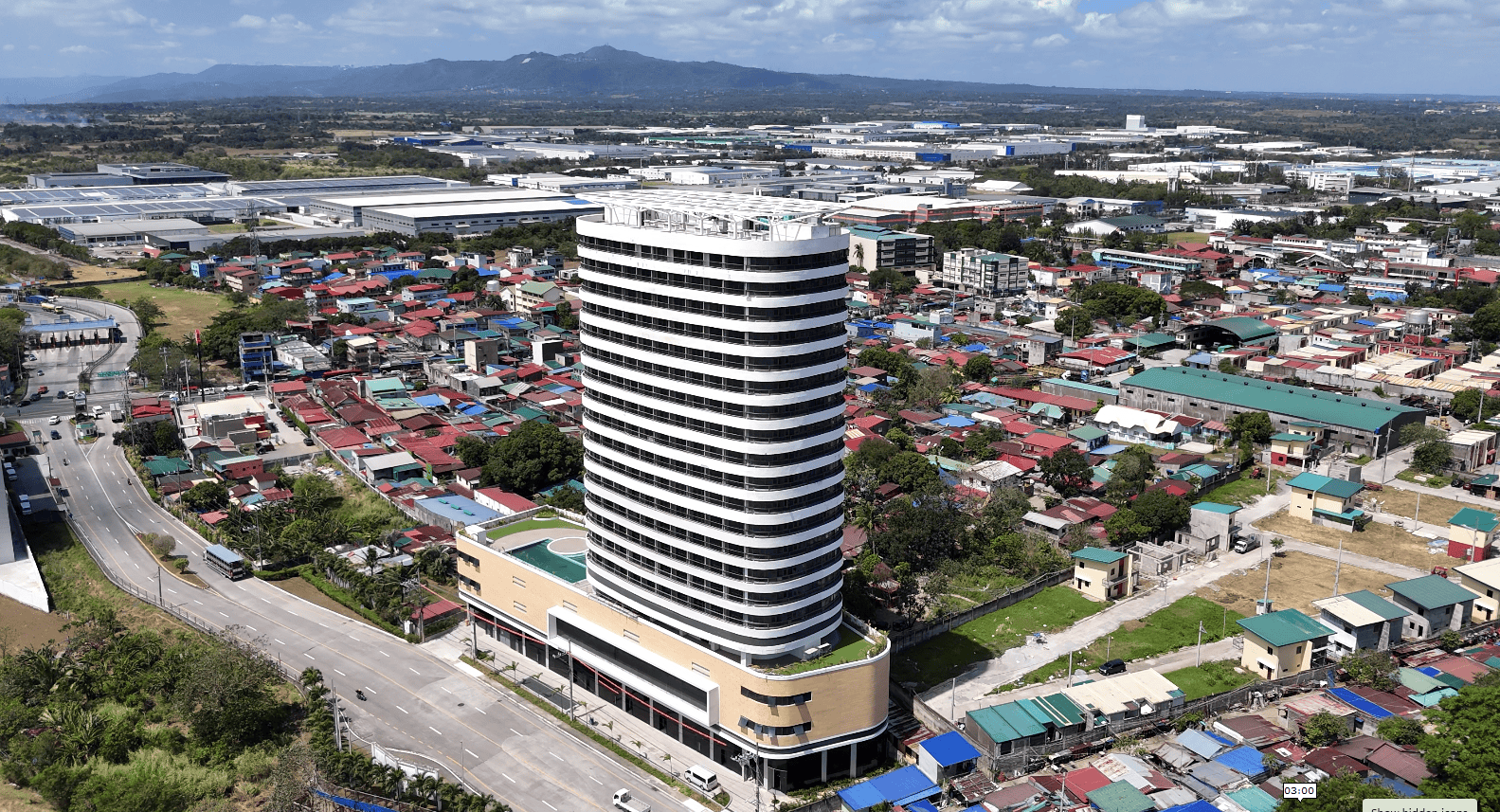
Miramonti's location at 1 Millennium Drive, LISP III, Barangay San Rafael places it less than three kilometers from Sto. Tomas town proper and within a network of industrial parks that employ thousands of workers. The site sits roughly 60 kilometers from Makati and 35 kilometers from Alabang, accessible via the South Luzon Expressway. This positioning has made the project attractive to professionals working in the surrounding industrial estates and to families seeking a residential base outside Metro Manila's congestion. The development's three towers—the first completed, the second underway under a joint venture expansion valued at approximately ₱1.8 billion on an adjacent 5,347-square-meter parcel—will collectively house 352 residential units, 20 commercial spaces, and 88 parking slots in Phase 1 alone.
The property is bordered by educational institutions including Sta. Anastacia Elementary School and Lyceum of the Philippines University–Laguna, while WalterMart Makiling and First Philippine Industrial Park are within a short drive. The mountain itself is not merely scenic backdrop but a functional presence: its forested slopes moderate local temperatures and provide a visual anchor that defines the project's identity. The inauguration on May 16, with its "Tuscan Chic" dress code of linen polos and flowy earth-tone dresses, acknowledges this relationship between built form and natural setting. The event, scheduled for 3:00 p.m., is designed less as a corporate ceremony than as a communal afternoon—wine included—that marks the transition of Miramonti from construction site to living neighborhood.
Awards, Certification, and What They Mean for Daily Life
Miramonti Green Residences has accumulated recognition that speaks to both its design merit and its environmental performance. The project won Best Mixed-Use Development at the Asia Pacific Property Awards, a category judged against entries from across the region. It also received the Best Innovation Project of the Year from Lamudi's The Outlook real estate awards. These external validations matter not because they decorate a corporate shelf but because they represent independent assessment of the building's design integrity—confirmation that the passive cooling, the solar integration, and the spatial planning work as intended.
Sales performance has reinforced that the market values what the awards recognize. Miramonti contributed meaningfully to IDC's 29.9 percent revenue increase to ₱784.7 million in 2025, with sustained demand from end-users purchasing units as primary residences and from investors attracted by the rental potential of a property situated inside a PEZA-accredited industrial estate. The development's License to Sell was issued on January 31, 2024, and units are now in the ready-for-occupancy phase. As the May 16 inauguration approaches, Miramonti Green Residences offers a tangible answer to a question that has long animated Philippine real estate: whether a building can be genuinely green, genuinely livable, and genuinely profitable—all at the same time.