



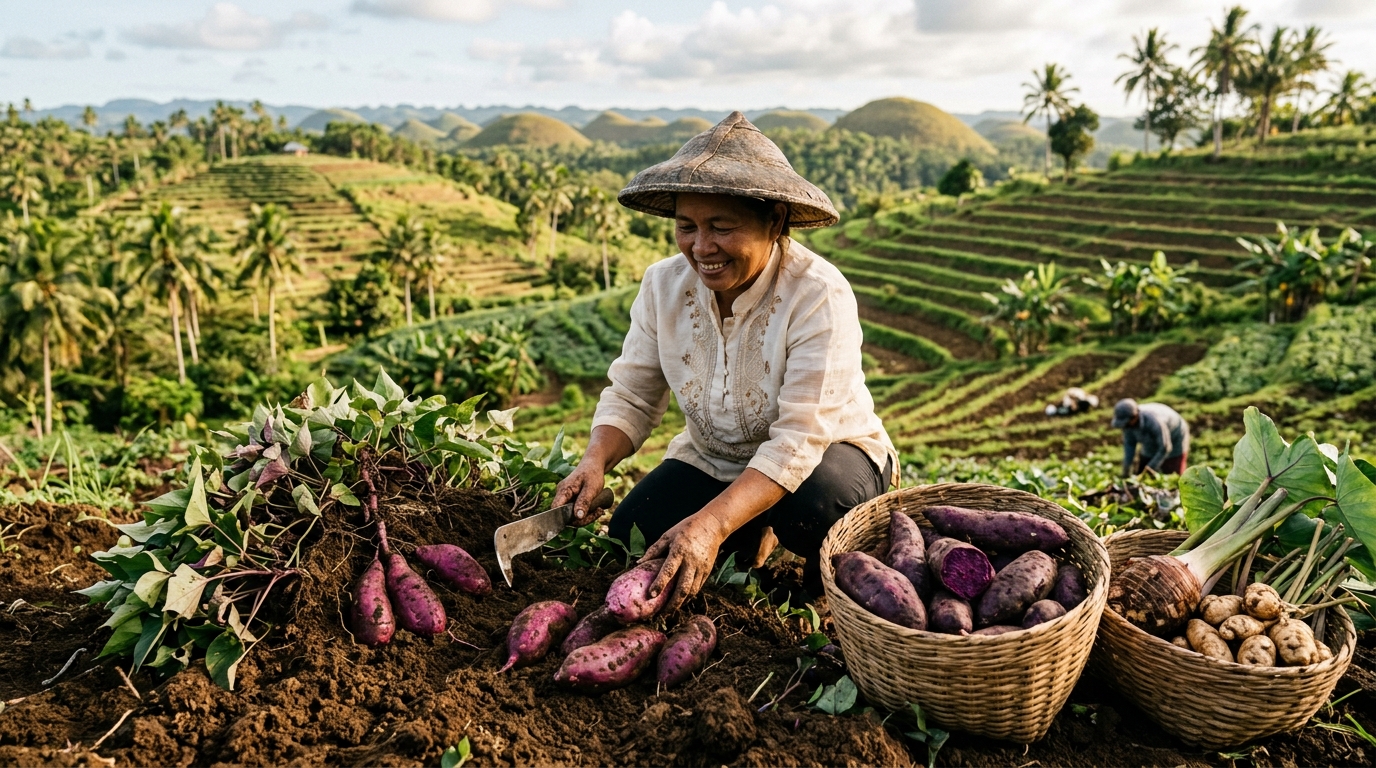
Bohol is executing a return to its agricultural roots as of 2026, following the tactical success of the Ubi Festival and the island’s ongoing commitment as a UNESCO Global Geopark. The province's rural food system acts as a primary anchor for the 2026 roadmap, prioritizing unprocessed, climate-resilient staples that have sustained the islanders for centuries. Central to this high-fidelity food identity is the Ube Kinampay, a "sacred" purple yam that is unique to the island’s mineral-rich soil and celebrated for its unparalleled aroma. For the 2026 generation of eco-conscious travelers and locals, these root crops effectively turn a simple harvest into a sophisticated ritual of environmental stewardship and nutritional security.
The Sacred Queen and Volcanic Soil
The 2026 identity of Bohol’s agriculture is defined by "Sacred Productivity," where the tactical cultivation of Ube Kinampay provides a high-fidelity answer to global food industrialization. As of early May, this vibrant purple yam is acting as a primary anchor for the province's 2026 roadmap, protected by local ordinances that recognize its status as the "Queen of Philippine Yams." This week, agricultural historians noted that the unique geological composition of the island is a tactical template for the 2026 roadmap of "Geographic Indicator" branding. It effectively turns a traditional crop into a "Heritage Ritual" that is both high-energy in its festival celebrations and sophisticated in its ecological niche.
Climate-Resilient Staples and Famine Heritage
What sets this May 2026 window apart is the tactical revival of 'Palau' and 'Apali', acting as a primary anchor for the island’s "Climate Resilience" strategy. As of 2026, these giant swamp taros and lesser yams have trended for their ability to thrive in extreme weather, providing a high-fidelity safety net for rural communities. This month, food security analysts noted that integrating these traditional tubers back into the daily diet is a tactical template for the 2026 roadmap of "Resilient Nutrition." It provides a unique ecosystem for the 2026 generation of farmers to experience a "Sustainability Ritual" that is both high-energy in its yield and sophisticated in its low-carbon footprint.
