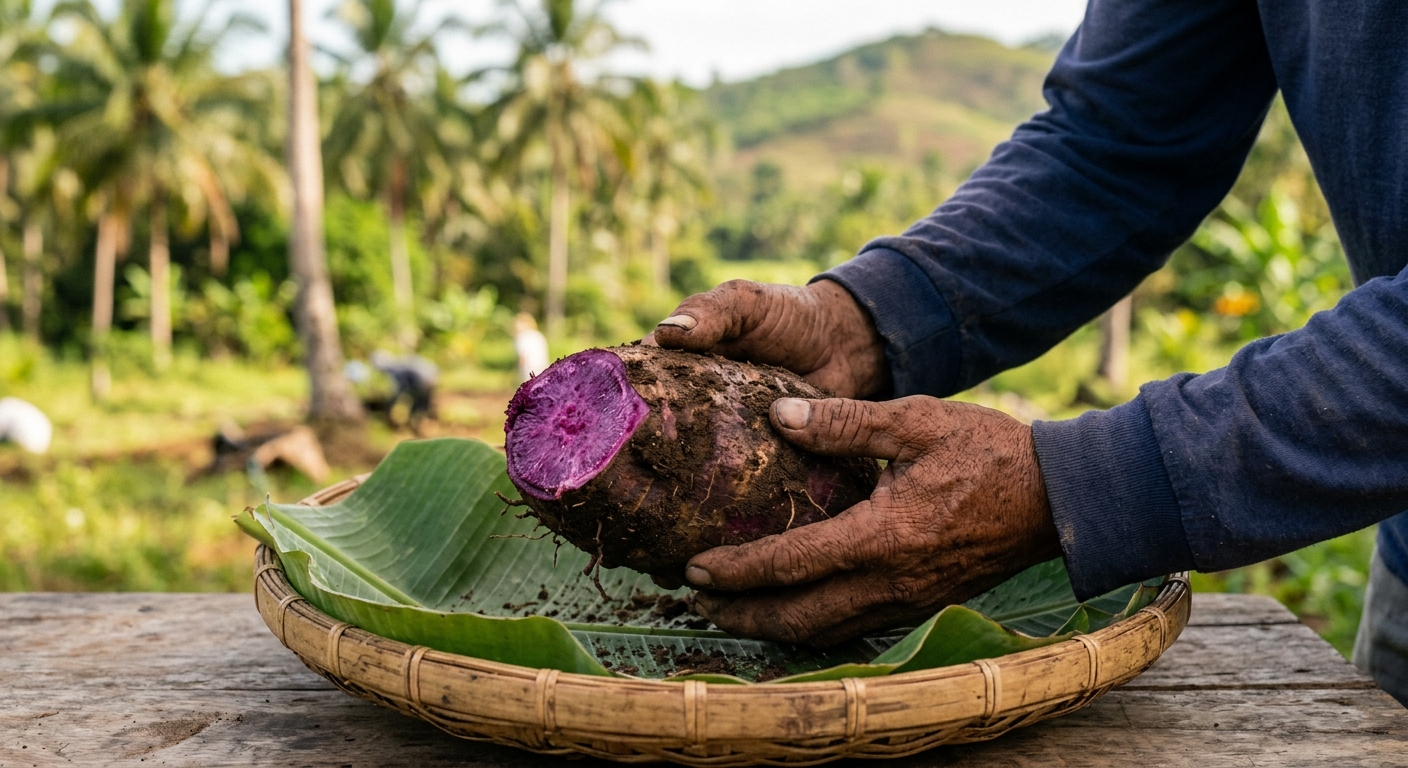
Bohol — The provincial government of Bohol has formally applied for Geographical Indication (GI) protection for its prized ubi kinampay, a move designed to legally safeguard the purple yam’s authenticity, cultural heritage, and growing market value. The filing was led by Gov. Erico Aristotle Aumentado through the Bohol Economic Development and Investment Promotion Office.
A Bid to Secure Bohol’s Purple Crown
The application submitted to the Intellectual Property Office of the Philippines seeks to prevent unauthorized parties from falsely branding their products as ubi kinampay. GI protection ties the yam’s unique qualities—its flavor, aroma, texture, and vibrant color—directly to Bohol’s soil, climate, and traditional farming methods. This legal tool ensures that only genuine produce from the province can carry the celebrated name.
The initiative also strengthens Bohol’s identity as the country’s first UNESCO Global Geopark. Ubi kinampay already carries the Geofood label, marking it as a product deeply linked to the island’s geological and cultural landscape. Securing GI status would elevate that recognition to a formal intellectual property right.
The Queen of Yams and Its Cultural Roots
Widely regarded as the “queen of Philippine yams,” ubi kinampay is more than an agricultural commodity. Local tradition holds that if a yam accidentally falls during transport, it must be picked up and kissed as a sign of respect. Failure to do so, many Boholanos believe, invites misfortune.
This reverence stems from stories of how ubi helped communities survive droughts and hardships in generations past. The crop is the only agricultural product mentioned in the official Bohol hymn, underscoring its deep cultural significance. For Boholanos, ubi is both livelihood and sacred heritage.
Economic Value and Market Protection
GI registration is expected to increase the product’s market value and strengthen consumer confidence. With global demand for ube surging, the legal shield will help local farmers capture more value instead of losing out to imitation goods. The designation signals to buyers that they are purchasing authentic, traceable produce.
Officials from Bedipo emphasized that the filing builds on years of provincial investments in production enhancement, research, and farmer support. The process requires a detailed manual of specifications, mapping out the geographic production area, established methods, and the evidence linking ubi kinampay’s distinctiveness to Bohol’s environment.
Farmers and Production Muscle
Bohol remains the Philippines’ top ube producer, harvesting over eight million kilograms annually from some 1,200 hectares of farmland. At least 400 farmers belong to the Bohol Ubi Growers Association, which coordinates production and promotion across the province. The crop is cultivated in Tagbilaran City and all 47 towns.
Assistant provincial agriculturist Larry Pamugas noted that Bohol’s connection to ubi runs deep in its history and identity. The province is home to several yam varieties, including tam-isan, baligonhon, and kabus-ok, but kinampay commands the strongest reputation. Protecting its name is a matter of economic justice for the families who grow it.
Building on a Growing GI Portfolio
Once approved, ubi kinampay will become Bohol’s second registered GI, following the artisanal sea salt asin tibuok from Alburquerque town. The Philippines currently recognizes four GIs: Guimaras mangoes, Aklan piña, Alburquerque asin tibuok, and Tau Sebu tnalak. Adding ubi kinampay to this list would further position Bohol as a leader in heritage product protection.
The application is now under evaluation by the Intellectual Property Office, which will examine the submitted specifications and evidence. For Bohol, the GI mark represents more than legal registration—it is a promise to future generations that the queen of yams will forever wear its crown with pride and authenticity.