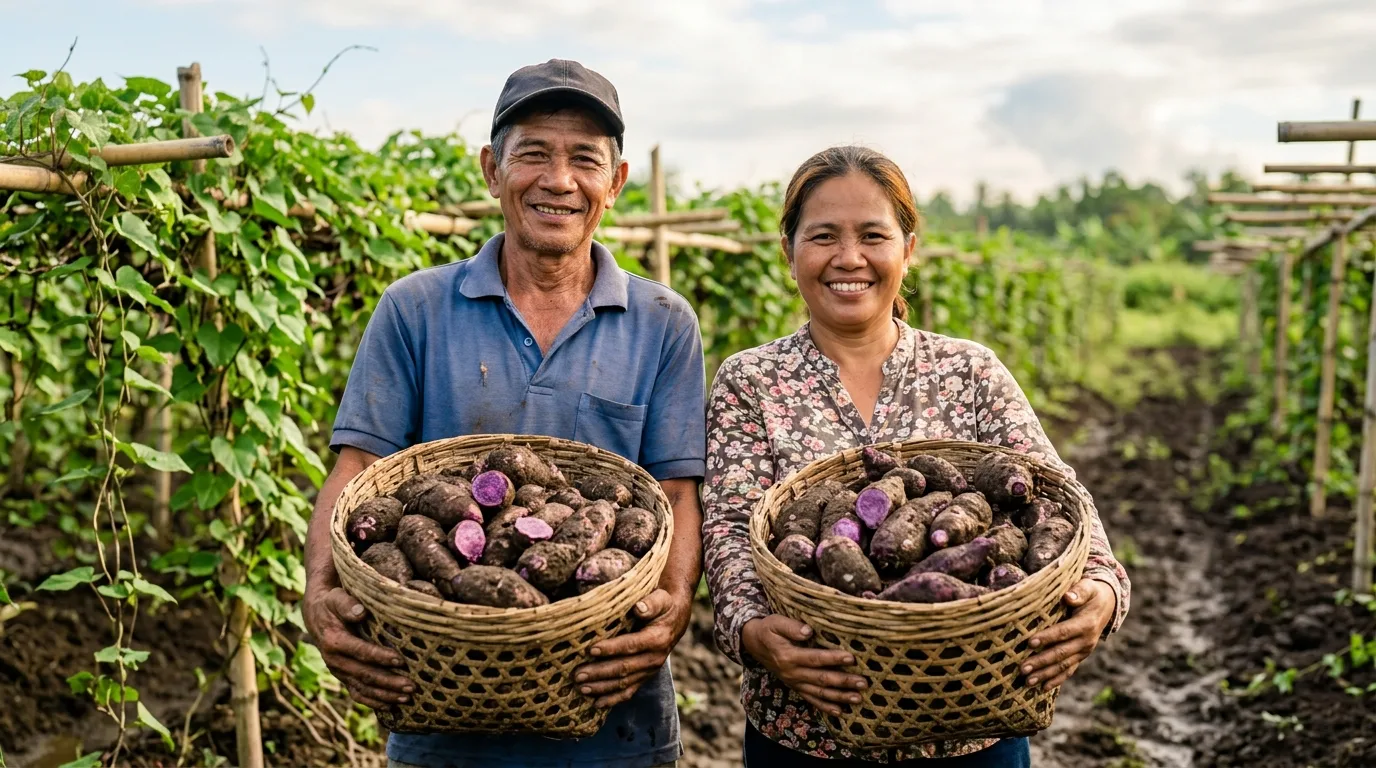
BOHOL — The Provincial Government of Bohol gathered key agencies on July 3, 2026 to sharpen a bid for United States Department of Agriculture funding, aiming to accelerate the purple yam industry’s global competitiveness. The initiative centers on Ubi Kinampay, Bohol’s prized variety that already supplies roughly a third of the country’s total purple yam output.
Stakeholders Unite for a Single Crop
Provincial Agriculturist Liza Quirog presided over the meeting, which brought together the Department of Trade and Industry, the Department of Science and Technology, the Bohol Economic Development and Investment Promotion Office, and Bohol Island State University. Their shared task was to refine a funding proposal that would unlock technical and marketing support.
The proposed USDA assistance would target three fronts: speeding up production development, adding value through processing innovations, and promoting the crop internationally. By pooling institutional expertise, the province aims to present a unified, bankable project that can attract foreign grant support and propel local farmers into premium markets.
Geographical Indication as a Shield of Identity
The discussion placed heavy emphasis on the ongoing pursuit of Geographical Indication protection for Ubi Kinampay. A GI seal functions like a legal birthplace certificate, guaranteeing that only yams grown in Bohol’s specific soil and climate conditions can carry the revered name. This prevents counterfeit products from diluting the brand abroad.
Securing GI status would reinforce the crop’s premium pricing power in markets that value authenticity. Quirog noted that the process requires meticulous documentation of traditional cultivation methods and sensory profiles. Partner agencies committed to pooling data and research to meet international registration standards, a move that could set a precedent for other Philippine heritage crops.
A Third of the Nation’s Purple Yam from Bohol
Bohol already accounts for approximately 33 percent of the Philippines’ total purple yam production, a dominance built on the island’s unique volcanic soil and generations of farming knowledge. Ubi Kinampay stands out for its intense violet hue, creamy texture, and natural sweetness that makes it a favorite ingredient in high‑end confectionery and ice cream.
That market share, however, has not yet fully translated into global recognition. Processors and traders still face hurdles in meeting international food safety certifications and packaging standards. The USDA‑backed project intends to close those gaps by funding equipment upgrades, farmer training, and laboratory testing that can open doors to North American and European buyers.
Building a Value Chain from Farm to Export Dock
Beyond the field, the meeting tackled the entire value chain. DTI representatives outlined plans for improving post‑harvest handling to reduce spoilage, while DOST pledged technical assistance for product development such as ubi flour, powder, and frozen puree. BISU committed its research capabilities to study shelf‑life extension and nutritional profiling.
BEDIPO, the province’s investment arm, emphasized the importance of linking these upstream improvements to actual trade deals. Their office will scout international trade fairs and coordinate buyer‑seller meetings that put Bohol’s purple yam products directly in front of importers. The combined effort aims to move farmers from selling raw tubers to supplying processed goods with higher margins.
Strategic Roadmap and Geopark Synergy
The entire initiative dovetails with the provincial government’s Strategic Change Roadmap, which calls for agricultural innovation as a pillar of economic growth. Officials stressed that strengthening the ubi sector also supports Bohol’s identity as a UNESCO Global Geopark, where sustainable livelihood and landscape conservation go hand in hand.
By branding Ubi Kinampay alongside the Geopark’s eco‑cultural tourism appeal, the province can create a seamless narrative: a visit to Bohol’s Chocolate Hills and tarsier sanctuaries ends with a taste of its unique purple yam delicacies. The USDA proposal thus becomes not just a farm project but a holistic economic development tool that bridges agriculture, tourism, and trade.