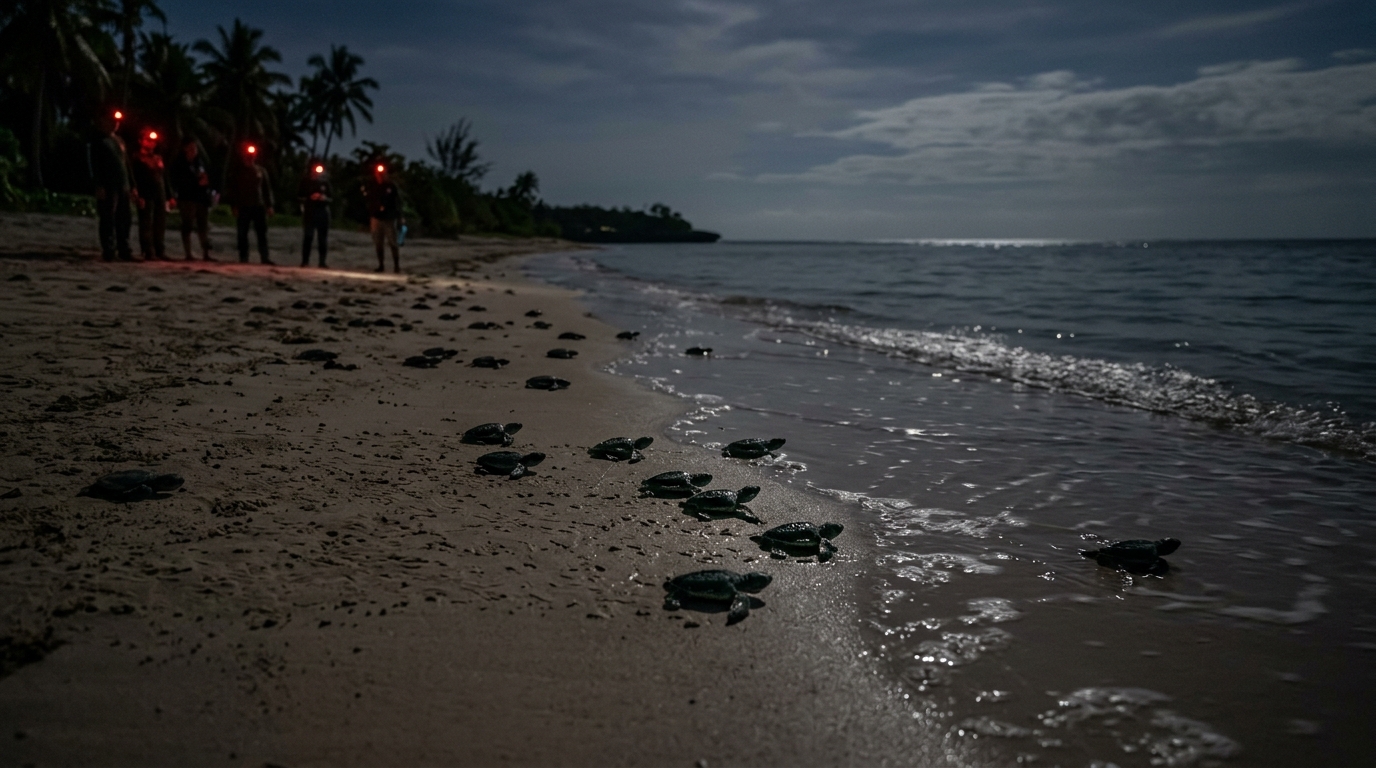
Bohol — The coastal shores of Panglao, Bohol, witnessed a heartwarming spectacle as 79 endangered green sea turtle hatchlings successfully made their way to the sea on the night of June 15, 2026. This milestone comes after two months of diligent monitoring by the Department of Environment and Natural Resources (DENR-7) and local conservation partners, including the Panglao Island Protected Seascape (PIPS). By maintaining a disturbance-free habitat and strictly limiting artificial lighting near the nesting site, the community ensured these tiny creatures had a safe journey. This successful release is a resounding victory for marine conservation efforts, highlighting the island’s commitment to safeguarding its precious biodiversity.
A Collaborative Effort for Survival
The survival of these turtles is a testament to the powerful alliance between resort staff, local government units, and environmental specialists who kept the nesting area protected since April 2026. Because turtles are highly sensitive to their environment, the team implemented a strict "dark beach" policy during the crucial emergence period. This hands-off approach allowed the hatchlings to orient themselves toward the natural horizon of the ocean without the confusion of city lights. Such collaborative vigilance demonstrates that economic activity and environmental stewardship can indeed coexist when managed with foresight and care.
Bohol’s Role as a Safe Haven
Provincial leaders have lauded the PIPS and local rehabilitation programs for their tireless work, framing the event as a reflection of Bohol’s identity as a sanctuary. Governor Erico Aristotle Aumentado emphasized that the protection of natural treasures remains a top priority, ensuring the island stays a viable nesting ground for future generations of sea turtles. Beyond the immediate joy of the release, this success is part of a larger plan to maintain healthy, clean coastal ecosystems throughout the province. Keeping these waters pristine is essential for the continued recovery of endangered species that choose Bohol’s beaches as their home.
Inspiring a Culture of Protection
This event has served as a wake-up call for both residents and visitors to appreciate the fragile life cycles that occur right beneath their feet on the sand. Educational campaigns are being expanded to remind beachgoers about the importance of minimizing pollution and respecting turtle nesting boundaries. When people understand that their actions—such as properly disposing of plastics or avoiding nighttime beach disturbances—directly impact turtle survival, the community becomes the best defender of its own wildlife. Every hatchling that reaches the water represents a collective success, proving that when the public takes ownership of its natural resources, the results are life-sustaining.