Bohol is pulsating with energy as it kicks off its legendary "Fiesta Month," a time when every town on the island takes turns hosting vibrant community feasts. While the festivities are famously large, the true soul of Boholano hospitality is found in its quiet morning traditions and farm-to-table innovations. As of May 2026, local tourism is seeing a significant boost from direct international charter flights, bringing a new wave of travelers eager to experience the island’s UNESCO Global Geopark status through its stomach. From the rich, dark swirls of sikwate in Baclayon to the organic harvests at the Bohol Bee Farm, the island is proving that its culinary lifestyle is as resilient and inviting as its people.
A Timeless Pairing for the Soul
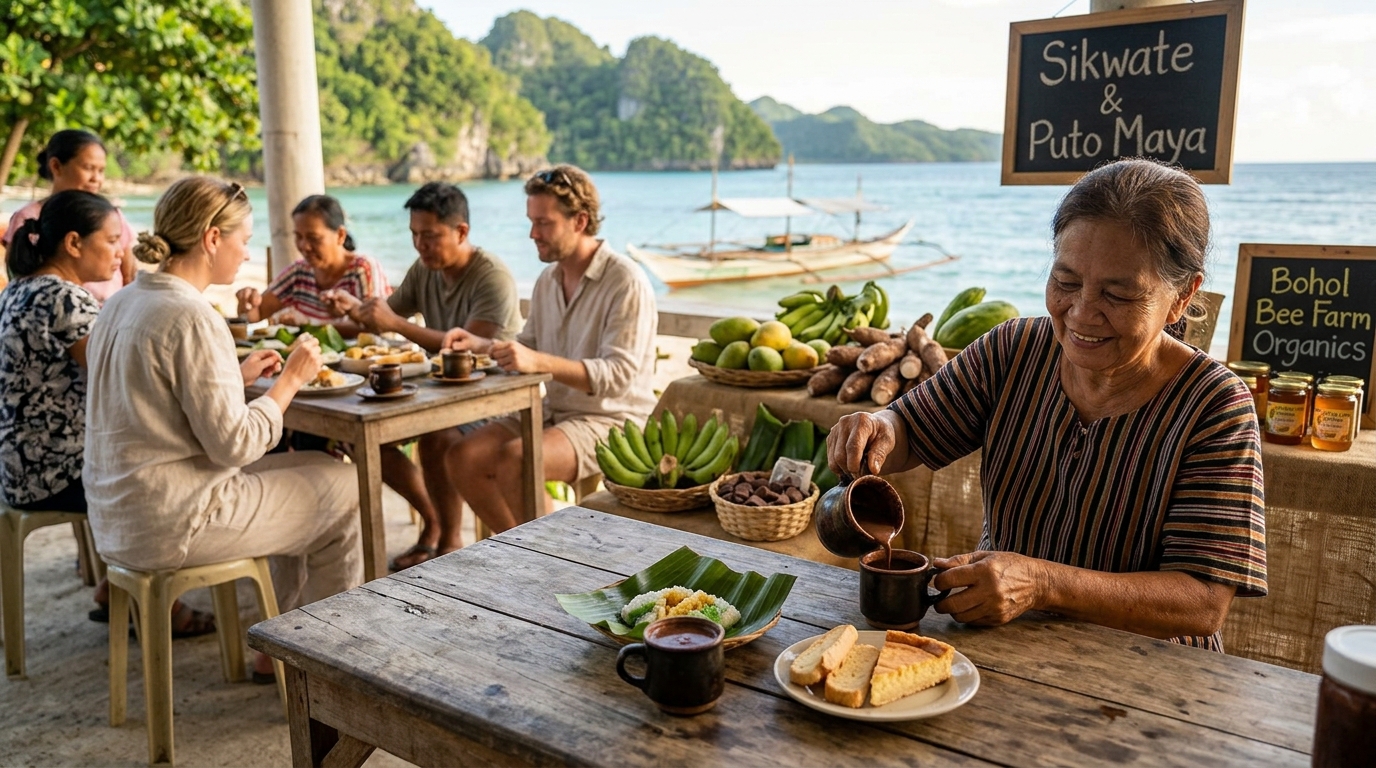
The Boholano morning begins with the comforting aroma of sikwate, a thick hot chocolate made from pure cacao tablea that serves as the province's ultimate liquid gold. This tradition is almost always paired with puto maya, a ginger-infused glutinous rice that provides a satisfying, savory-sweet balance to the rich cocoa. In the historic town of Baclayon, residents and visitors alike gather at local stalls to enjoy these staples alongside the town’s famous broas and torta. These breakfast rituals are more than just meals; they are cultural touchpoints that have remained unchanged for generations, offering a moment of slow living amidst the busy fiesta schedule.
Sustainable Flavors at the Bohol Bee Farm
For those seeking a modern twist on local ingredients, the Bohol Bee Farm in Panglao remains the premier destination for organic, farm-to-table dining. This May, the farm is drawing crowds with its innovative use of indigenous plants, such as their signature malunggay ice cream and cassava-crust pizzas. The establishment recently hosted ASEAN delegates, showcasing how homegrown goods like honey spreads and edible flowers can be elevated into world-class culinary experiences. By prioritizing the livelihoods of local farmers and artisans, the farm exemplifies the "regenerative tourism" model that Bohol is championing globally this year.
Economic Vibrancy Amidst the Feasts
Despite a provincial call for austerity and simpler celebrations this year, the local food economy is flourishing through initiatives like "Kompra sa Tagbi," which is currently pumping nearly ₱600,000 daily into the local market. This surge in economic activity ensures that heritage restaurants like Gerarda’s and the bustling stalls in Jagna—the Calamay capital—remain well-stocked for the influx of visitors. The provincial government is balancing this growth with environmental protection, recently lifting red tide alerts in Tagbilaran waters just in time for the peak dining season. This careful management ensures that the flavors of Bohol, from its sea-fresh delicacies to its mountain-grown cacao, can be enjoyed safely and sustainably by all.