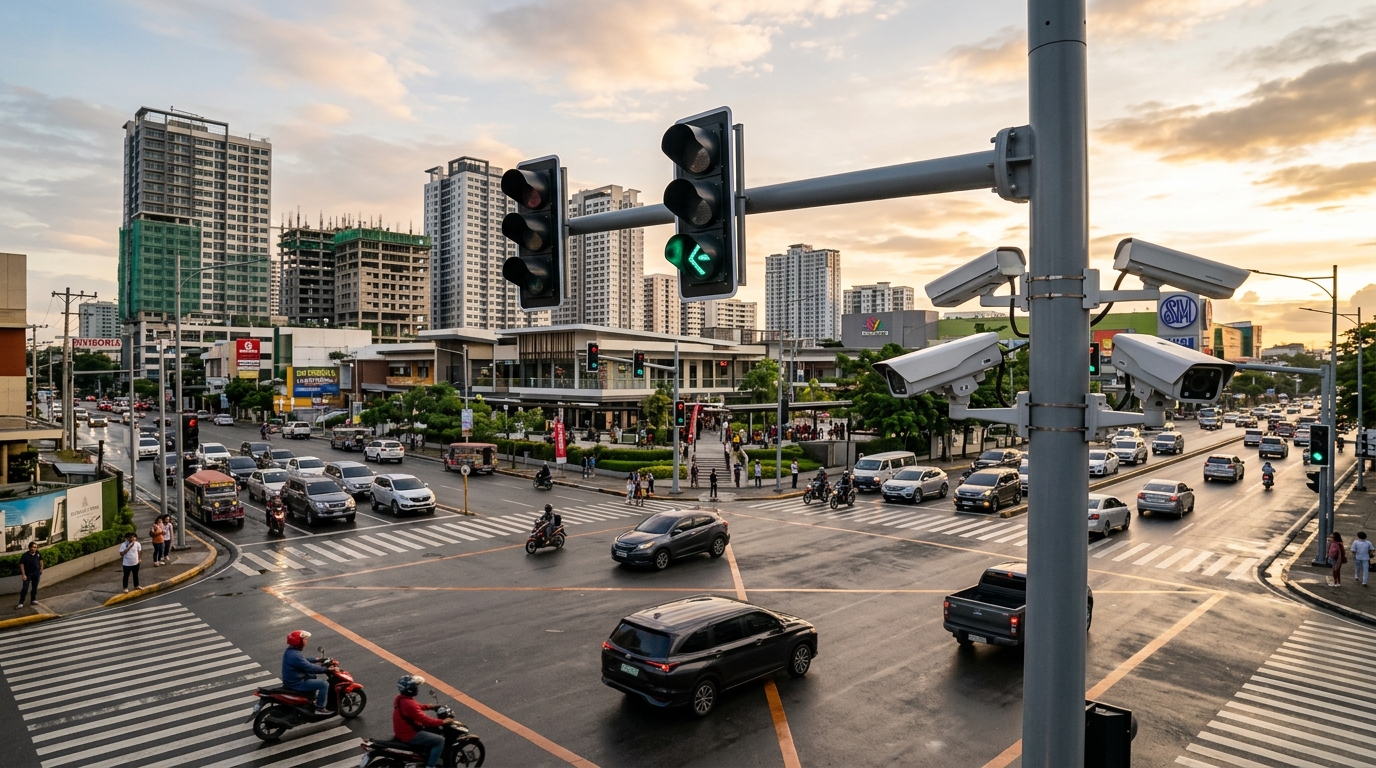
CAGAYAN DE ORO CITY — A high‑tech, AI‑driven traffic management system is set to be piloted in key intersections across the city, promising to ease congestion without costing local taxpayers a single peso. Beyond the immediate relief for daily commuters, the project signals a potential boost for urban real estate values: smoother commutes make residential and commercial locations more attractive, and a tech‑forward, livable city draws both investors and homebuyers.
The local government’s decision to leverage a free, cutting‑edge traffic solution could have long‑term payoffs for Cagayan de Oro’s property market.
A Free Pilot with a Big Promise
The 21st City Council has authorized Mayor Rolando Uy to formalize an agreement with OneSystems Technologies LTD Inc., a Singapore‑based firm, to implement the AI‑assisted system at “no cost to the city government”. Majority Floor Leader Edgar Cabanlas assured the council that taxpayers would not spend a single peso; the technology provider will shoulder all installation, operation, maintenance, and data management expenses. The pilot will run for six months and cover “three four‑way signalized intersections” along major thoroughfares from Velez Street up to Agora.
The City Council also intends to use the six‑month trial to evaluate “the technical, operational, legal, and policy suitability of the proposed system prior to any decision to undertake a citywide deployment”.
How AI-Driven Mobility Works
The proposed system will leverage smart traffic lights and CCTV cameras to automatically detect violations such as counterflowing, jaywalking, and failure to wear helmets or seatbelts. The AI-facilitated mobility could transform transportation in the city. Cabanlas explained that the captured data will integrate directly with the LTO and RTA systems, creating a “no‑contact apprehension” policy. Enhanced traffic flow, reduced travel times, and increased overall road safety are projected benefits.
The Real Estate Connection
Reliable, efficient mobility is a foundational driver of property demand. When congestion eases, commute times shrink, and neighborhoods become more accessible, urban land values tend to rise. A smoother‑flowing Cagayan de Oro would strengthen the appeal of its business districts, encourage residential infill, and support the city's ongoing transformation into a modern, livable metropolis. Real estate stakeholders closely monitor such projects: reduced traffic friction boosts the viability of mixed‑use developments, attracts retail and hospitality investments, and enhances the overall quality of life that homebuyers seek.
The Road Ahead
The pilot represents a small but strategic step in the city’s digital transformation. If successful, the system could pave the way for a full‑scale rollout under a Hybrid Public‑Private Partnership (PPP), further embedding smart‑city solutions into the local infrastructure landscape. With the pilot placing Cagayan de Oro on the map for next‑generation urban mobility, a more connected, accessible, and valuable urban environment may be just around the corner.