


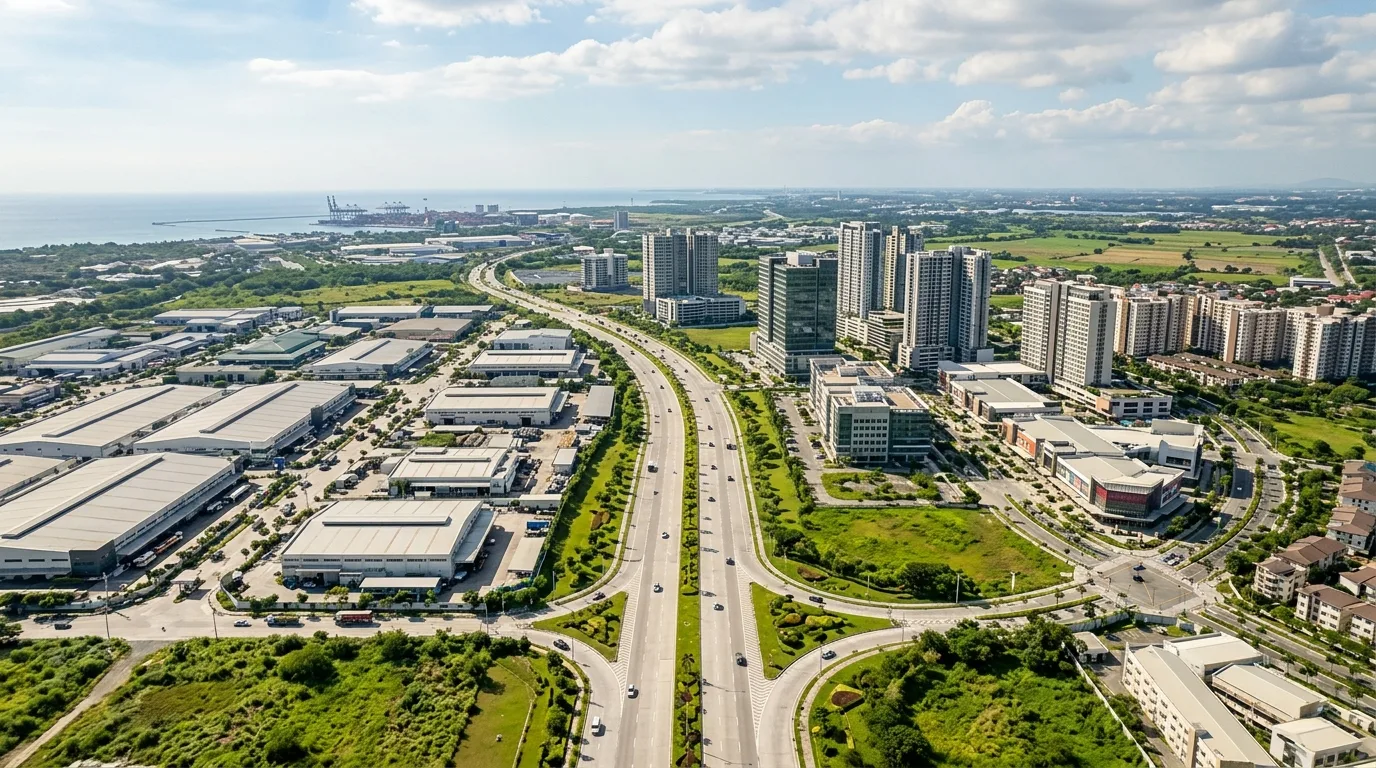
Cavite's provincial Gross Domestic Product (GDP) reached an all-time high of PHP822.15 billion, firmly solidifying its status as the second-largest provincial economy nationwide, trailing only Laguna. This sustained economic surge is propelled by the province's dynamic service, industrial, and real estate sectors.
Cavite's Economic Dominance: By the Numbers
Cavite's economic performance in 2024 underscores its vital role in the national landscape. According to the Philippine Statistics Authority's Provincial Product Accounts, Cavite's economy expanded alongside all other provinces in the country, contributing a substantial 3.7% to the national GDP . This achievement places it second only to Laguna, which remains the country's only trillion-peso provincial economy . The figures firmly establish Cavite, along with Batangas, Bulacan, and Pampanga, among the top provincial economies that collectively account for over a quarter of the nation's total economic output .
The province's economic strength is characterized by a services-dominated structure, a common feature among the country's most prosperous provinces . This reflects the increasing urbanization of its cities and the growth of trade, real estate, and business process outsourcing. While specific growth rates for Cavite's sectors are detailed in the PSA's full report, the overall performance builds on a consistent record of expansion, with the PSA highlighting that almost all provincial economies in the Philippines were predominantly services-based in 2024.
The Engines of Growth: Cities and Sectors
Cavite's impressive economic engine is powered by the collective strength of its key cities. Highly urbanized centers such as Dasmariñas, Bacoor, General Trias, and Imus serve as the province's core economic drivers . These cities are home to major technology parks, industrial zones, and a concentration of commercial and residential developments that fuel local and regional growth.
The province's industrial and manufacturing sectors continue to be bolstered by its strategic location and improving infrastructure, including the CALAX and connectivity to Metro Manila. Additionally, Cavite has seen a strong recovery in its agriculture sector, with a notable 6.67% growth in recent years, signifying diversification and a more resilient economic base. This balanced growth across services, industry, and agriculture positions Cavite as a robust and stable economy, attracting both local and foreign investors and providing ample opportunities for its residents.
