Davao — Davao City is facing a pressing challenge as its sole sanitary landfill remains under suspension due to urgent slope stabilization requirements. In response, local environmental agencies and city administrators are pivoting toward a circular economy model to manage the city's daily waste output of approximately 750 metric tons. This shift involves exploring new partnerships with neighboring municipalities for temporary waste diversion and prioritizing co-processing solutions with industrial partners. The goal is to move beyond traditional disposal methods, fostering a more sustainable system that reduces dependency on singular landfill sites.
Engineering Safety Above All
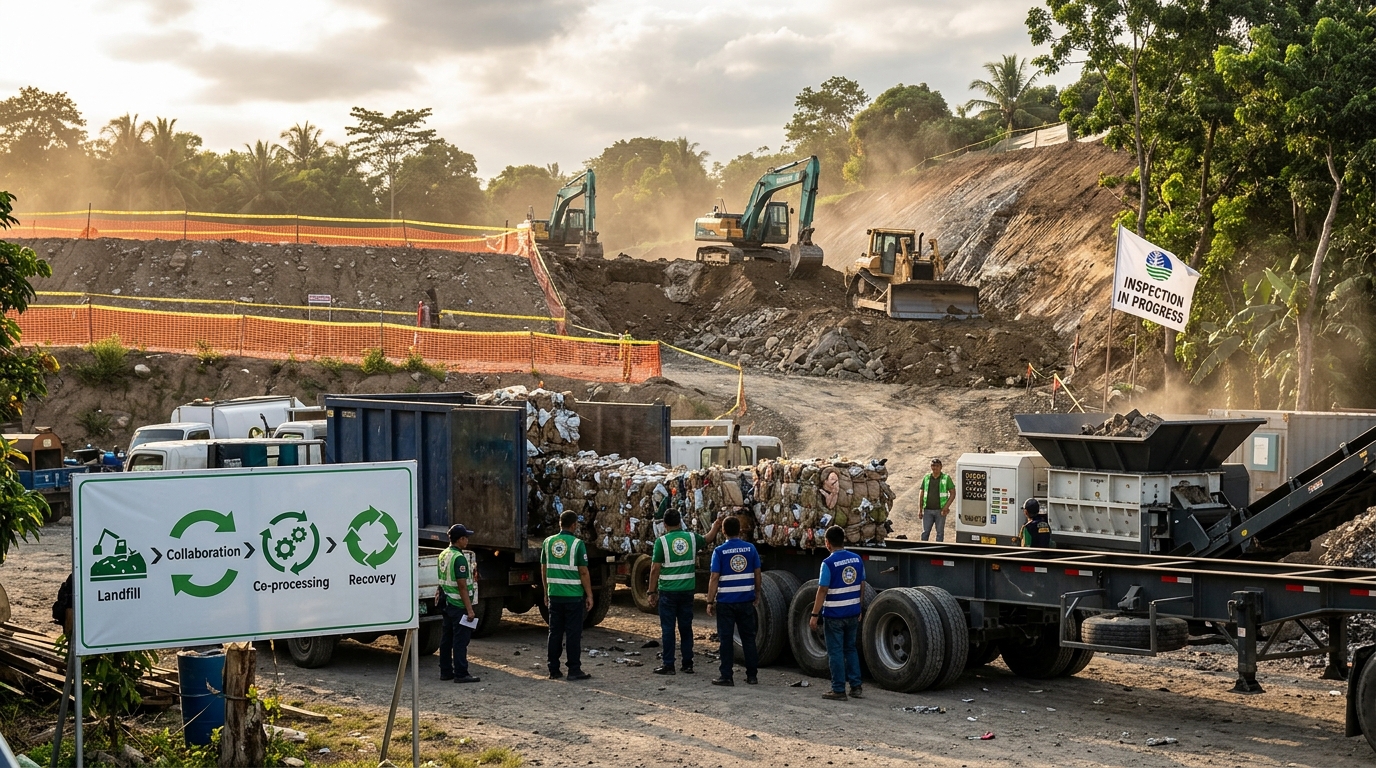
The current suspension of the landfill is a technical measure prioritized by the Department of Environment and Natural Resources (DENR-XI) to ensure the safety of the surrounding terrain and retrieval teams. Daily inspections are ongoing to monitor the stabilization progress, ensuring that when the site does reopen, it meets the highest environmental benchmarks. This rigorous approach to public safety is essential to preventing long-term hazards, even as it creates short-term logistical hurdles for the city. By prioritizing the structural integrity of the site, the government is setting a precedent for responsible land use and disaster prevention.
Collaborating for Cleanliness
To bridge the gap in disposal capacity, the city government is coordinating with adjacent local government units to manage excess residuals through shared facilities. This inter-LGU cooperation is a significant step in regional waste management, proving that neighboring cities can work together to address shared environmental pressures. Simultaneously, the city is actively exploring co-processing partnerships, which turn residual waste into alternative fuel, effectively diverting it from the landfill. This multi-pronged strategy is designed to minimize the impact on city streets and maintain hygiene standards throughout the suspension period.