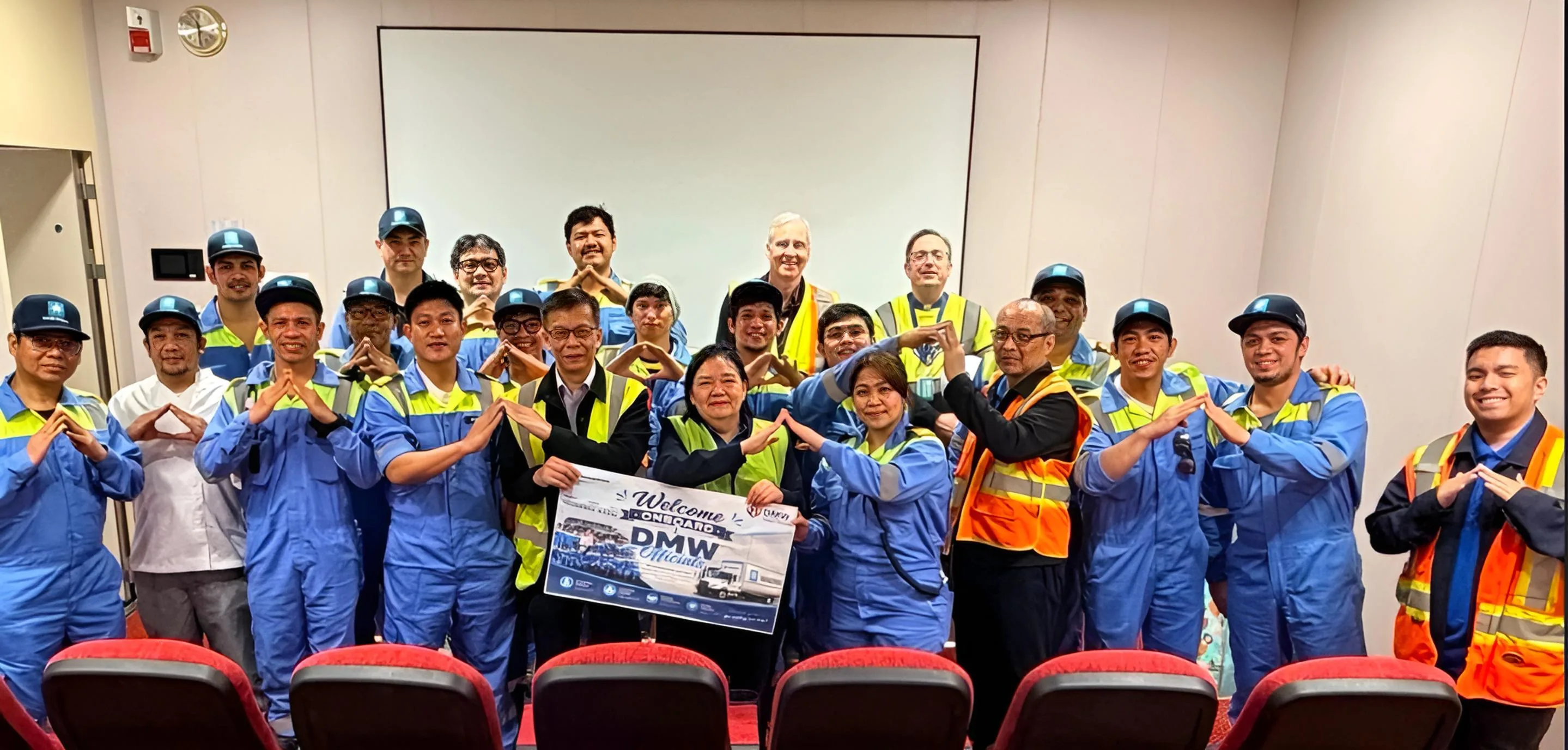
VANCOUVER, CANADA — Migrant Workers Secretary Hans Leo J. Cacdac stepped aboard the Tauranga Maersk at the Port of Vancouver on July 6, 2026, personally checking on the vessel’s 22‑member crew. Sixteen of those mariners are Filipinos, led by Chief Mate Jonafel Nabor, navigating a newly built 9,000‑TEU methanol dual‑fuel container ship on its historic first journey.
Wellness Visit on a Methanol‑Powered Vessel
The Tauranga Maersk represents the next generation of sustainable shipping, running on a dual‑fuel system that drastically cuts emissions. Secretary Cacdac toured the bridge and crew quarters, using the face‑to‑face encounter to ask seafarers directly about their working hours, health protocols, and communication links with their families back home.
He stressed that the Department of Migrant Workers treats every port call as an opportunity to listen and respond. The visit was not ceremonial but a working check to ensure that labour protections written in policy are actually felt on deck. For a crew sailing a landmark green vessel, the government’s presence sent a clear signal: Filipino innovation abroad is matched by institutional support at home.
Master and Crew Commend Filipino Excellence
Ship Master DG Dsouza briefed Cacdac on the vessel’s maiden voyage and openly praised the Filipino complement. He highlighted their technical mastery of the methanol‑injection engines, noting that the rigorous maritime training system in the Philippines produces seafarers who adapt quickly to complex, low‑emission propulsion technology.
Chief Mate Nabor, speaking on behalf of the crew, thanked the Secretary for making the trip. She attributed the team’s confidence to a demanding pre‑employment selection process, thorough safety orientations, and the steady backing of their manning agency. The crew saw the visit as proof that their government values the sacrifices of those who spend months away from loved ones.
Government Safety Nets and Family Support
Secretary Cacdac reminded the seafarers that the DMW operates 16 regional offices in the Philippines and 42 overseas posts, including the Migrant Workers Office and OWWA branches right in Vancouver. He encouraged them to report any distress affecting relatives back home, promising swift coordination with local welfare units.
Beyond crisis response, the DMW is deepening career pathways through partnerships with TESDA and MARINA. Upskilling programs now cover alternative fuel handling, advanced navigation, and leadership training to future‑proof Filipino mariners for an industry that is rapidly turning toward greener propulsion and digitalized operations.
Partnership with Mission to Seafarers
During his Vancouver stop, Cacdac also met with Reverend Peter Smyth of the Mission to Seafarers and expressed gratitude for the center’s tireless pastoral care. The mission regularly boards visiting ships to offer counselling, spiritual guidance, and practical assistance — a lifeline that complements the government’s formal protection mechanisms.
The wellness visit was jointly coordinated by MWO Vancouver, the manning agency, and the vessel’s foreign principal. This collaboration exemplifies how government, industry, and faith‑based organizations can build a holistic safety net, ensuring no Filipino seafarer feels abandoned while navigating international waters.
A Commitment That Sails Beyond Ports
The Tauranga Maersk engagement demonstrates that the administration’s OFW agenda reaches beyond capital‑based policymaking. By inserting senior officials into the daily reality of a working vessel, the DMW translates empathy into actionable intelligence that shapes future labour regulations and welfare programs.
Chief Mate Nabor’s team will continue their maiden voyage knowing that a broad support infrastructure is tracking their progress. The message from Vancouver is unambiguous: as Filipino seafarers power the world’s green transition, the government remains a steadfast partner, ready to anchor their security and advance their professional growth.