
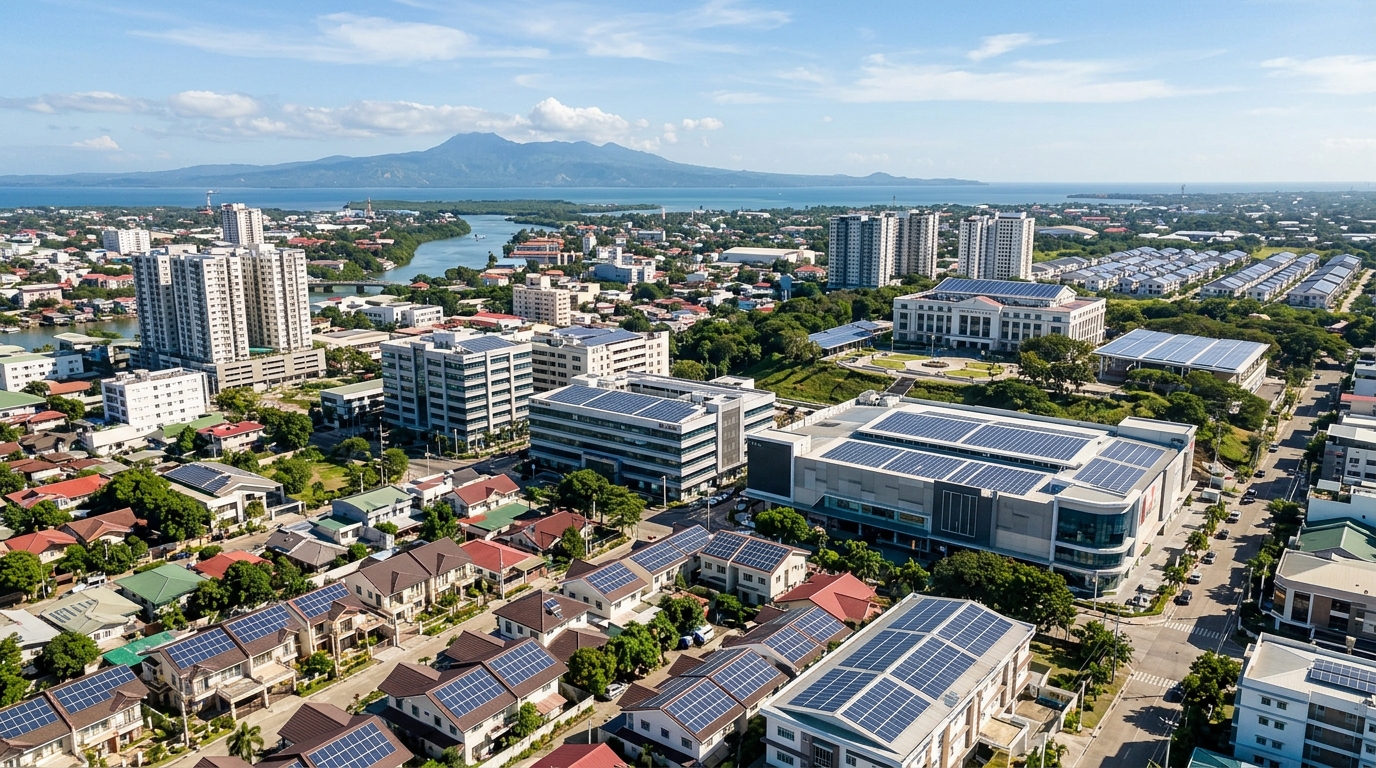
ILOILO CITY — A sweeping new directive is set to transform the cost of living and the appeal of property ownership across this UNESCO Creative City. The Iloilo City government is urging all 180 of its barangays to integrate solar power systems into their community facilities, a move designed to combat the ongoing energy crisis while insulating the city’s booming real estate market from the shock of rising global oil prices. For developers, homeowners, and tenants, the policy signals a structural reduction in operational overheads that promises to unlock new value across the residential and commercial sectors.
The initiative, codified in the Sangguniang Panlungsod's Resolution No. 2026-0236, arrives as global tensions force the national government to declare a state of energy emergency. For the real estate sector, the message is clear: Iloilo City refuses to let external instability erode its hard-won status as the Philippines’ most resilient metropolitan investment destination. "Sa aton ginatubang nga national energy emergency, kinahanglan naton ang practical kag long-term solutions," Mayor Raisa Treñas stated, emphasizing that solar energy is key to long-term stability. The City Planning and Development Office and the City Engineer’s Office have been tasked with providing technical assistance to barangays for design and implementation, ensuring the program moves beyond mere encouragement and into actionable construction.
Energy Cost Deflation Becomes the New Neighborhood Amenity
From a real estate valuation perspective, the fiscal calculus behind the mandate is compelling. Iloilo City currently consumes a staggering 5.75 million kilowatt-hours of electricity daily. By systematically slashing these energy costs at the institutional level, the local government is effectively engineering a deflationary environment for monthly association dues and operational expenses. This creates a powerful competitive advantage for homes and offices located in solar-equipped barangays, offering a clear hedge against the volatile electricity rates that typically depress consumer spending power.
The city has already gathered concrete proof of concept. A 134-panel installation at City Hall generates one-third of the building's power demand, while solar systems at public schools and dialysis centers showcase the technology's adaptability across different building typologies. These working models directly de-risk the value proposition for private actors, providing a tangible template for condominium corporations and subdivision homeowners' associations. Building on this, SMDC recently energized the first solar-powered residential development in the Visayas at its Style Residences project, a milestone expected to cut energy consumption by around 15 percent and directly impact association dues—proving that large-scale residential solar is commercially viable in Iloilo.
A RISE in Livability: From Barangay Halls to the Residential Sales Pitch
The barangay-level push integrates seamlessly into the city’s "RISE, Iloilo City" development roadmap and its WHEELS agenda, which prioritizes sustainability as a core governance pillar. For property investors, the translation is direct: enhanced public infrastructure lowers the risk profile of adjacent neighborhoods. As barangay halls, health centers, and the new iCare buildings transition to solar, nearby land values are expected to appreciate, buoyed by the promise of uninterrupted emergency power and superior municipal services.
Crucially, the policy is not confined to public buildings. Mayor Treñas explicitly extended the call to city residents, urging them to consider personal solar installations. This encouragement aligns with aggressive net metering ordinances and incentives for establishments using renewable energy, effectively paving the way for a decentralized, city-wide green grid. In a market where Colliers Philippines already notes that 17 percent of household remittances are flowing directly into real estate purchases, the "solar-ready" or "solar-integrated" label is set to become a primary differentiator, promising significantly reduced lifetime ownership costs in a post-crisis economy.