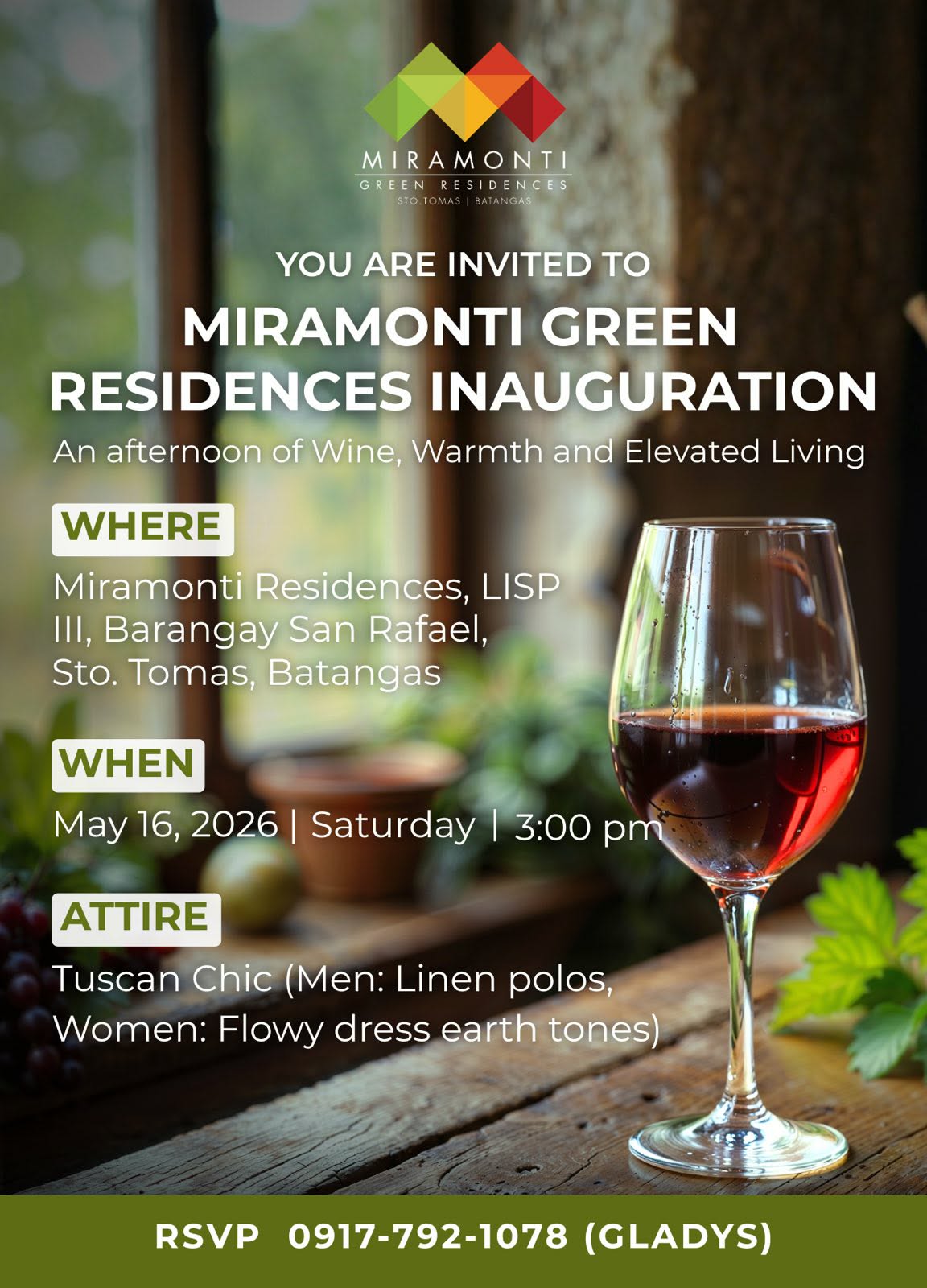
STO. TOMAS, BATANGAS — On May 16, 2026, the foothills of Mt. Makiling will witness an afternoon that has little to do with hard-hats and project brochures. Italpinas Development Corporation (IDC) is staging an inauguration for Miramonti Green Residences at LISP III, Barangay San Rafael—and it has chosen wine, warmth, and a dress code called "Tuscan Chic" to do it. The event marks the formal unveiling of a development that has been quietly reshaping Sto. Tomas into a legitimate residential destination for over half a decade, anchored by three 21-story towers that combine Italian contemporary architecture with passive green engineering.
The company chose to celebrate with a 3:00 p.m. gathering rather than a routine corporate program says something about the milestone. Miramonti is IDC's Luzon flagship, the project that proved the developer's Cagayan de Oro-honed sustainability model could travel north and find demand. The May 16 event, with its deliberately unhurried format, is both a thank-you to buyers and a signal that the community has reached a state of completion where living, not just buying, is underway.
A Mountain-View Master Plan Years in the Making
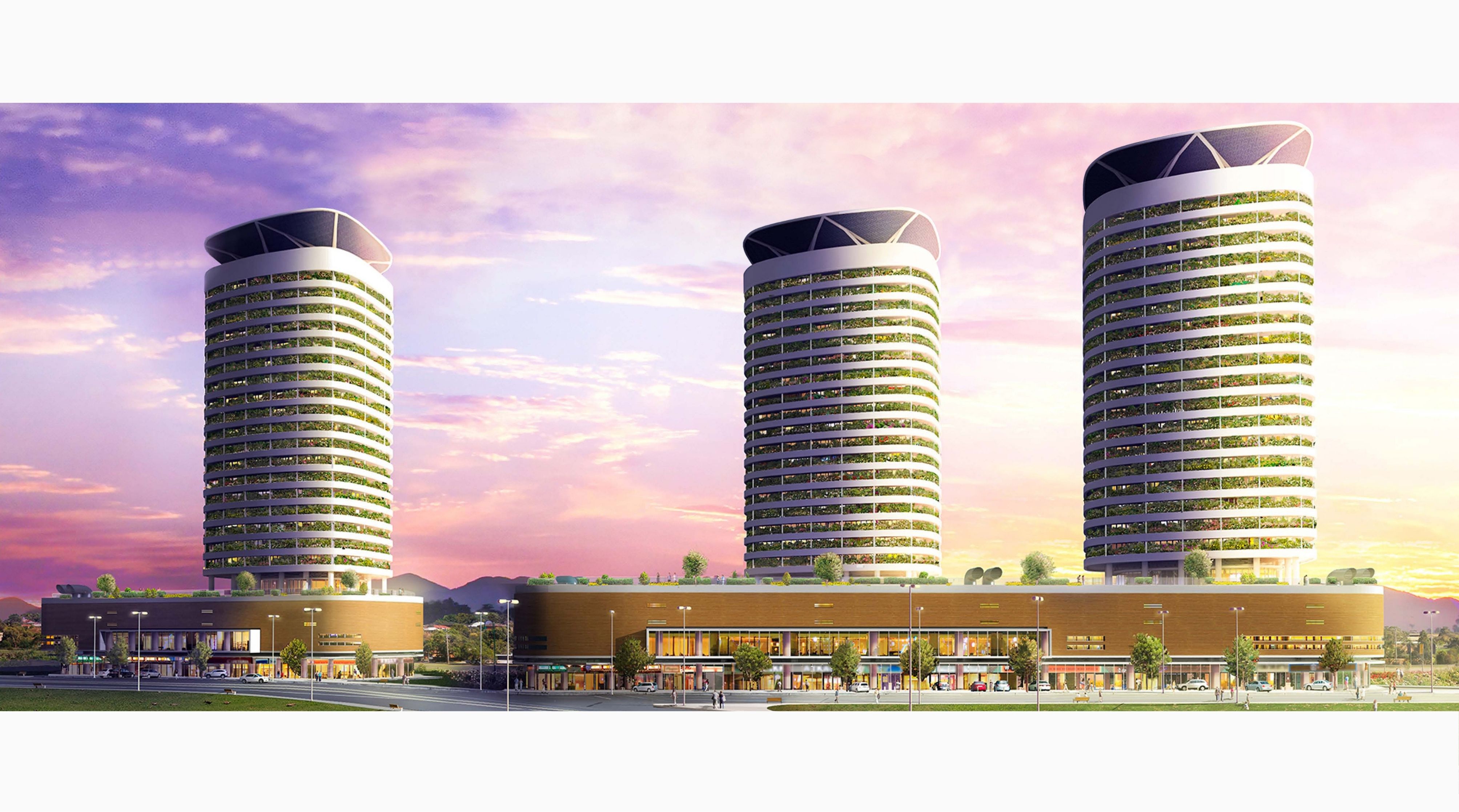
Miramonti—Italian for "mountain views"—was never conceived as a single-building proposition. The master plan spans two phases with three towers positioned on a commercial lot at the doorstep of the Light Industry & Science Park III, the 124-hectare PEZA-accredited industrial estate that has drawn high-tech manufacturing and logistics operators to Sto. Tomas. The first phase, which forms the centerpiece of the May 16 inauguration, delivered 352 residential units, 20 commercial spaces, and 88 parking slots, all wrapped in a building envelope designed to reduce energy consumption through natural ventilation, solar panels, and a water recycling system. The second phase, a joint venture expansion, is set to add further capacity on an adjacent parcel.
What makes the Miramonti formula distinct is its commitment to EDGE certification from the International Finance Corporation, a World Bank-backed green building standard that IDC has pursued across its entire portfolio. The firm was the first developer in East Asia to complete a certified condominium, and Miramonti extends that track record into Luzon territory. For buyers, the certification translates into lower common-area electricity costs—solar panels power shared amenities—and a structural advantage in a market where sustainability has moved from niche preference to purchase criterion.
An Inauguration That Speaks the Language of Lifestyle
The invitation itself is a statement. "An Afternoon of Wine, Warmth and Elevated Living" sets a tone far removed from a typical turnover ceremony, and the "Tuscan Chic" attire—linen polos for men, flowy earth-tone dresses for women—suggests an event conceived as a community gathering rather than a corporate obligation. The choice of "wine" and "warmth" as anchoring themes aligns with the broader branding IDC has cultivated since its 2009 founding: Italian design sensibility paired with Filipino hospitality, a fusion embodied by its Italian-Filipino leadership team of Founder and Chairman Arch. Romolo Nati and CEO Giuseppe Garofalo.
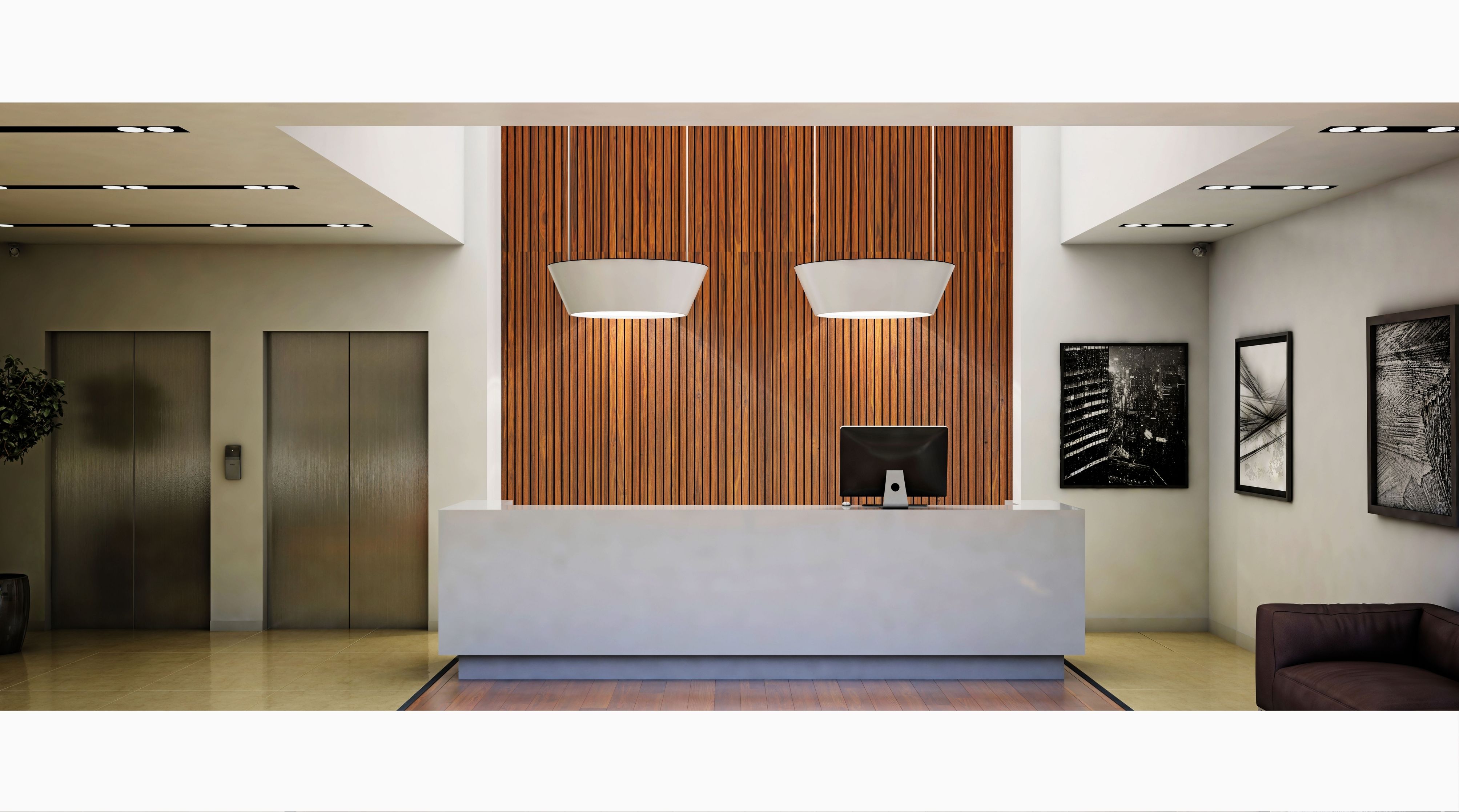
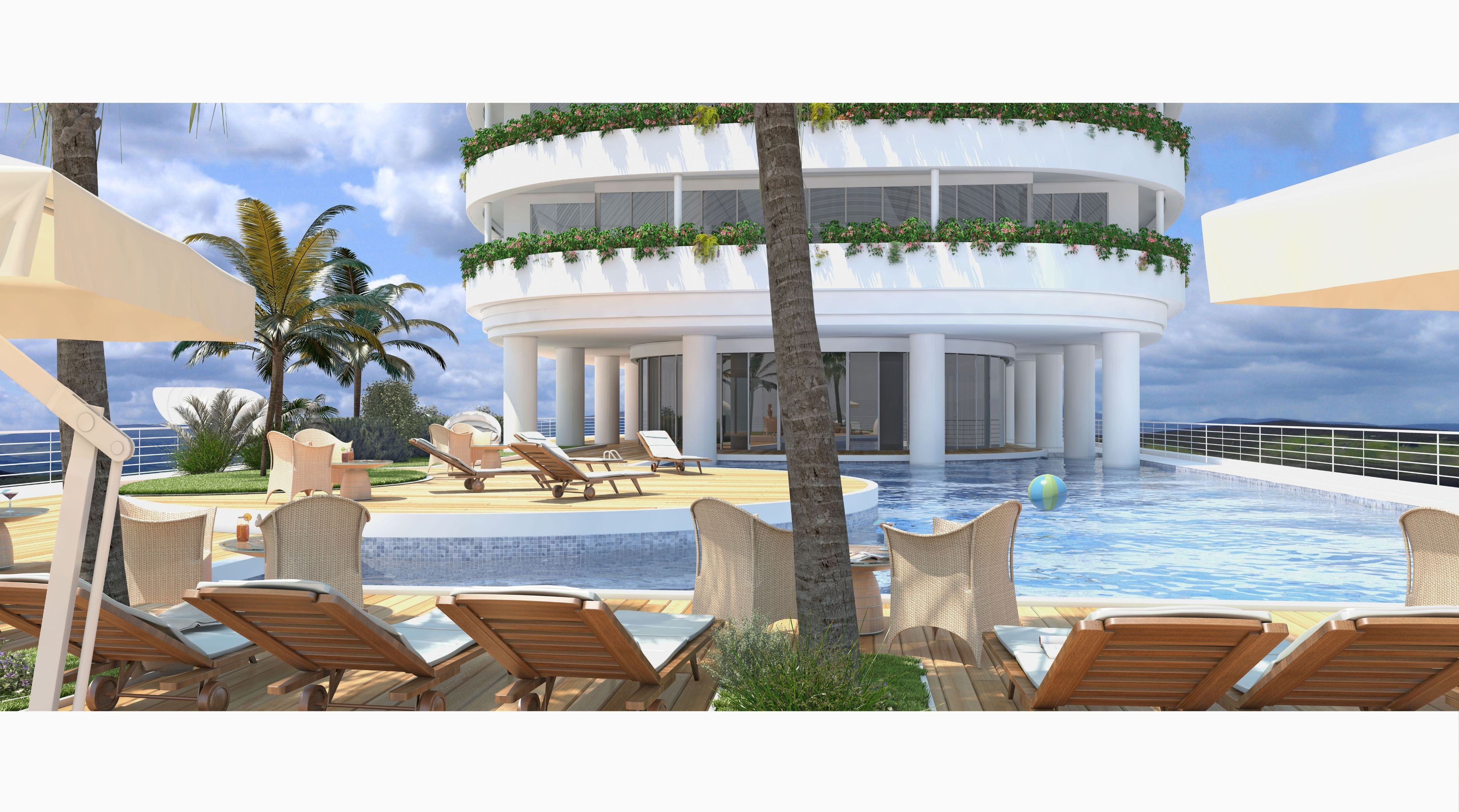
The inauguration also serves an unspoken but important function: activating the resident community. Miramonti's amenity deck includes a fitness gym, swimming pool, children's playground, function rooms, and Wi-Fi-enabled common areas—facilities that only become meaningful when occupied. An event that draws homeowners into those spaces reinforces their value and accelerates the social infrastructure that transforms a condominium complex into a neighborhood.
Sto. Tomas Emerges as a Growth Corridor
IDC's decision to plant its Luzon flag in Sto. Tomas was early and deliberate. The municipality sits at the southbound exit of the South Luzon Expressway, roughly an hour from Makati and Alabang, and has become one of Batangas' fastest-growing industrial and residential hubs. LISP III alone hosts over 100,000 industrial park managers and employees, creating a built-in rental and purchase market that developers have been quick to serve. The area also draws interest from OFW remittance recipients—CALABARZON accounts for the highest regional proportion of overseas workers in the country—who channel savings into property acquisition in familiar provincial settings.
Miramonti's location within a PEZA zone further differentiates it from conventional residential developments. Proximity to duty-free, tax-incentivized industrial estates translates into a tenant pool of engineers, managers, and skilled workers with stable incomes and employer-backed housing subsidies. For investors purchasing units with rental income in mind, that employment density provides a direct hedge against vacancy risk.
Sustainability as a Competitive Moat
At a moment when developers across the Philippines are adopting green marketing language, Miramonti's passive green design—external louvers, natural cross-ventilation, rainwater harvesting—operates as a measurable differentiator rather than a cosmetic label. The building's solar panels produce electricity for shared amenities, lowering association dues and insulating residents from the full impact of rising power costs. Those operational savings, modest as they may sound on a monthly basis, compound into a meaningful price advantage over decades of ownership.
The inauguration arrives as IDC continues to expand into Palawan, Boracay, Bataan, and Bukidnon, but its financial footing rests in part on the performance of established projects like Miramonti. The May 16 celebration is, in that sense, a bookend to a chapter that began with early financing secured years ago and has now matured into a revenue-generating, occupied community. For the guests arriving in linen and earth tones, the afternoon is a toast. For the developer, it is the sound of a thesis validated.