PHILIPPINES — On the last Monday of April 2026, inside the central office of the Department of Human Settlements and Urban Development (DHSUD), a conversation unfolded that could determine the trajectory of millions of Filipino families seeking homes. The Kizuna Communities—a consortium of Japanese developers—sat across from Secretary Jose Ramon Aliling and asked, with the directness characteristic of international investors, a single threshold question: can you guarantee that the program will remain free of corruption?
The question was not rhetorical, nor was it a formality. It was the gate through which every subsequent commitment would pass. Aliling, who has built his tenure on an 8-Point Agenda that places integrity at its operational center, answered without equivocation. He assured the group that he would personally monitor the entire process to ensure corruption-related intervention would find no foothold. Local partners in the room vouched for his unblemished track record. By the meeting's close, Kizuna Communities had committed to participate in the nationwide implementation of the Expanded Pambansang Pabahay para sa Pilipino (4PH) Program, initially pledging to undertake two socialized housing projects within the year. Senior Undersecretary Eduardo Robles Jr., head of the Expanded 4PH Project Management Office, pledged to assist the Japanese consortium in implementing their projects.
The meeting's significance extends beyond a single handshake or a pair of housing projects. It represents a structural signal to the global investment community that the Philippines' flagship housing program has crossed a credibility threshold—one that foreign capital, historically hesitant to enter public-sector housing in developing markets, recognizes and rewards. "As long as the Expanded 4PH Program is corruption-free, more investors will participate," Aliling said. "The high credibility of DHSUD should always be maintained to make Expanded 4PH sustainable." The sequence is instructive: credibility attracts capital, capital enables scale, and scale is what the country's 6.5-million-unit housing backlog demands.
From Credibility to Capital: The Investment Logic
The Kizuna Communities' entry into the Philippine mass housing sector was not an impulsive gesture. The consortium had been the subject of sustained engagement by DHSUD, conversations in which the Japanese side consistently raised governance and transparency as their primary concerns. Their decision to move forward—even at an initial level of two socialized housing projects—reflects a calculated bet that the anti-corruption architecture Aliling has instituted is durable enough to protect their investment.
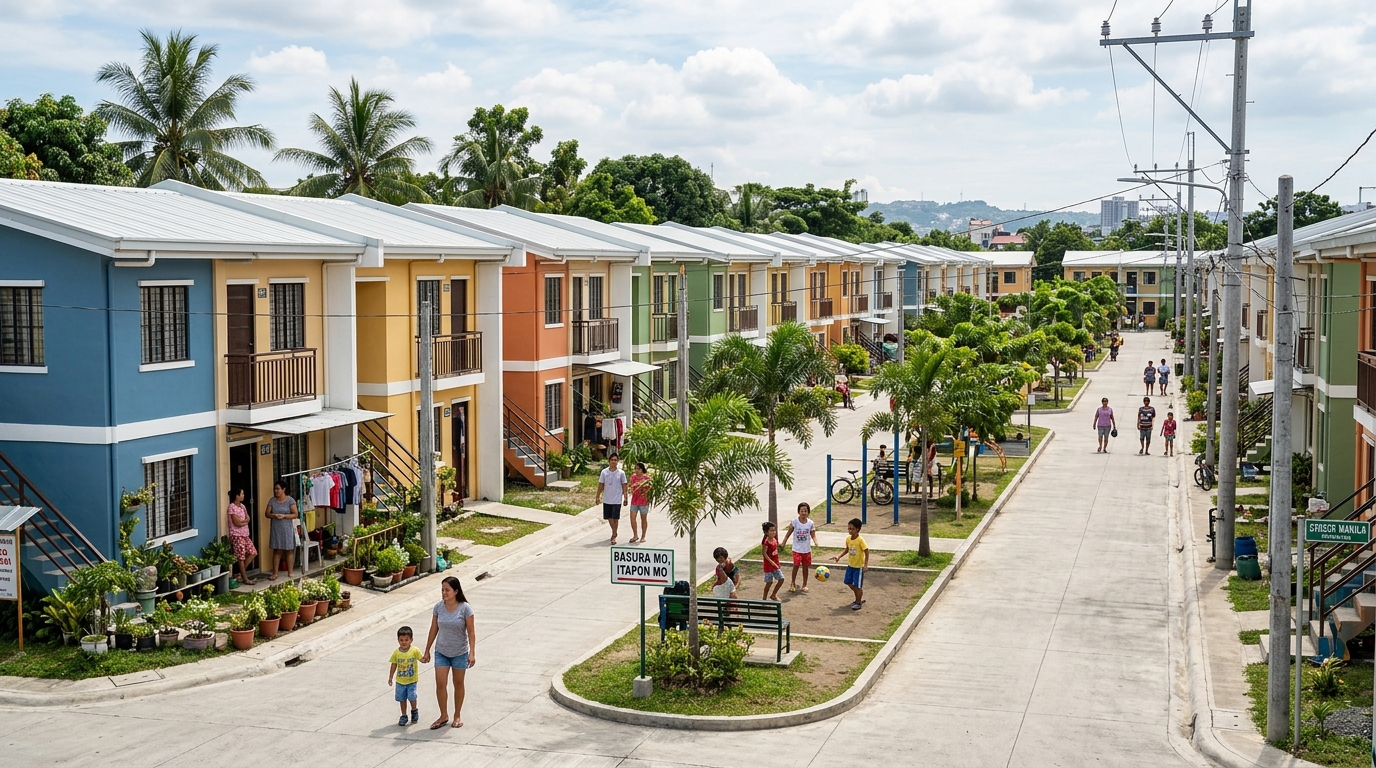
The implications for the broader real estate sector are both immediate and medium-term. The Expanded 4PH Program has already delivered results on the ground: the Palayan City Township in Nueva Ecija has turned over units to 198 families, with monthly amortizations as low as PHP4,005. Housing fairs in Calamba, Cebu, and Pampanga have drawn thousands of attendees and showcased tens of thousands of units from accredited developers. The program's modalities now span vertical and horizontal housing, rental housing, the Enhanced Community Mortgage Program, incremental housing, temporary shelters, and high-density housing for highly urbanized areas. With the entry of foreign capital, the velocity of project delivery is poised to accelerate.
The Signal That Travels Beyond the Boardroom
Aliling understands that the Kizuna Communities commitment is a test case. "Ang patuloy na pagpasok ng mga respetadong kompanya, at mga foreign investors kagaya ng Kizuna Communities ay patunay sa tumataas na kredibilidad ng DHSUD at ng Expanded 4PH ng Pangulong Marcos Jr.," he said. The statement, rendered in Filipino, carries a deliberate inclusiveness: it is not a boast but an invitation, directed at the other international firms evaluating whether the Philippine mass housing sector is ready for their capital.
The Philippine property market in 2026 is operating on diverging trajectories. Colliers Philippines has reported that Metro Manila's residential vacancy rate has risen to 24.7 percent, with approximately 12,900 new units slated for completion this year. But outside the capital, the picture is markedly different—house-and-lot take-up rates in the Visayas-Mindanao region reached 92 percent in the first quarter, with Iloilo City posting 96 percent. The Bangko Sentral ng Pilipinas has documented that 17 percent of household remittances now flow into real estate. Into this landscape of uneven demand, the Kizuna Communities' entry introduces a new variable: foreign institutional capital channeled not into premium condominiums or commercial towers but into socialized housing, the segment where the backlog is deepest and the need most acute.
The two socialized housing projects that Kizuna Communities has initially committed to will, upon groundbreaking, function as proof of concept. Local partners have already been identified. Robles and the Expanded 4PH team have been tasked with providing operational support to shepherd the Japanese consortium through permitting, site identification, and compliance. If those first two projects deliver on time and within budget—and if the anti-corruption safeguards Aliling has personally guaranteed hold firm—the pipeline of Japanese investment is likely to expand well beyond the initial pledge.