Cagayan de Oro is currently wrapped in the warmth of its peak summer season, but for the locals, the true heat of the city is found in its traditional morning snacks and heritage street foods. As of May 3, 2026, the city’s culinary landscape is being celebrated through a renewed focus on "Slow Food" traditions, emphasizing ingredients sourced directly from the fertile hinterlands of Northern Mindanao. From the rhythmic whisking of hot chocolate in local markets to the distinctive "frog-shaped" steamed corn cakes, these delicacies offer a nostalgic window into the city’s past. Visitors arriving this week are finding that the "City of Golden Friendship" is best introduced through its humble, hand-wrapped treats that have sustained generations of Kagay-anons.
The Iconic Leap of the Binaki
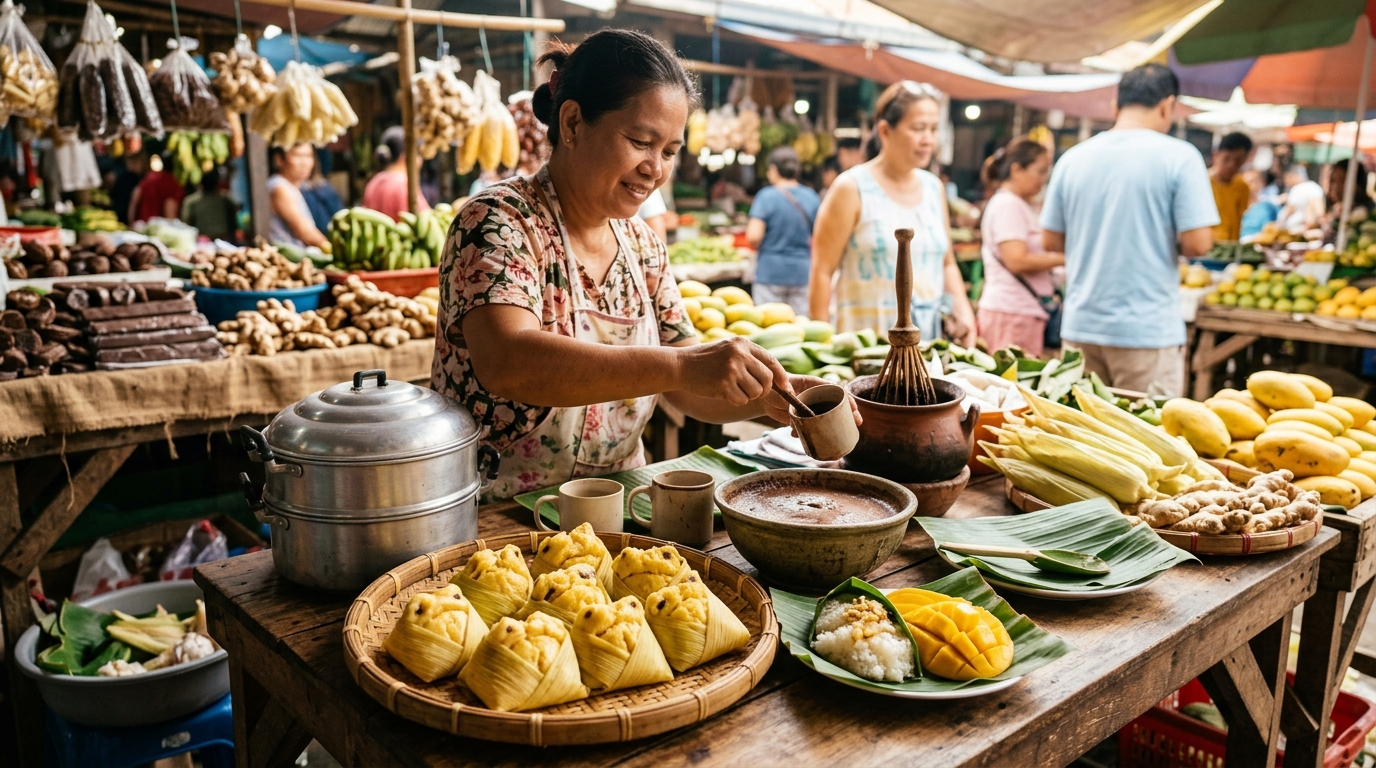
One of the most recognizable sights in the city’s public markets is the Binaki, a sweet steamed corn cake that serves as the definitive native delicacy of Northern Mindanao. Derived from the local word "baki" (frog), these cakes are uniquely wrapped in corn husks to resemble a crouching frog, a shape that has become synonymous with CDO’s street food identity. The preparation involves scraping young corn kernels and mixing them with milk and sugar before steaming them to a soft, pudding-like consistency. In early May, these treats are a staple for travelers heading to the nearby Bukidnon highlands, providing a portable and delicious piece of the region’s agricultural heritage that is best enjoyed while still warm from the steamer.
Morning Rituals of Sikwate and Puto Maya
For many Kagay-anons, the day does not truly begin without the classic pairing of Puto Maya and Sikwate. This breakfast powerhouse consists of glutinous rice steamed with fresh ginger and coconut milk, creating a fragrant, slightly spicy base that is traditionally paired with a thick, frothy hot chocolate made from pure cacao tablea. Vendors at the Cogon and Carmen markets are particularly busy this week, serving these staples to early-morning commuters and tourists alike. This ritual is often accompanied by a slice of ripe mango, creating a perfect trifecta of sweetness, richness, and spice that embodies the tropical lifestyle of the city.
Resilience and Heritage in Every Bite
The CDO food scene is also a story of resilience, best exemplified by the popularity of Nanay Choleng’s Muron. Originally a delicacy from Tacloban, this chocolate-infused sticky rice treat became an accidental CDO staple after its creators relocated to the city following the devastation of Typhoon Yolanda, proving that culinary heritage can find new roots in the face of adversity. Similarly, the traditional Keseo (local white cheese) remains a cherished link to the old Cagayan de Oro, made from fresh carabao milk using artisanal methods passed down through families. These snacks are more than just food; they are edible archives of the city’s history, social changes, and its enduring ability to welcome and integrate new flavors into its golden identity.