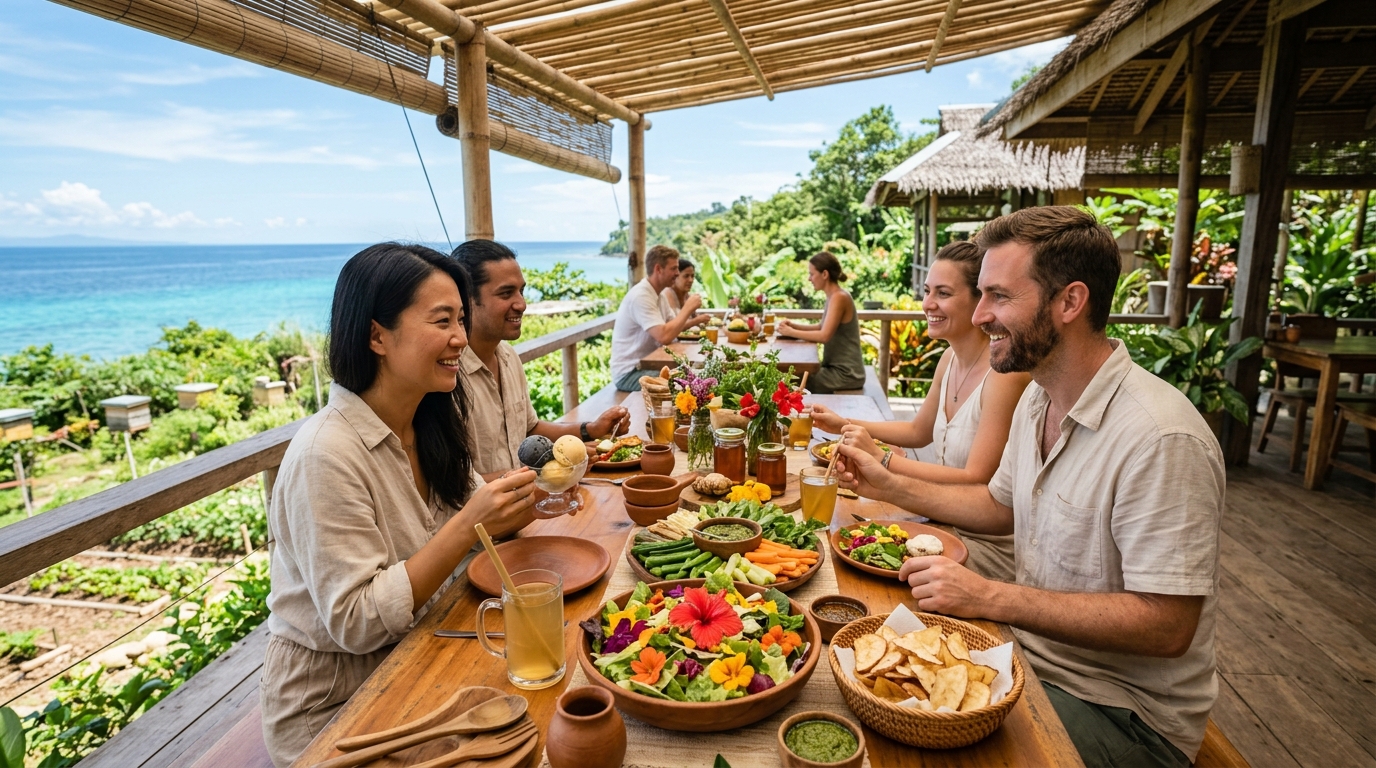
Located on the secluded cliffs of Dauis, the Bohol Bee Farm has transcended its origins as a simple agricultural project to become the island’s most influential eco-gastronomy destination. As of late April 2026, the farm is celebrating a surge in "wellness travelers" who arrive specifically for its organic, farm-to-table buffet and world-famous coconut milk ice cream. The establishment has long been a pioneer in sustainable tourism, integrating bee conservation with a massive organic garden that supplies nearly 90% of the restaurant’s ingredients. This week, the farm is being highlighted as a model for "regenerative dining," where every meal consumed directly contributes to the preservation of Bohol’s native bee populations and biodiversity.
Innovation in Organic Flavors
The restaurant at Bohol Bee Farm is famous for turning unconventional garden finds into gourmet staples, such as their flower salads and honey-infused dressings. As of April 23, 2026, their "Charcoal Ice Cream" and "Ginger Honey Tea" remain the most talked-about items for visitors exploring the Panglao-Dauis corridor. By avoiding synthetic additives and focusing on the natural sweetness of their own honey, the kitchen provides a "clean" dining experience that resonates with the global health-conscious market. Every dish is a colorful celebration of what the Boholano soil can produce when treated with ecological respect.
A Holistic Experience for the Senses
Beyond the dining table, the farm offers a multi-sensory journey through its lush gardens, craft demonstrations, and ocean-view balconies. Visitors this week have noted the "serene and quiet" atmosphere that contrasts sharply with the busy tourist strips of nearby Alona Beach. The facility includes a souvenir shop where the same ingredients used in the kitchen—like cassava chips and pesto spreads—can be purchased to take home. This "educational dining" model helps guests understand the complex relationship between the food they eat and the pollinators that make it possible.
Driving the 2026 Green Tourism Agenda
As a cornerstone of the Bohol Island UNESCO Global Geopark, the farm plays a critical role in educating the public about environmental stewardship. Recent reports from late April indicate that the farm’s sustainable practices, such as water recycling and composting, are being adopted by newer resorts across the province. This "multiplier effect" ensures that the Bee Farm's influence extends far beyond its own boundaries, shaping the future of Bohol’s tourism industry. For the traveler in 2026, a visit here is more than just a meal; it is an endorsement of a future where luxury and nature coexist in harmony.