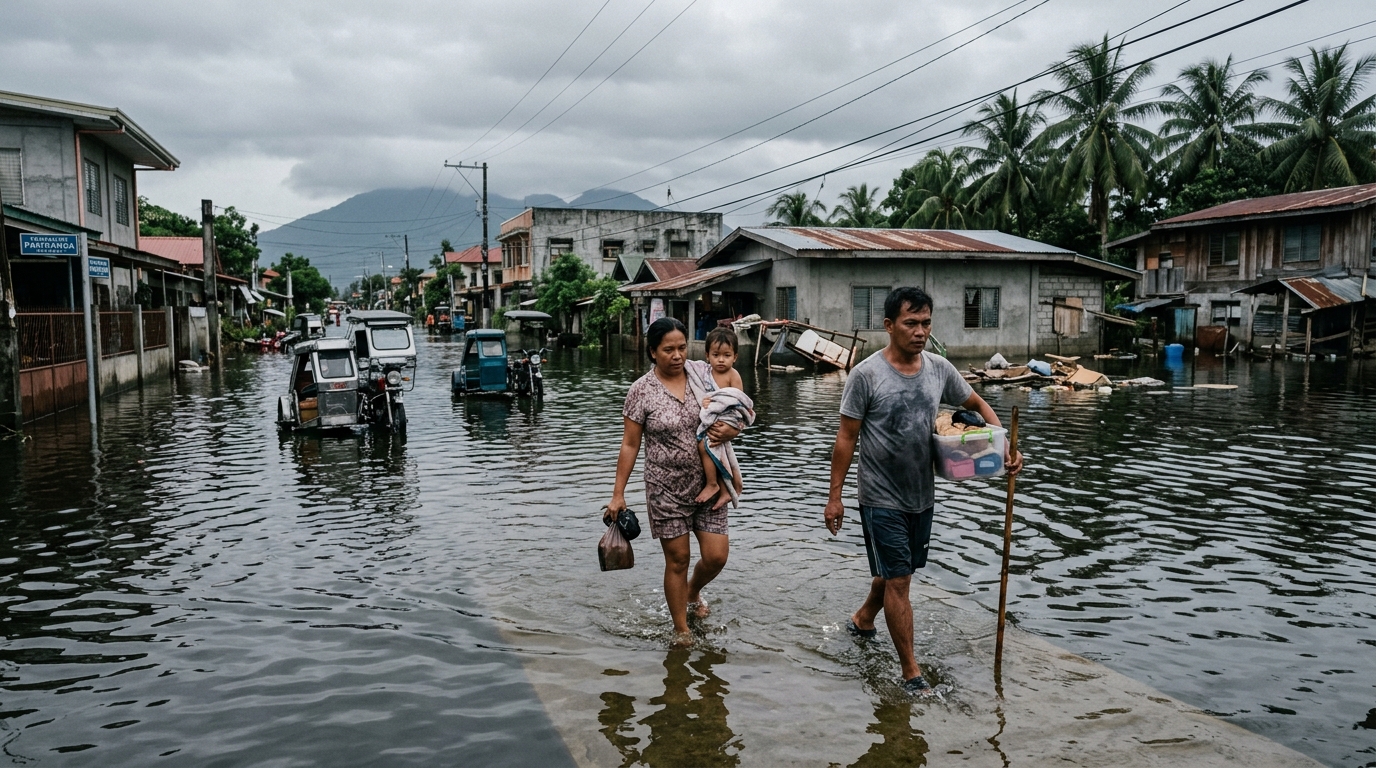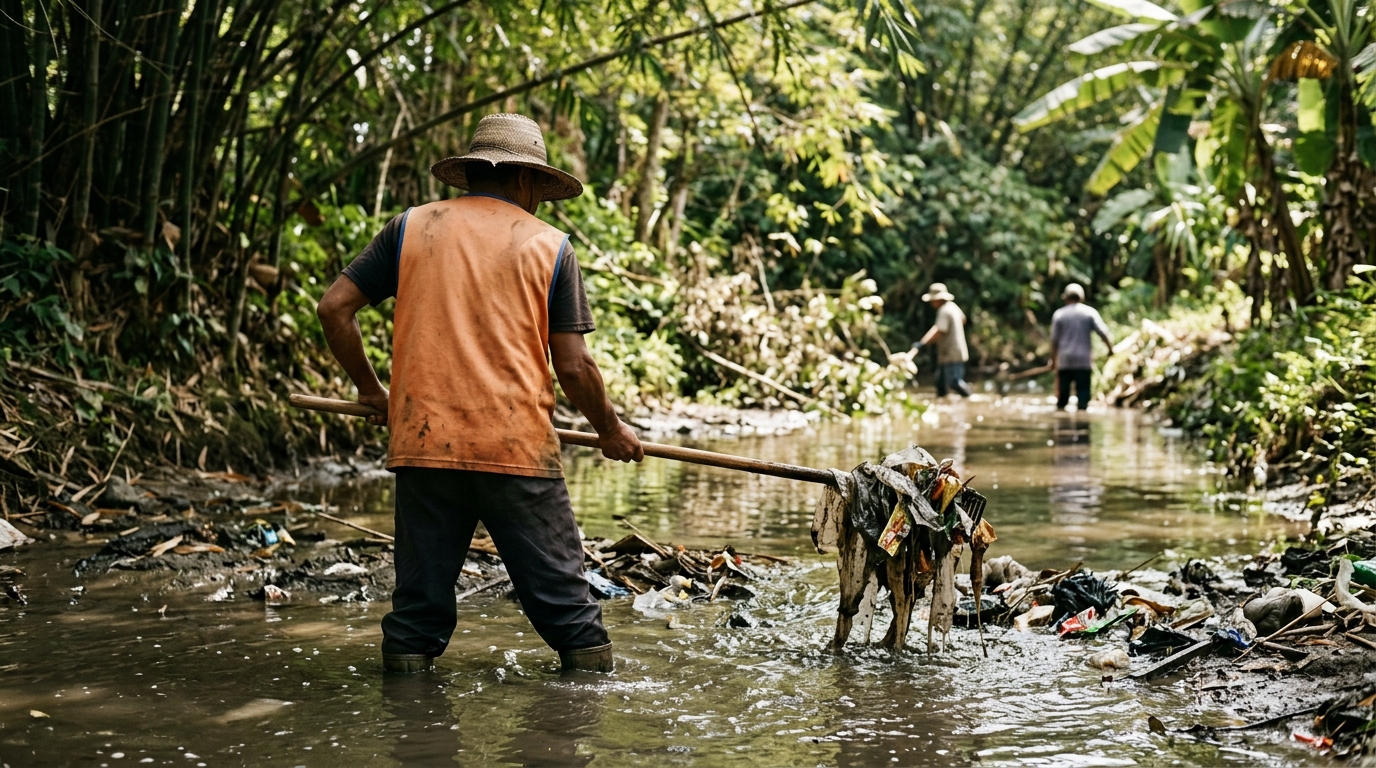
ILOILO CITY — On May 19, 2026, the city government launched the "Creek Cleaning Oplan Kontra Baha" in Barangay Ticud, La Paz district—a month‑long, multi‑agency intervention that put 70 displaced and disadvantaged workers on the banks of the heavily silted Jaro River system. The initiative, led by the Department of Labor and Employment Region 6, the Department of Public Works and Highways Region 6, and the Iloilo City Government, is the most targeted flood‑mitigation drive the city has mounted this year. Its logic is both simple and overdue: clear the waterways that have choked neighborhoods during every rainy season, and do it with the very residents who live along those waterways.
Mayor Raisa Treñas led the launch, joined by DOLE‑6 Regional Director Atty. Sixto Rodriguez, DPWH‑6 officials, and Police Colonel Alladin Dingal of PRO‑6. "Ini nga proyekto indi lamang clean‑up activity kundi isa ka investment sa public safety, environmental protection, kag disaster preparedness sang aton siyudad," Treñas said. The framework deploys the Tulong Panghanapbuhay sa Ating Disadvantaged/Displaced Workers (TUPAD) program, giving each beneficiary a daily wage of ₱550—₱17,050 over 31 days—while they remove the accumulated waste that has turned the Jaro River into a recurring flood hazard. Rodriguez framed the program as a convergence of two mandates. "Through programs like TUPAD Oplan Kontra Baha, our aim is to provide an opportunity for employment to vulnerable workers and also to empower communities to take part in environmental protection and disaster mitigation initiatives."
Seven Barangays, One Waterway, and a Strategy Beyond the Cleanup
The workers are drawn from seven flood‑prone barangays: Banuyao, Baldoza, Caingin, Hinactacan, Tabuc Suba, Ingore, and Ticud—communities whose residents have long watched the water rise during even minor rainfall because clogged creeks leave it nowhere else to go. Their task covers the stretch from Hinactacan to Ticud in La Paz, and from Ticud to Tabuc Suba in Jaro, a corridor where silt and debris have accumulated over years of inadequate maintenance.
General Services Office head Engr. Neil Ravena said the Jaro River clearing is only the first phase. The broader plan includes installing 12 waste traps at upstream and downstream points, creating a system that will identify exactly which barangays are generating the waste that clogs the waterway. "Sometimes barangays point fingers at one another regarding where the garbage is coming from. Through the waste traps, we will be able to identify the sources of the waste," Ravena said. The data‑gathering dimension of the project transforms it from a one‑time cleanup into a diagnostic exercise—one that will inform enforcement and behavioral interventions long after the 31‑day program ends.
The cleanup also partners with the Department of Public Works and Highways and the city's General Services Office for in‑water debris removal, while beneficiaries of the Pantawid Pamilyang Pilipino Program will later be involved in community service to sustain the cleared riverbanks. Treñas confirmed plans to expand the clearing operations to other districts, with Molo and Jaro next in line. "This project reminds us nga kon matinluan naton ang aton ugsaran, kita man mismo ang makabenepisyo," she said. The Hiligaynon phrasing carries a directness that translation softens: when you clean your own doorstep, you are the one who benefits.
A Palliative That Points Toward a Permanent Fix
Ravena was candid about the initiative's scope. While Oplan Kontra Baha has conducted previous cleanups, he described them as "palliative solutions"—temporary relief for a chronic condition. The difference this time is the integration with DOLE‑TUPAD, which embeds the labor force within the communities most affected. "The reason why we connected with DOLE‑TUPAD is to strategize correctly how we can solve the problem of throwing waste in our waterways," he said. The strategy recognizes that a river choked with garbage is not only an infrastructure problem but a behavioral one, and that the people best positioned to change behavior are the neighbors who live alongside it.
The cleanup complements other flood‑mitigation measures already underway, including dredging at Rizal Creek and the Batiano River, the city's adoption of a "Sponge City" strategy, and a ₱250‑million flood control allocation for 2026. The 12 waste traps, once installed, will provide granular data that the city has never had: a barangay‑level accounting of where the plastic, the diapers, and the household refuse are entering the water system. That data, in turn, can be used to target enforcement and education efforts with the precision that previous cleanup drives lacked. For the 70 TUPAD workers now pulling waste from the Jaro River, the 31‑day program is a wage and a purpose. For the city, it is a diagnostic tool, a flood defense, and a quiet assertion that even palliative care, when delivered strategically, can point the way to a cure.