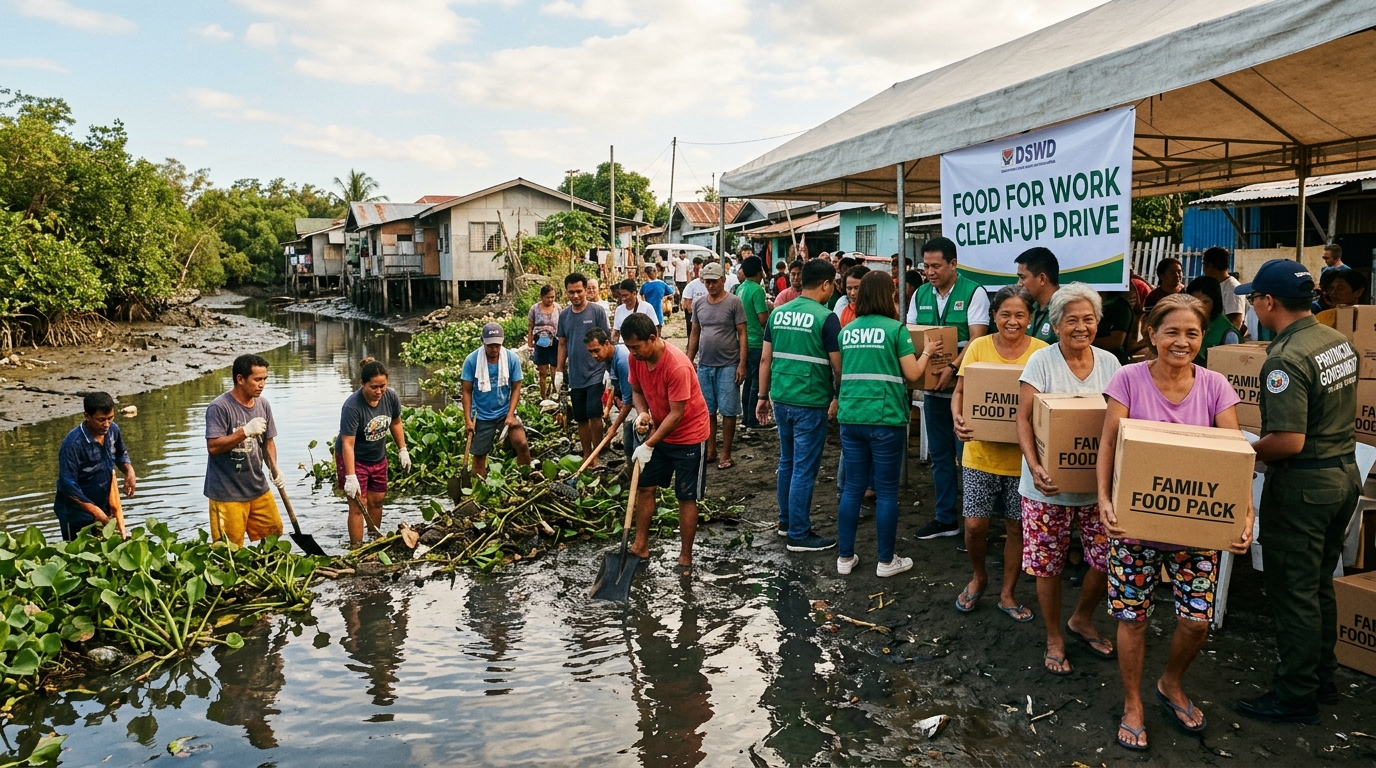
More than 10,000 residents of coastal barangays in Minalin and Macabebe received family food packs from the Department of Social Welfare and Development on June 8, 2026, in exchange for participating in local clean-up drives aimed at disaster preparedness and environmental protection. The program, titled "Clean-Up Drive in the Coastal Areas of Pampanga: A Community Empowerment and Disaster Preparedness Project," was undertaken in partnership with DSWD Field Office III and the Pampanga provincial government.
Beneficiaries came from seven barangays: Bulac, Dawe, Saplad, and Maniango in Minalin (4,431 beneficiaries), and Dalayap, San Esteban, and Consuelo in Macabebe (5,678 beneficiaries) . The initiative was designed to assist vulnerable households while clearing out drainage canals and coastal areas ahead of the rainy season, addressing both food security and flood risk reduction simultaneously.
Combining Livelihood Assistance with Environmental Action
The program's structure is simple but effective: residents receive food assistance in exchange for labor that benefits the entire community. The clean-up drive targeted drainage canals and coastal areas that are prone to clogging and flooding during heavy rains, helping to reduce the risk of inundation when the rainy season arrives . This preventive approach aligns with the provincial government's broader strategy of shifting from reactive disaster response to proactive disaster risk reduction.
The operation was led by the Provincial Social Welfare and Development Office (PSWDO) and the Provincial Disaster Risk Reduction and Management Office (PDRRMO), with Vice Governor Dennis "Delta" Pineda spearheading the distribution alongside municipal mayors and DSWD representatives . Beneficiary Grace Ronquillo of Barangay Saplad expressed her gratitude: "Laking pasasalamat po namin sa Kapitolyo sa paghatid ng ayuda mula sa DSWD. Nakakatuwa po na sa programang ito ay nakatulong din kami sa paglilinis ng aming paligid".
Building Community Resilience Before the Rains Arrive
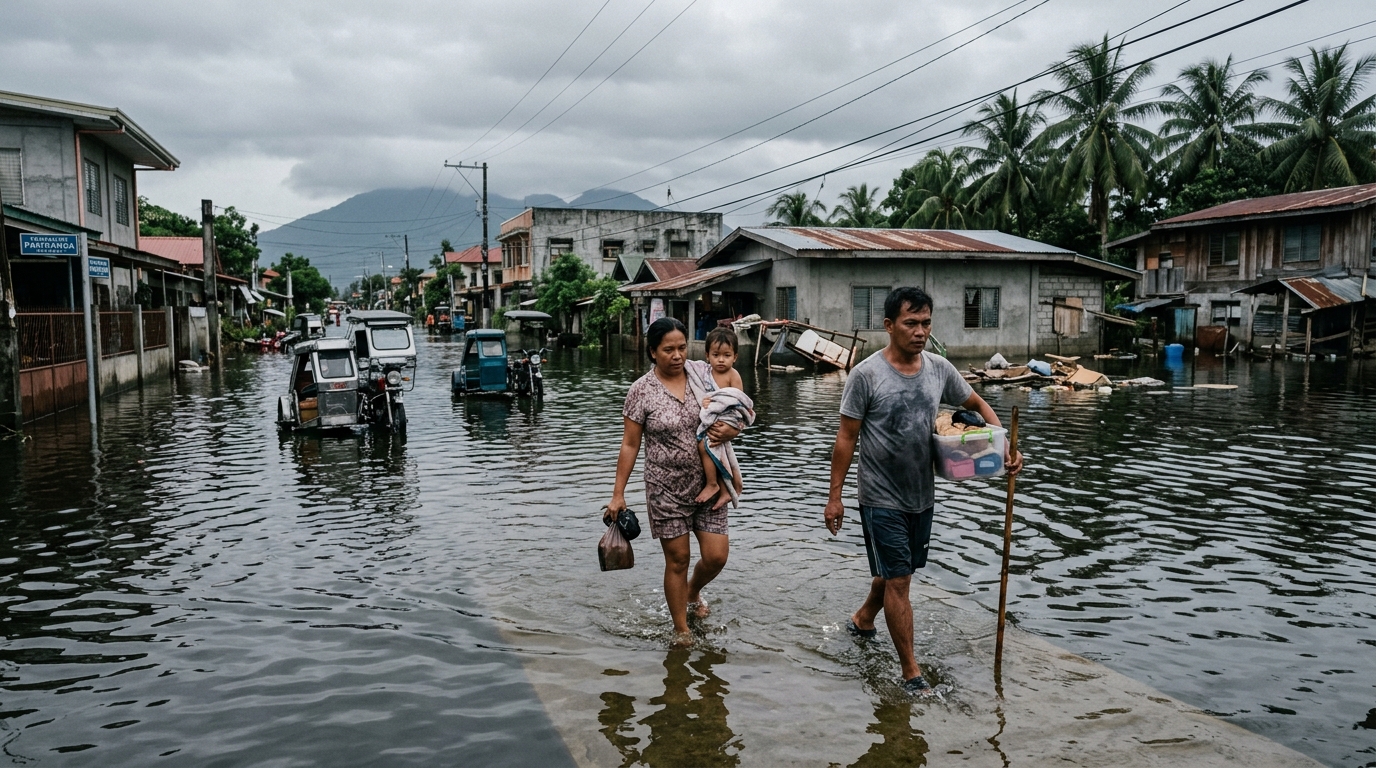
For coastal communities like Minalin and Macabebe, which are particularly vulnerable to flooding and storm surges, the program serves a dual purpose. The food packs address immediate food security concerns, while the clean-up activities build long-term community resilience by keeping drainage systems clear and reducing flood risks . This model ensures that aid is not simply handed out but is earned through labor that benefits both the recipients and their neighbors.
The timing of the program is critical. With the rainy season approaching, clearing drainage canals and coastal areas helps prevent the accumulation of debris that can worsen flooding . By engaging residents in the clean-up effort, the program also fosters a sense of ownership and responsibility for maintaining these infrastructure improvements, encouraging ongoing community-led maintenance beyond the duration of the DSWD project . For the 10,109 families who participated, the program provided not only food assistance but also the satisfaction of contributing to their own community's safety and well-being.