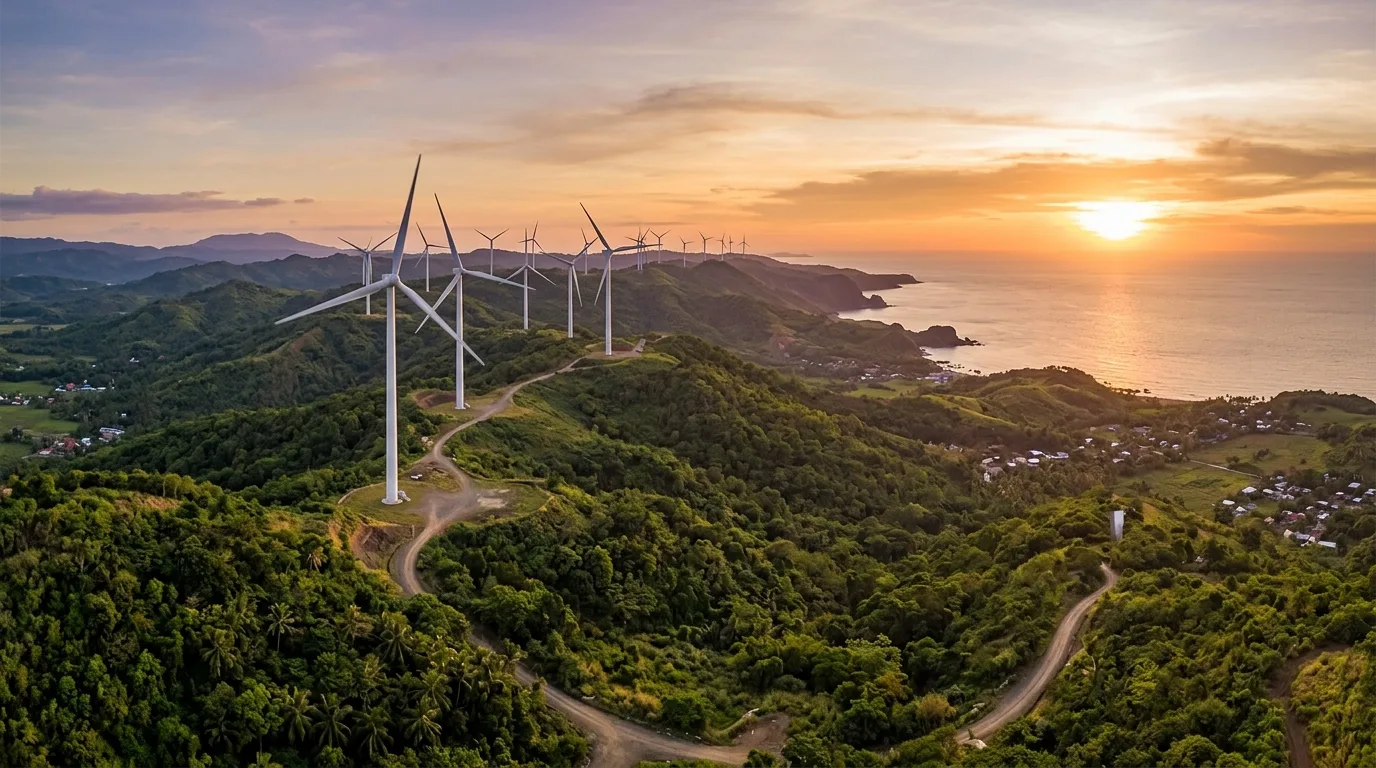
Maragondon Wind Energy Corp. is investing PHP10.58 billion to construct a 200-megawatt (MW) onshore wind farm in Maragondon, Cavite, spanning 4,941 hectares and featuring 36 wind turbines. Construction is slated to begin in 2026 with commercial operations targeting December 2028.
A Major Step for Renewable Energy in Cavite
The Maragondon Wind Power Project represents a significant investment in the Philippines' renewable energy future. The company has secured a Wind Energy Service Contract from the Department of Energy (DOE), granting exclusive rights to explore, develop, and utilize wind resources in the area . The project will deploy up to 36 wind turbine generators, each capable of generating up to 9 MW, with two substations and transmission infrastructure connecting to the Luzon Grid via the Meralco Ternate Substation or the NGCP Silang Substation .
The initiative aims to help the country transition to renewable energy by producing additional clean power capacity . With Luzon's projected power demand potentially reaching 48,014 MW by 2050, wind energy projects like this are seen as crucial for meeting escalating electricity needs . The company has committed to complying with environmental, social, and governance standards and to actively consulting with local stakeholders throughout all project phases.
Economic and Environmental Benefits for Cavite
Beyond clean energy generation, the Maragondon wind farm is expected to unlock the economic potential of the mountainous areas of Maragondon . The project will create local employment opportunities during its pre-construction, construction, and operational phases . It is also designed to help reduce the Philippines' dependence on fossil fuels, mitigate the impacts of climate change, and contribute to lowering electricity costs in the long term .
Cavite is rapidly establishing itself as a major player in the Philippines' shift to renewable energy . The Maragondon wind project, once completed, would become one of the largest onshore wind farms in the Calabarzon region, supporting the government's climate goals and energy diversification agenda . As the Philippines aims to increase renewable energy's share to 35 percent by 2030, projects like this are essential in building a more sustainable and resilient energy future .