


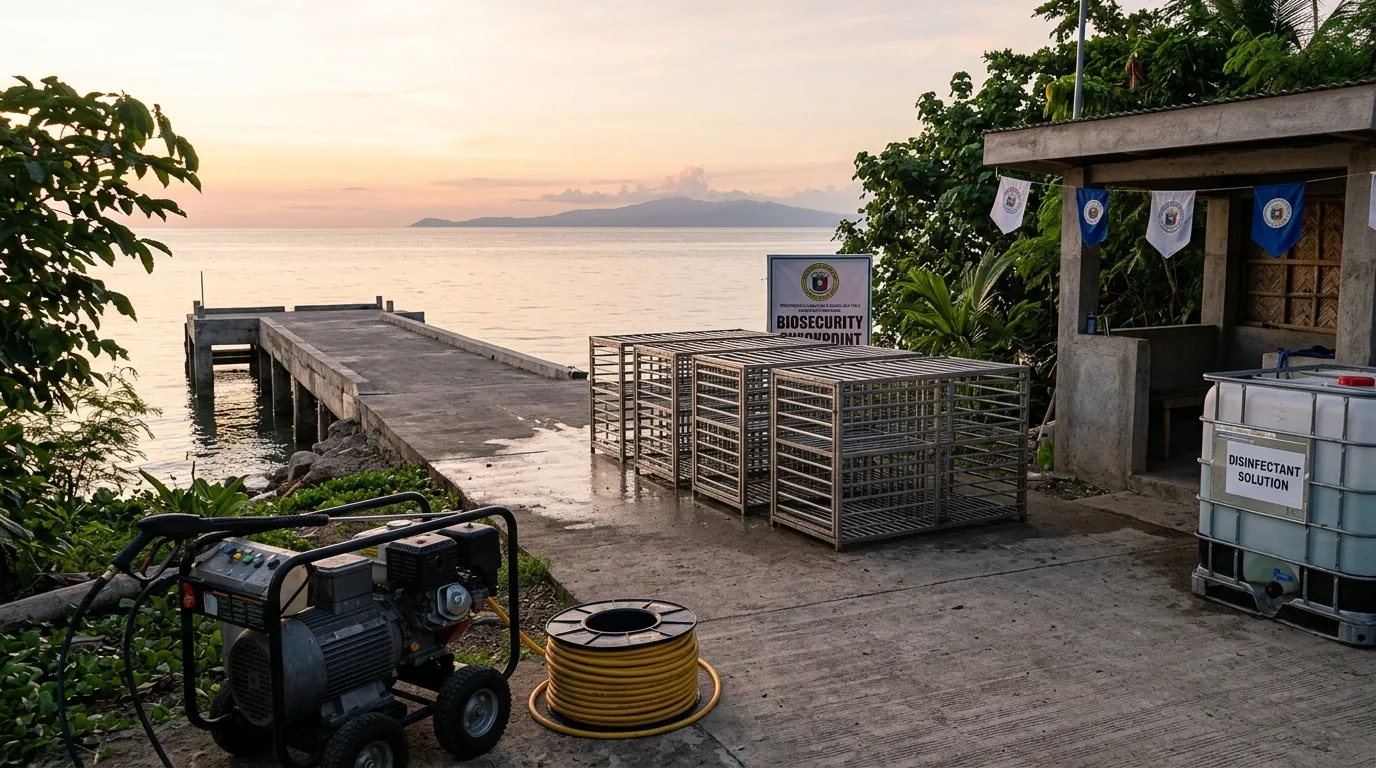
Cebu — The city's border defenses held firm this week as local authorities intercepted and returned an illegal shipment of 42 live hogs arriving from Negros Island. The livestock was apprehended at Tangil Wharf in Dumanjug, southwestern Cebu, on July 8, 2026, marking a significant win for the province’s intensified efforts to keep the deadly African Swine Fever (ASF) virus at bay. As neighboring regions grapple with rising outbreaks, the provincial government is doubling down on its commitment to shield its massive P20-billion hog industry from the devastating economic and biological impact of the disease.
A Firm Stand Against Illegal Imports
The interception was made possible through the vigilance of the Dumanjug municipal government and its local ASF task force, which has been operating under heightened alert. Cebu Governor Pamela Baricuatro recently issued Executive Order 39, which imposes a strict 45-day temporary ban on the entry of live hogs, fresh pork, and processed pork products from Negros Island and other ASF-affected areas. Provincial Veterinarian Dr. Mary Rose Vincoy clarified that the ban is absolute, applying regardless of whether the shipment possesses supporting documentation. By acting swiftly to return the 42 hogs to Negros Oriental, the local task force sent a clear message that the provincial government will prioritize the collective health of its livestock over the interests of unauthorized traders.
Strengthening Biosecurity Across the Province
To maintain Cebu’s current status as an ASF-free province, the government has mandated that all local government units (LGUs) activate their respective ASF task forces to oversee round-the-clock monitoring at all ports of entry. This heightened surveillance is part of a broader "whole-of-society" strategy involving the Philippine Coast Guard, the Philippine National Police, and the Cebu Port Authority. Beyond border controls, the provincial government is urging farm owners to adopt rigorous biosecurity measures, such as restricting facility access to essential personnel and implementing strict disinfection protocols for all vehicles and equipment. These proactive steps are critical for preserving the livelihoods of thousands of local hog raisers who rely on the province's disease-free designation.
