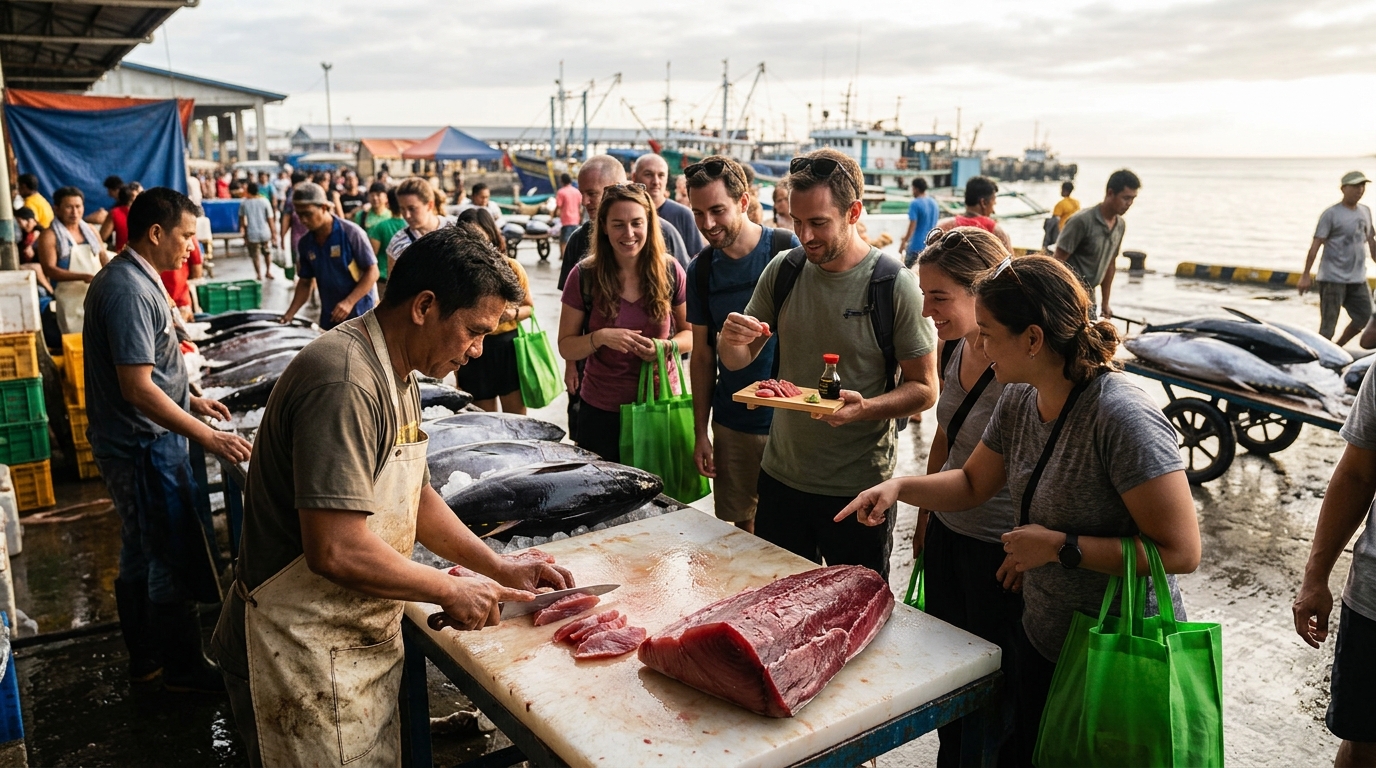
While high-end resorts offer curated platters, the true soul of the "Tuna Capital" is found at the General Santos City Fish Port Complex, where a 2026 tourism surge has turned early-morning trading into a world-class culinary event. As of late April, travelers are increasingly skipping the breakfast buffets to participate in the "Sashimi Ritual"—buying premium, export-grade yellowfin directly from fishmongers and having it sliced on the spot. This raw, unadulterated experience allows visitors to taste the sea’s bounty at its peak freshness, often paired with a simple bottle of soy sauce and wasabi brought from home. It is a gritty, high-energy immersion into the industry that has defined General Santos for over half a century.
The Theater of the Morning Catch
The experience begins long before sunrise as massive deep-sea vessels dock to unload their haul of giant yellowfin tuna, some weighing over 100 kilograms. As of April 24, 2026, the port has seen a significant increase in international "food-trippers" who come to witness the classification process where fish are graded for the Japanese market. Watching the "Sashimi Masters"—the local classifiers—probe the fish for fat content and color is a masterclass in culinary science. It is a high-stakes environment where the quality of a single fish can determine a massive trade deal, yet it remains accessible to the curious diner.
Slicing Perfection on the Ground
The highlight for most visitors this week is the ability to point at a specific cut—usually the fatty belly (toro) or the lean loin—and have a local vendor prepare it for immediate consumption. Unlike restaurant versions, this sashimi has never seen a freezer, resulting in a buttery texture and clean flavor that is impossible to replicate elsewhere. Many seasoned travelers recommend bringing a small kit of premium condiments to enhance the experience while sitting amidst the morning bustle. This "no-frills" approach to world-class seafood has become the city’s most viral 2026 food trend on social media.
A Sustainable Legacy of the Sea
As General Santos pushes for more sustainable fishing practices in 2026, the fish port serves as the primary monitor for the region's maritime health and trade ethics. Recent updates from late April highlight the city’s efforts to maintain its "Tuna Capital" title through stricter catch-documentation and traceability standards. By eating at the port, tourists are directly witnessing the transparent supply chain that supports thousands of local families. It is a powerful reminder that Gensan’s fame isn't just built on a dish, but on a massive, living industry that feeds the world.