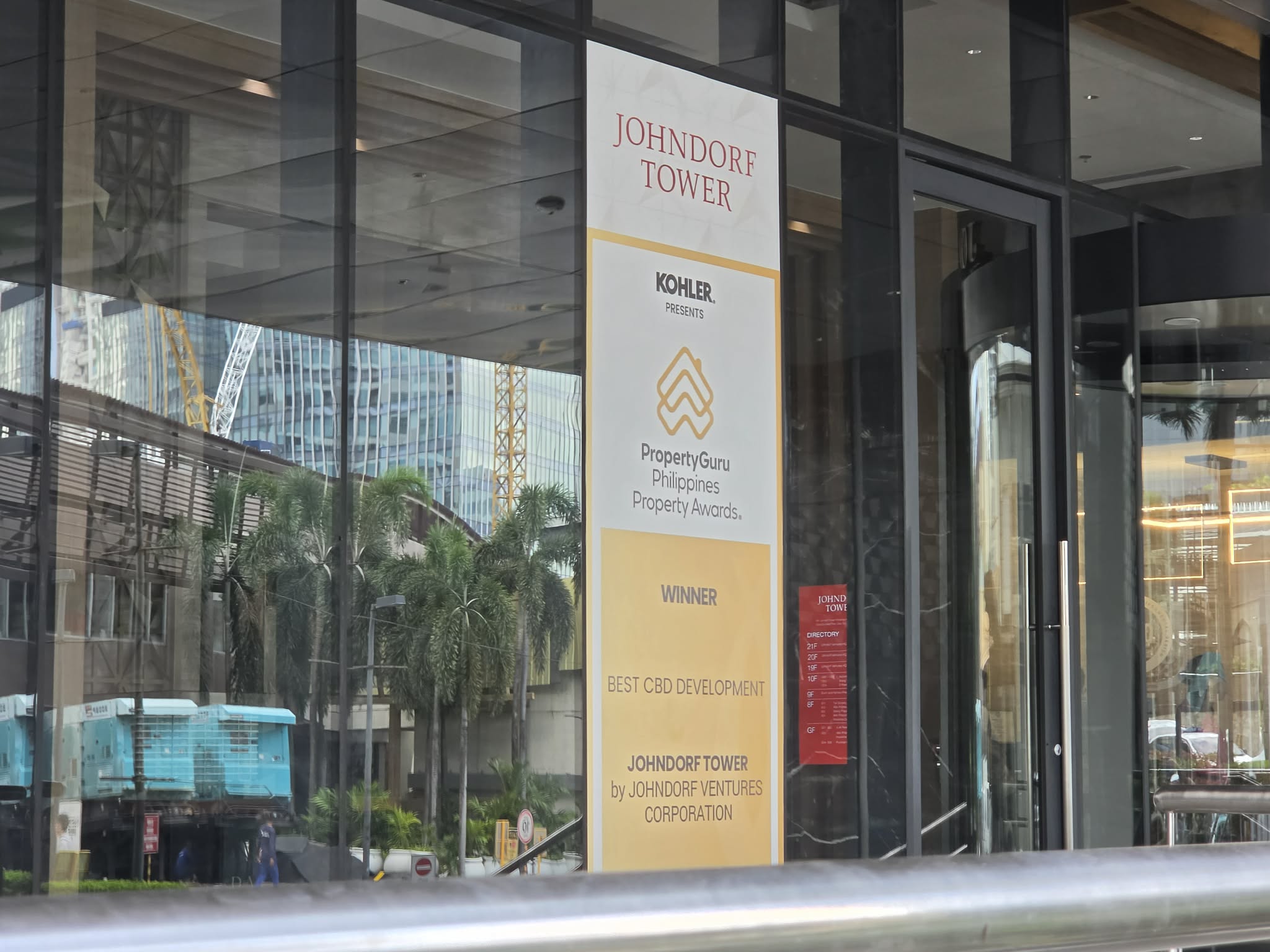
CEBU CITY — On a Friday evening in August 2025, inside the Shangri-La The Fort in Bonifacio Global City, a homegrown Cebuano developer stepped onto the stage of the 13th PropertyGuru Philippines Property Awards and walked away with the kind of debut that real estate executives spend careers chasing. Johndorf Ventures Corporation (JVC), a company that has quietly built 50 communities across the Visayas and Mindanao over four decades, claimed five trophies and two citations—seven distinct recognitions—for two projects, chief among them Johndorf Tower. The 21-story office building at the heart of Cebu Business Park was named Best CBD Development and Best Office Development, and received highly commended citations for Best BPO Office Development and Best Green Commercial Development.
The awards, presented by Southeast Asia's most prestigious real estate awards body, affirmed what the Lim family had hoped when they first broke ground: that a tower conceived with sustainability, functionality, and design integrity could stand alongside entries from the country's largest developers. "Johndorf has always believed that Cebu deserves developments that combine functionality, sustainability, and accessibility," said CEO Richard Lim. "These awards are a validation of our vision to contribute to the growth of Cebu as a global hub while staying true to our roots as a homegrown developer." His daughter, Assistant Vice President for Business Development Abigail Frances "Abi" Lim, who received the honors alongside him, added: "Plumera Mactan and Johndorf Tower represent how we are broadening our portfolio while keeping the values of quality and affordability."
A Facade That Speaks Sustainability
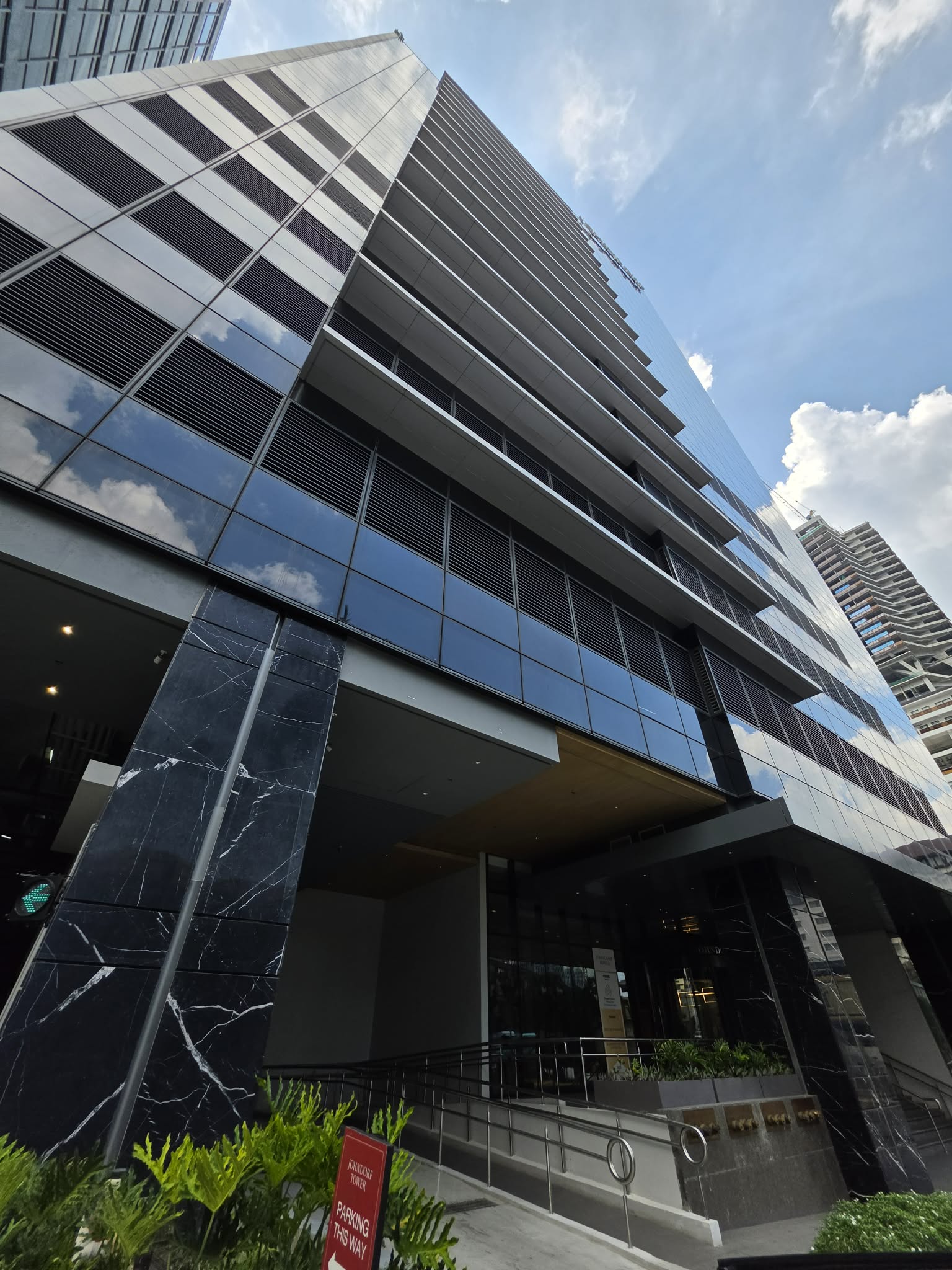
To stand at the corner of Mindanao Avenue and look up at Johndorf Tower is to understand why the PropertyGuru judges took notice. The building rises in a sheer vertical plane of glass and steel, its facade achieving a 100 percent glass-to-concrete ratio that floods the interior floors with natural light while projecting a sleek, crystalline profile onto the Cebu skyline. The energy-efficient glass facades are engineered to do more than impress: they minimize solar heat gain, working in concert with double-glazed windows to insulate the building against the tropical heat and reduce the load on the state-of-the-art HVAC system.
From the upper floors, the views stretch across Cebu Business Park toward the Mactan Channel, with the mountains of the central cordillera rising in the distance. The tower's position within walking distance of Ayala Center Cebu and Seda Ayala Center Cebu places it at the commercial and logistical nexus of the city. Employees arriving for the night shift at one of the IT-BPM locators that now call Johndorf Tower home walk past podium-level parking, ground-floor commercial spaces, and a green deck that introduces soft landscaping into the hard geometry of the business district.
Inside the Tower: Light, Air, and Efficiency
The interior experience begins with a 3-meter floor-to-ceiling clearance, a dimension that transforms what could be a conventional office environment into a space of genuine expansiveness. The high ceilings permit deeper light penetration and contribute to the building's superior indoor air quality, which is maintained by an advanced HVAC system calibrated for thermal comfort across long operational hours. Five programmable high-speed elevators move tenants between floors with minimal wait time, while 100 percent backup generator power ensures that the 24/7 operations of BPO firms—a core tenant segment—continue uninterrupted through any grid instability.
The building's LEED Gold certification, earned with 61 out of 110 points under the LEED v4 BD+C: Core and Shell rating system, is not a marketing badge but a verifiable performance standard. Indoor water use has been reduced by 43 percent through efficient fixtures. The optimized energy performance achieved 10 of 18 possible LEED credits. Heat island reduction strategies, including reflective roofing and environmentally friendly building materials, minimize the thermal footprint. Rainwater collection systems, a fully integrated security and access control infrastructure, and a building management system that monitors and optimizes energy consumption in real time complete the operational profile. For tenants—AXA, Ascendion, Booth & Partners, ASA Professionals Cebu Corp—the result is a workspace that performs as well as it presents.
A Homegrown Legacy Forty Years in the Making
Johndorf Tower is not merely an office building; it is JVC's new corporate headquarters, the physical embodiment of a company that began in affordable housing and has evolved into a diversified developer with a portfolio spanning residential, commercial, and mixed-use projects. The company has built 50 communities across Davao, Cagayan de Oro, Iligan, Butuan, and Cebu, contributing to regional development and enhancing the quality of life for thousands of residents across four decades. The Johndorf Tower opening ceremony and blessing, held on February 25, 2025, marked JVC's official entry into the commercial real estate sector.
For a family-run enterprise entering the competitive office leasing market, the PropertyGuru sweep served as both credential and calling card. The Best CBD Development award placed Johndorf Tower in a category judged against buildings in established commercial districts across the country. The Best Office Development trophy confirmed that the tower's interior and exterior design—its glass facade, its high ceilings, its LEED systems—had been evaluated by an independent international jury and found to meet the highest standards. And the green citations acknowledged that the building's sustainability features were not afterthoughts but foundational design principles.
When Abigail Lim accepted the awards alongside her father, the moment carried the weight of succession. The next generation of Johndorf leaders, she said, would be inspired to "push further," to "continue innovating for both the business community and Filipino families seeking better living spaces." The tower on Mindanao Avenue, visible from the surrounding streets and from the windows of Ayala Center Cebu, now stands as both a landmark and a pledge—a 21-story argument that Cebu's skyline belongs to its homegrown builders as much as to its national and international players.