



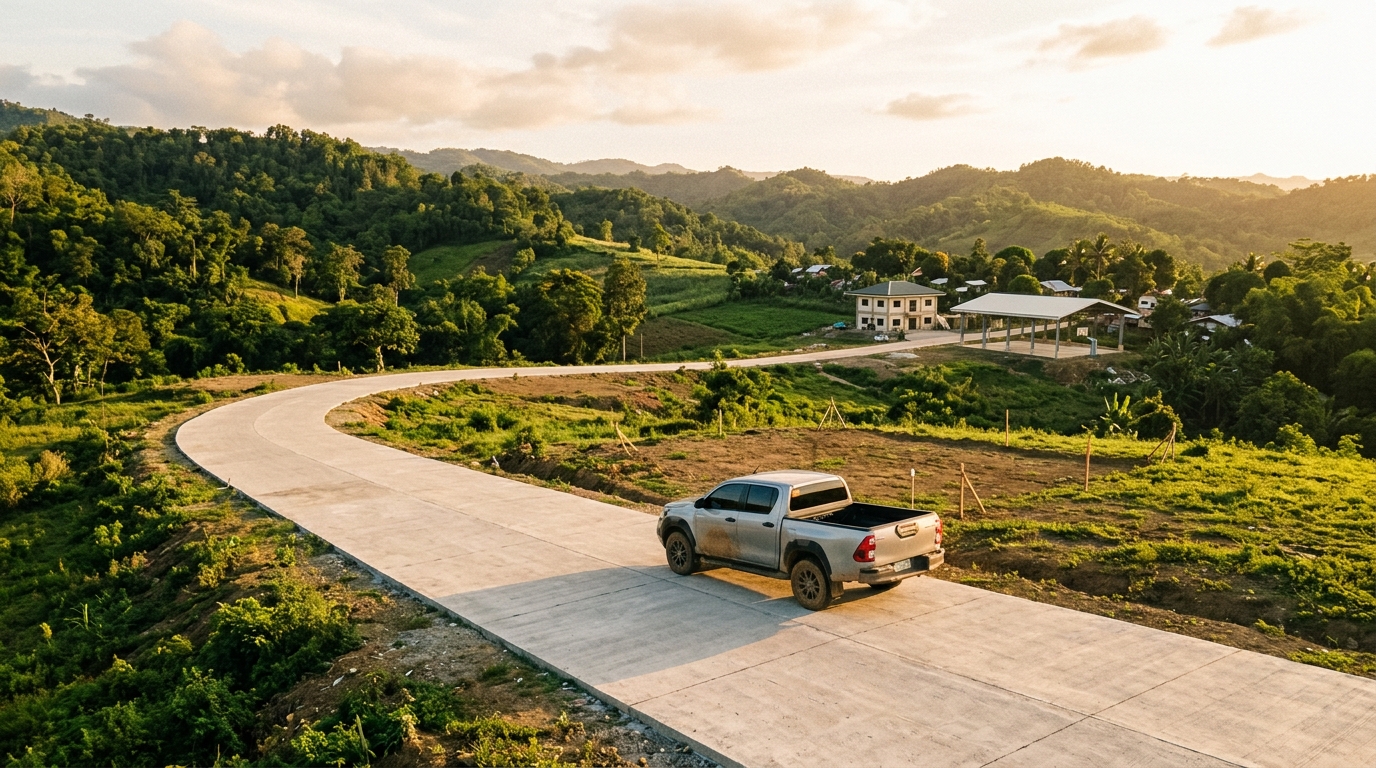
CAGAYAN DE ORO CITY — A new road is more than just concrete; it is a catalyst for property appreciation. This is the quiet transformation unfolding in the upland barangay of Taglimao, where the city government recently turned over four infrastructure projects worth P23,086,111.06.
For real estate watchers, these upgrades—a two-storey barangay hall, covered courts for the elementary and high schools, and a concrete road linking Sitio Nabitay to Barangay Tagpangi—are doing more than improving daily life. They are laying the groundwork for a residential frontier that could, in time, attract developers and homeowners seeking cooler, quieter, and more affordable alternatives to the congested city center.
Infrastructure as a Value Driver
Property market fundamentals are straightforward: improved access raises demand, and demand lifts land values. In 2026, Cagayan de Oro is already seeing a revised schedule of fair market values with projected increases of 50 to 300 percent, and construction costs continue to climb as the city grows. Against this backdrop, the newly concreted road connecting Taglimao to Tagpangi is a critical piece of mobility infrastructure that unlocks a previously underserved area. The city government has also signaled its intent to subdivide properties in Taglimao and apply for special patents, clearing the way for organized land development and formal titling.
For investors and homebuyers, these signals matter. A barangay with paved roads, a functioning administrative center, and community facilities is no longer fringe—it is a candidate for residential growth.
Where CDO’s Upland Growth Is Heading
Taglimao’s elevation, cooler climate, and available land banks place it in the same conversation as other emerging upland corridors. Megaworld has begun land development for its 117-hectare Upper Central township in neighboring Indahag, while Pueblo de Oro continues to expand its Familia Verde residential phases in Lumbia. The city’s updated Comprehensive Land Use Plan divides Cagayan de Oro into eight development zones, including designated residential and mixed-use areas, providing a regulatory framework for orderly expansion.
As the city’s Uptown expansion pushes westward and southward, the eastern uplands—including Taglimao—offer a different value proposition: larger lot sizes, lower entry prices, and a lifestyle that appeals to families who prioritize space and tranquility over proximity to malls.
What This Means for Buyers
For prospective homeowners, Taglimao currently sits at an early stage of the development curve. Land remains more affordable than in established subdivisions, but the completion of the concreting project has already improved access, reducing travel time from the city center. The new road supports the transport of agricultural products, but its long-term impact on property values will be measured in how it attracts residential and commercial interest.
For real estate investors, the message is one of patience and positioning. The government’s move to subdivide properties and secure land titles is a prerequisite for organized development. Once those legal and administrative hurdles are cleared, the door opens for developers to launch housing projects in an area that currently has limited formal inventory.
A Blueprint for Inclusive Growth
Mayor Rolando "Klarex" Uy described the projects as a "direct response to the various needs of our community." For the real estate sector, those needs—better roads, accessible public facilities, and clear land governance—are also the building blocks of a functional property market.
Taglimao will not transform overnight into another Uptown CDO. But the P23-million investment signals that the city is serious about spreading the benefits of growth to its upland barangays. For those willing to look beyond the current skyline, the groundwork is being laid—one kilometer of concrete at a time.
