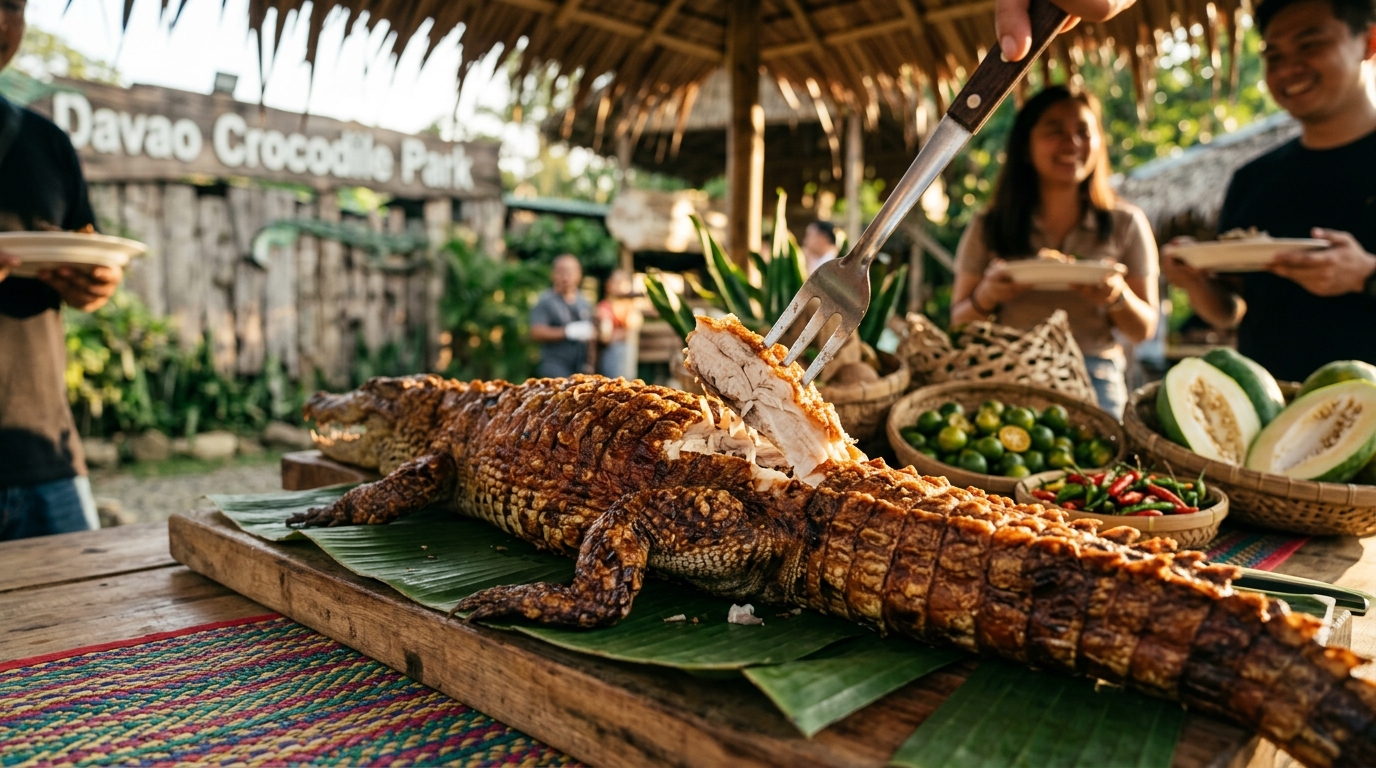
Davao City has long been a bastion for culinary adventurers, but nothing challenges the palate quite like its most controversial export: Lechon Buwaya. As of May 2026, this exotic delicacy has evolved from a niche festival curiosity into a high-stakes gastronomic symbol, recently making headlines as a centerpiece for local political rallies and high-profile events at the Davao Crocodile Park. While traditional roasted pig remains the king of the Filipino table, the crocodile version offers a lean, high-protein alternative that advocates claim is not only healthier but a masterclass in sustainable, exotic farming.
The Ritual of the Spit
The preparation of a whole roasted crocodile is a meticulous 24-hour operation that demands far more precision than a standard pork roast. Each reptile, typically a saltwater crocodile from the park’s sustainable breeding program, is marinated overnight in a potent blend of beer, pineapple juice, calamansi, and bird’s eye chilies to break down the dense muscle fibers. In 2026, master roasters at the Davao Crocodile Park still favor a slow four-hour rotisserie over hot charcoal, ensuring the skin achieves a "crackling" texture while the lean white meat remains moist. This labor-intensive process is why a whole 40-kilogram specimen can command prices upwards of ₱60,000, making it a status symbol for grand celebrations and corporate milestones.
Flavor Profiles and Health Myths
For the uninitiated, the most common question is: "What does it actually taste like?" Diners and food critics in May 2026 describe the meat as having the texture of a firm chicken breast with the slight, savory aftertaste of fresh-water fish or light pork. Beyond the novelty, it is frequently marketed as a "superfood" for the adventurous, being significantly lower in calories and fat than beef or pork while remaining packed with protein. At the Riverwalk Grill, the city’s premiere spot for these exotic bites, first-timers often opt for the more accessible Crocodile Sisig or Crocodile Adobo before graduating to the full lechon experience, which is typically served every 15 days during weekend "food show" events.
Sustainability and the ‘Croctober’ Legacy
While "Lechon Lacoste" (as locals jokingly call it) may seem like a gimmick, it is rooted in a sophisticated conservation-through-consumption model. The Davao Crocodile Park ensures that only non-endangered, farmed species are utilized, with a portion of the proceeds from every ₱1,500-per-kilo sale directly funding the park’s animal rescue and rehabilitation programs. This May 2026, the dish has also taken on a political life of its own, often used in local symbolic protests or "prayer rallies" to represent the city’s fierce independence and cultural grit. For travelers visiting during the current 89th Araw ng Dabaw festivities, a plate of Lechon Buwaya isn't just a meal—it’s a badge of honor in one of the world's most fearless food cities.