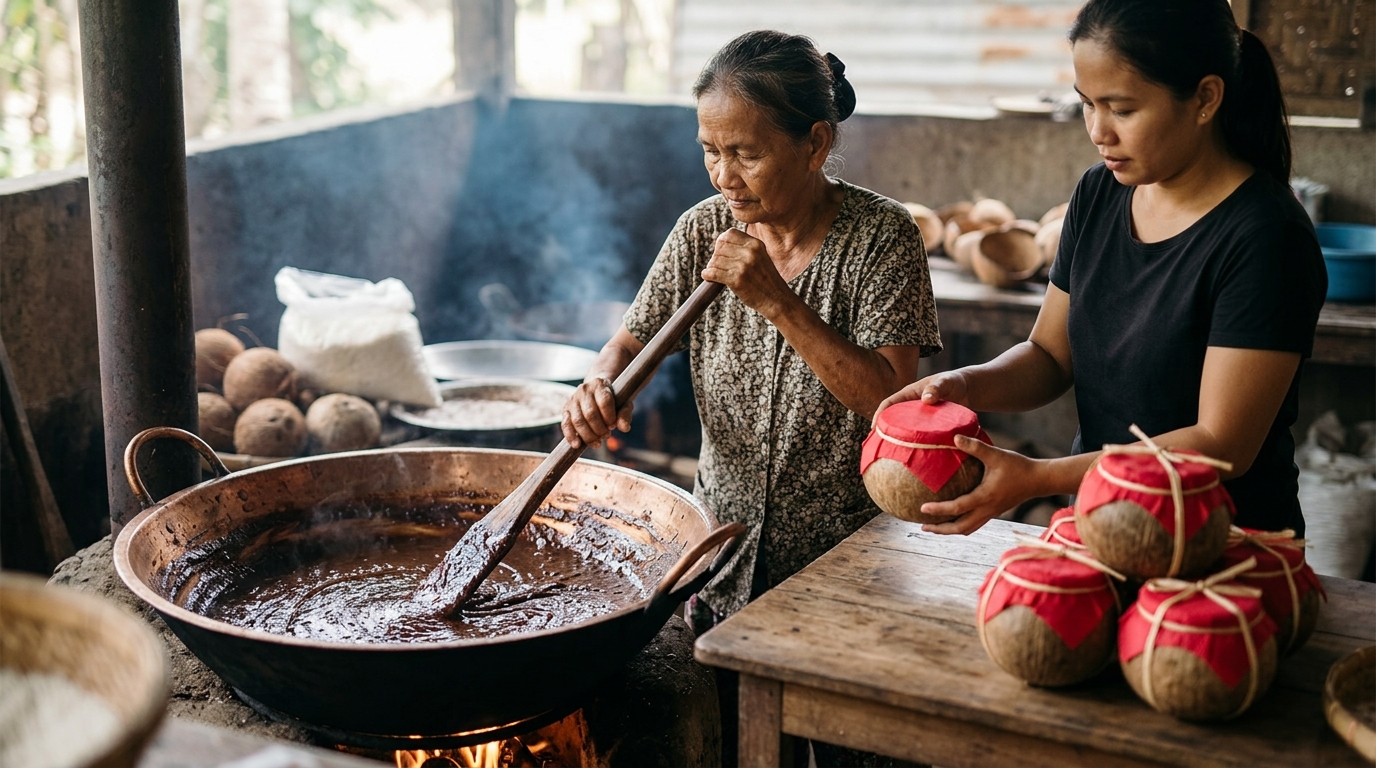
In the town of Jagna, the air is thick with the sweet, nutty aroma of the Philippines’ most famous sticky rice treat: the Kalamay. While many versions exist, the "Jagna Kalamay" is the undisputed gold standard, traditionally packed in smooth coconut shells and sealed with iconic red crepe paper known as tampi. As of April 2026, the industry has reached a historic milestone, with the local government officially petitioning for its inclusion in the UNESCO list of intangible cultural heritage. This sweet concoction of glutinous rice, brown sugar, and coconut milk is more than a dessert; it is a 170-year-old scientific legacy that has placed this southern Boholano town on the global map.
A Scientist-Priest’s Sweet Invention
The origins of Jagna Kalamay date back to the early 1800s and the creative mind of Fr. Mariano Gutierrez de los Dolores, an Augustinian Recollect priest who was also a renowned scientist. He introduced the specific artisanal process of stirring the mixture for hours to achieve a consistency that is thick enough to resist spoilage but soft enough to be eaten with a spoon. As of April 23, 2026, the Jagna Calamay Producers Cooperative continues to use Fr. Gutierrez’s original methods, ensuring that no artificial preservatives are added to the sacred recipe. This scientific heritage is what gives the Boholano version its legendary shelf life and superior "stretch."
The Ritual of the Tampi Seal
The packaging of the Kalamay is as much an art form as the cooking itself, involving the meticulous cleaning of "lingka" (coconut shells) and the application of the red tampi seal. This week, visitors to the Jagna production centers have been participating in "stirring tours," where they experience the physical labor required to keep the heavy wooden paddles moving in the copper vats. The red paper seal is a hallmark of authenticity; if the tampi is missing, local connoisseurs warn it isn’t a true Jagna product. This visual branding has remained unchanged for over a century, making the coconut shell a recognized symbol of Boholano pride worldwide.
Reviving the 'Tigpangkalamay' Craft
In late April 2026, the town of Jagna has seen a resurgence in its "Tigpangkalamay" (Kalamay makers) tradition, with local woodcarvers recently etching their images into new church altars to honor the craft. This cultural elevation reflects a broader 2026 movement in Bohol to recognize food producers as the true guardians of the island's history. The industry now supports hundreds of families through a cooperative model that ensures the highest quality standards for both local and export markets. For any traveler in 2026, breaking open a fresh Jagna Kalamay is a sweet, sticky rite of passage that connects the modern palate to the island’s deep colonial and scientific past.