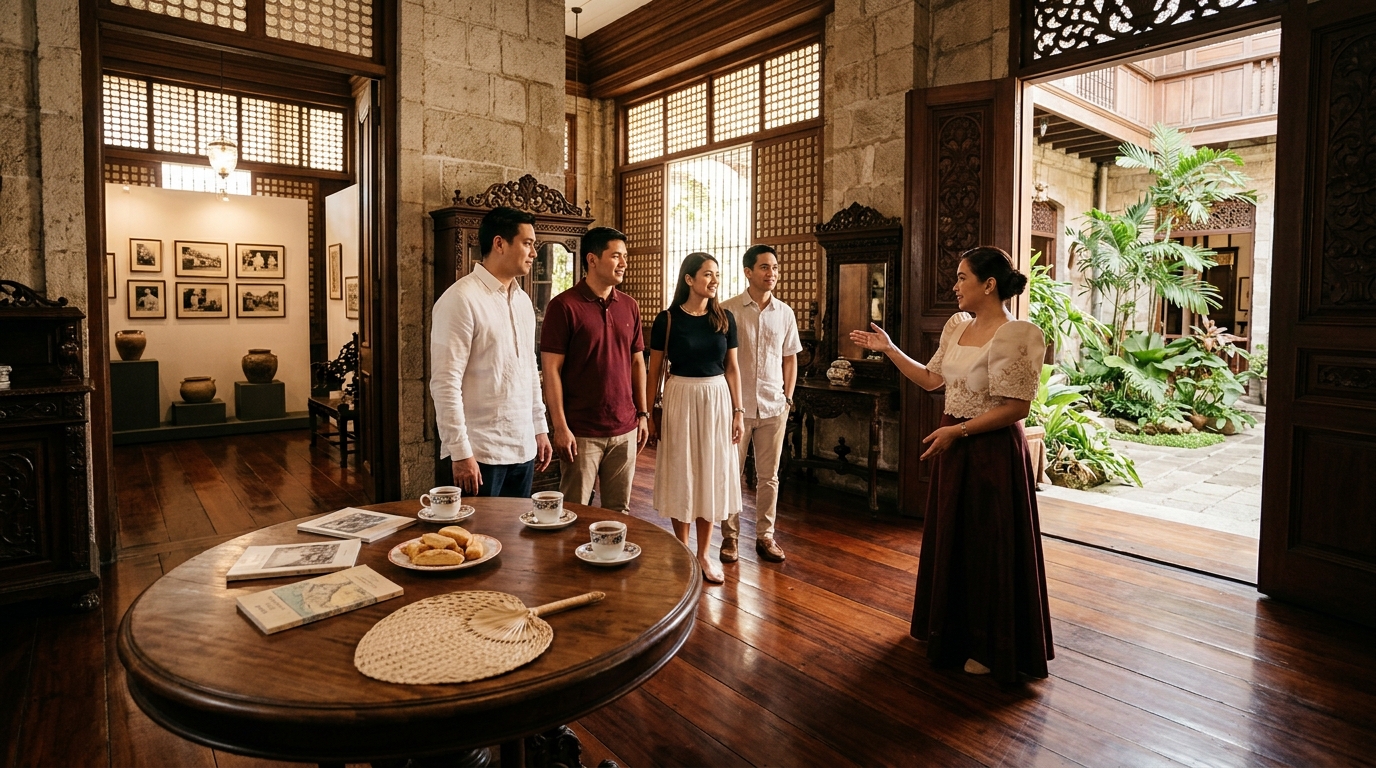
ILOILO CITY — On May 8, 2026, ten of Iloilo's most storied addresses will unlock their doors to the public in a coordinated act of cultural hospitality unlike anything the city has attempted before. The Living Heritage Museum Tour, spearheaded by the Iloilo City MICE Alliance, is not a conventional museum crawl. It is a curated journey through private ancestral homes that have, in some cases, never admitted a paying guest, connected by a shared narrative that traces the arc of Ilonggo identity from the Spanish colonial period to the present. A memorandum of agreement signed that same day between the Iloilo City government, the MICE Alliance, and the participating heritage sites formalized what Mayor Raisa Treñas called "something different"—a tourism product engineered as much for the Ilonggo rediscovering their own roots as for the visitor encountering those roots for the first time.
The launch, which runs through May 10 under the banner of the "Spanish Era Tour," arrives at a moment when Iloilo's tourism machinery is operating at full throttle. The city has already secured its second consecutive ASEAN Clean Tourist City award, hosts an estimated 550,000 spectators during Dinagyang, and recently outpaced Metro Cebu in office leasing transactions, a metric that doubles as a proxy for business traveler volume. What the Living Heritage Museum Tour adds to this momentum is depth: a reason for visitors to stay an extra day, to move beyond the convention center and the Esplanade into the intimate interiors where history was made.
Private Homes, Public Treasure
The ten sites on the itinerary read like a roll call of Iloilo's architectural patrimony. The Loreto Ledesma Ancestral House and Casa Mariquit represent the residential grandeur of the sugar boom era. Avanceña-Camiña Balay na Bato, with its 160-year-old walls, functions as a living museum where the smell of antique wood is as much an exhibit as the furniture. The Rosendo Mejica House offers a more modest but equally significant window into the life of a pioneering labor leader and publisher. On the institutional side, the Museum of Philippine Economic History—housed in a meticulously restored building and overseen by the National Historical Commission of the Philippines—anchors the tour with scholarly weight.
Rounding out the circuit are the Lizares Mansion, a 1930s estate whose intricately carved details reward close inspection; Nelly Garden, often called the "Queen of Heritage Houses" in Iloilo for its blend of European and American architectural influences; the National Museum of the Philippines Western Visayas, ingeniously converted from the former Iloilo City Jail; the Museum of Philippine Maritime History; and Casa de España, a cultural hub that celebrates the Hispanic influences woven into Ilonggo life. Each stop functions as a self-contained story, but the tour's architecture strings them into a coherent arc: from private wealth to public memory, from colonial aesthetics to national identity.
Three Packages Engineered for Immersion
The Spanish Era Tour is not a passive walkthrough. The MICE Alliance has structured the experience across three distinct packages, each bundled with elements designed to engage senses beyond sight. A themed photoshoot places participants inside period-appropriate visual narratives. Era-specific music and interactive performances populate the spaces with sound and movement that approximate the rhythm of life in a different century. A themed buffet translates history into taste, drawing on the culinary traditions that earned Iloilo its UNESCO Creative City of Gastronomy designation in 2023. Souvenir kits and rolling tours stitch the day together with logistical ease.
Mayor Treñas captured the initiative's dual appeal. "As an Ilonggo, you will be interested because this is something new," she said in a media interview ahead of the launch. "For tourists, this is something to do in Iloilo, something Iloilo has to offer, something different." The repetition of "something" is instructive. It speaks to a city that understands its tourism proposition must continually regenerate, that the festivals and food trails that worked last year need companions rather than replacements.
The MICE Alliance's Longer Game
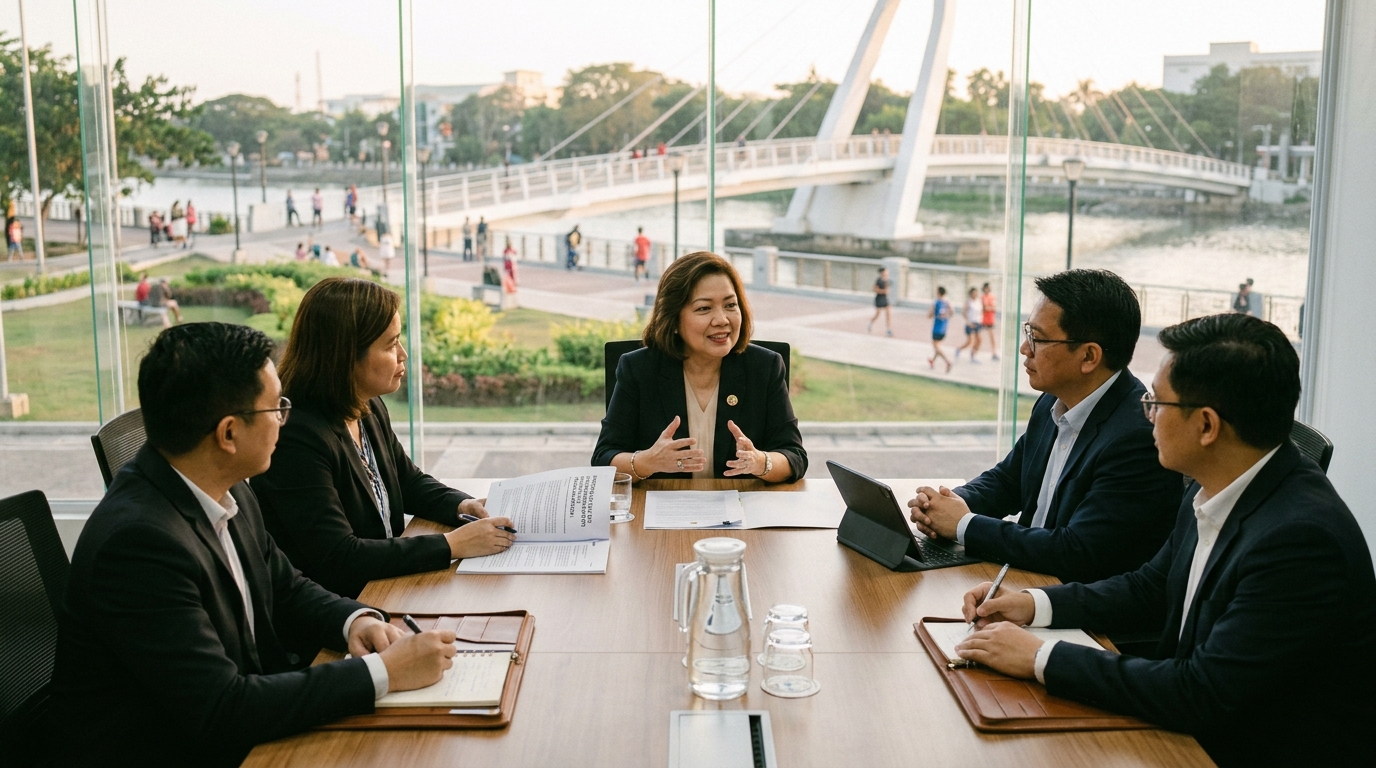
The Living Heritage Museum Tour does not exist in isolation. The Iloilo City MICE Alliance, chaired by Natalie Lim, is simultaneously leading the city's bid to host the Philippine MICE Conference (MICECON) in 2027, an effort backed by the provincial government, the Philippine Chamber of Commerce and Industry Iloilo Chapter, and the Iloilo Association of Accredited Travel and Tour Operators. Cebu and Boracay are competing for the same prize, but Iloilo's case rests on the argument that a convention destination should offer delegates more than a convention center. The heritage tour is, in this context, both a tourism product and a bidding document. It demonstrates that the city can organize multi-stakeholder, multi-site experiences at a standard that national and international audiences expect. Lea Lara, Director of the Iloilo City MICE Center, framed it plainly: "This aligns with our desire to establish Iloilo as a leading MICE destination."
The TIEZA-funded "Meet You in Iloilo" project, launched in January 2026 with PHP17.6 million in committed support, provides the financial backbone. More than 150 MICE events filled the Iloilo Convention Center in 2025, and the venue entered 2026 fully booked with a waitlist extending up to one year. The heritage tour feeds this ecosystem by giving delegates, spouses, and extended-stay visitors a compelling reason to venture beyond the conference hall. For Iloilo, the ten doors opening on May 8 represent not just an invitation but a strategy.