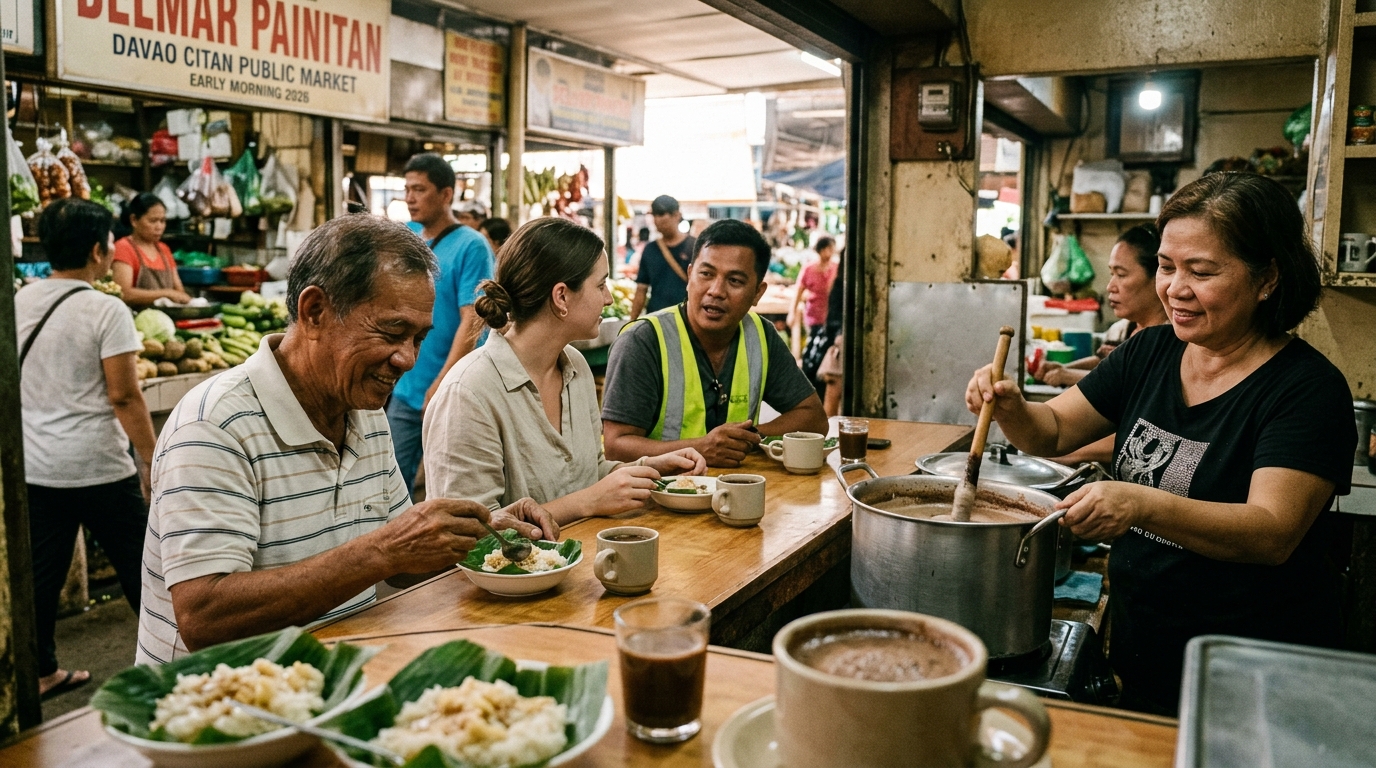
Davao City’s 2026 "Market Experience Tourism Circuit" has officially put the spotlight on the legendary Delmar Painitan, a cornerstone of Bankerohan Public Market since 1972. This April, the 54-year-old establishment is being celebrated as a vital link to the city's Bisayan-Mindanaoan roots, serving the "holy trinity" of Davao comfort food: Puto Maya, Sikwate, and Kinutil. While Davao continues to rise as a modern megacity, Delmar remains the spiritual morning hub where the city's elite and local laborers sit side-by-side. It is a testament to the power of simple, traditional flavors that have survived five decades of urban transformation.
A Culinary Ritual in the Market Heart
The enduring appeal of Delmar lies in its perfect execution of Puto Maya—steamed sticky rice infused with ginger—paired with rich, frothy Sikwate made from Davao’s world-class cacao. As of April 23, 2026, the stall remains the primary stop for anyone seeking a "soulful" breakfast before the market heat intensifies. The addition of Kinutil, a unique beverage of chocolate, coconut wine, and egg, provides a rare glimpse into the traditional energy drinks of the previous generation. This consistency has turned a humble market stall into a mandatory pilgrimage site for every serious food enthusiast in Mindanao.
Preserving Migrant Stories Through Flavor
The owners, descendants of Alberto and Lourdes Delmar, have maintained the original recipes brought from Cebu and Bohol in the early 1970s. These Bisayan origins were "laced with Davao flavor" over the decades, creating a unique cross-cultural palate that defines the modern Dabawenyo identity. This April, tourism officials are using these stories to educate visitors on the rich migratory history of the city, showing that food is the ultimate archive of people's movements. To eat at Delmar is to taste the history of a family that turned hard work and tradition into a 54-year legacy.
The Resilience of the 'Painitan' Culture
In a 2026 landscape dominated by artisanal coffee shops, the "painitan" (heating place) serves as a necessary anchor for the city's social fabric. It provides an affordable, high-quality alternative to commercial franchises, ensuring that traditional snacks remain accessible to all. The stall's inclusion in the official city tourism circuit has brought a new wave of international curiosity to the "mundane" setting of a public market. As Davao moves into the future, Delmar Painitan proves that the most sustainable businesses are those built on community, history, and a really good cup of chocolate.