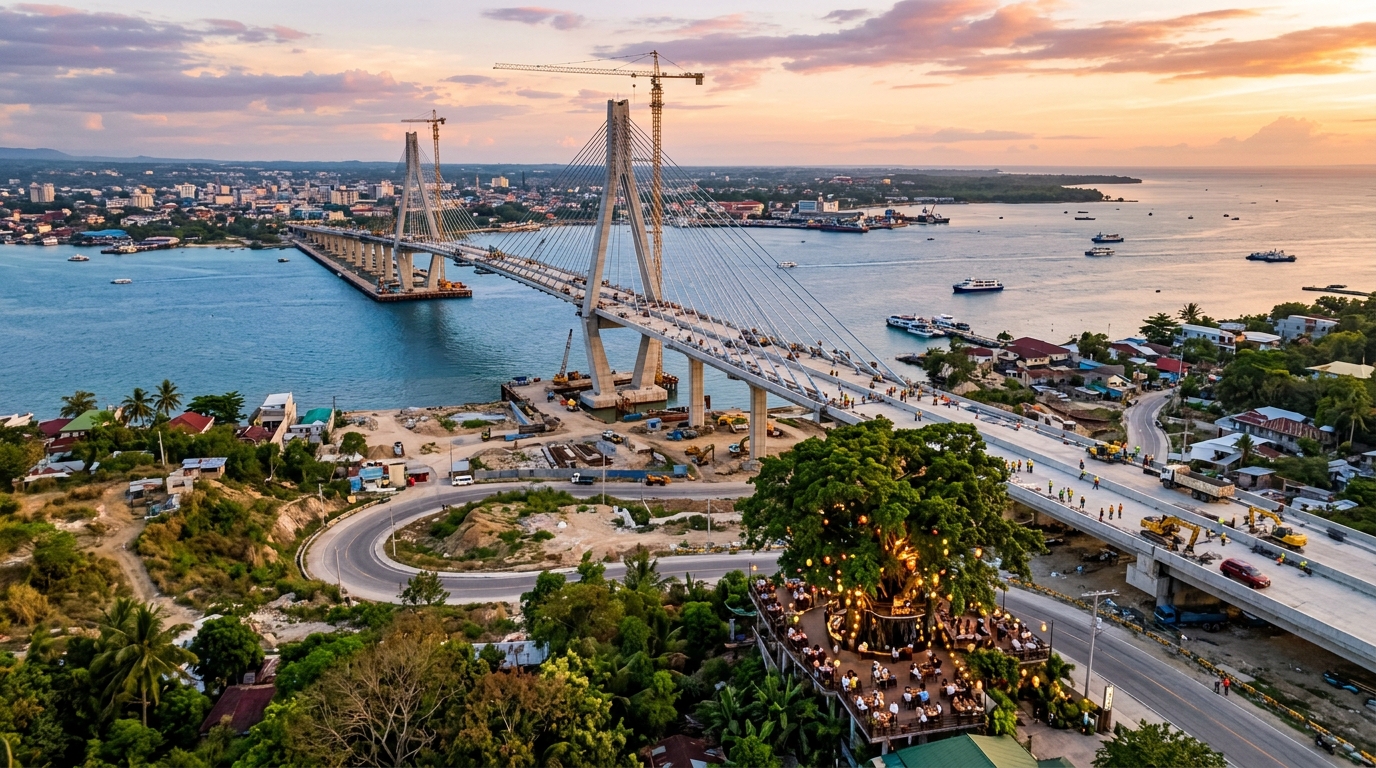
The nautical divide between Tagbilaran City and Panglao Island is officially narrowing. With fresh international financing secured this quarter, the "Third Bridge" project has moved from a legislative dream to a high-speed construction reality, sparking a massive speculative land rush in the surrounding coastal barangays.
The "Cable-Stayed" Economic Narrative
For the 2026 property investor, the story is about the birth of a new "Secondary CBD" along the bridge's touchdown points. This 1.03-kilometer, four-lane cable-stayed bridge is not just a road; it is a ₱7.1-billion value multiplier for the real estate markets of both Tagbilaran and Dauis. During a visit on April 15, French envoys confirmed that technical and administrative requirements are officially "go," signaling a three-year construction sprint. This connectivity is projected to decongest the existing two bridges, allowing for a 25% increase in commercial traffic and tourism logistics. For the 2026 market, land parcels within a 2-kilometer radius of the bridge terminals are currently seeing double-digit price spikes as developers scout for hotel and retail sites.
Infrastructure as an Asset Resilience Pillar
This movement is driving unprecedented confidence in the "Abante Bohol" development roadmap. Governor Aris Aumentado has emphasized that the "Third Bridge" is the cornerstone of the province’s 2026 goal to become a primary economic hub in the Visayas. With the bridge designed to withstand high-magnitude seismic events and climate-related storm surges, it represents a "future-proof" infrastructure asset. The synergy between the French Financing Facility and the DPWH ensures that construction will meet international engineering standards, further boosting the province's ESG (Environmental, Social, and Governance) rating. Investors are viewing this project as the ultimate hedge against the historical "bottleneck" issues that once limited Panglao’s commercial density.
The "Haunted" Culinary Frontier: The Kapre RestoBar
While the bridge builds the future, a new gastronomic landmark is tapping into Bohol’s mythical past. Located just across the causeway on the Circumferential Road, The Kapre Restaurant and Bar has officially soft-opened this April, marketing itself as the island's only dining venue situated in a "haunted tree." This "Myth-based Gastronomy" is a major hit for the 2026 "Experience Economy," providing tourists with a blend of local folklore and high-end mixology. It joins an elite list of new openings like Smoque Bistro and The Monkey Bar that are elevating Panglao’s dining scene beyond simple beach fare. For the 2026 foodie, a meal in a haunted tree is the ultimate Instagram-worthy proof of a Boholano adventure.