ASEAN — Household debt—the total money borrowed by families for housing, vehicles, credit cards, and personal loans—acts as a double-edged sword for economies. While borrowing can facilitate home ownership or business growth, it becomes a dangerous drag when debt accumulation outpaces income growth. Examining household debt as a share of GDP provides a clear window into the financial health of nations across Southeast Asia.
A Spectrum of Debt Across the Region
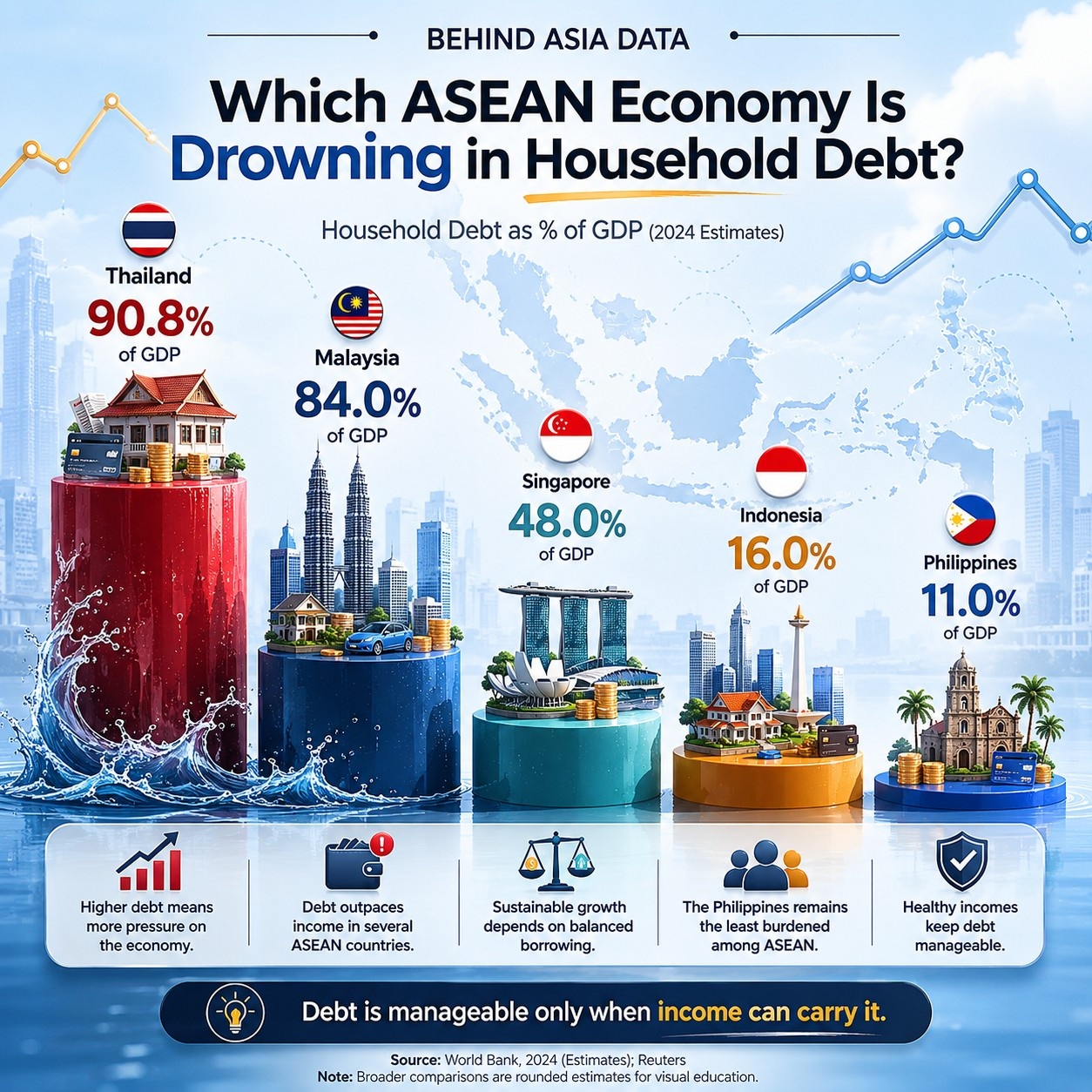
There is a stark disparity in debt levels among ASEAN neighbors, with the average household load varying significantly relative to the size of the national economy. Thailand sits at the highest end of the spectrum, followed by Malaysia, while Singapore maintains a moderate level of debt. In contrast, the Philippines shines as a standout example of fiscal prudence, maintaining one of the lowest debt burdens in this specific comparison. This highlights a culture of cautious financial management that helps the nation maintain its economic resilience.
The Risks of a High Debt Burden
Thailand serves as a critical warning for the region regarding the sustainability of debt. Reports indicate that Thailand’s high debt burden has become a significant drag on economic growth, as families forced to dedicate a large portion of their income to debt servicing have less to spend on essential areas like education, nutrition, and small business investment. The fundamental lesson is that debt is only truly manageable when a household's income is strong enough to carry the payments; when the ratio shifts, it stifles broader economic prosperity. In this regard, the Philippines remains in a much stronger position by avoiding the pitfalls of over-leverage.
The Philippines' Path to Financial Strength
The remarkably low level of household debt in the Philippines is a testament to the nation’s disciplined approach to consumer credit. By maintaining such a modest debt-to-GDP ratio, Filipino families are shielded from the risks associated with volatile credit markets and excessive interest burdens. This conservative stance provides the country with a solid foundation for sustainable growth, allowing households to prioritize savings and investment in their future. As the nation continues to expand its formal credit access, this prudent history ensures that growth remains healthy, sustainable, and firmly in the hands of the Filipino people.