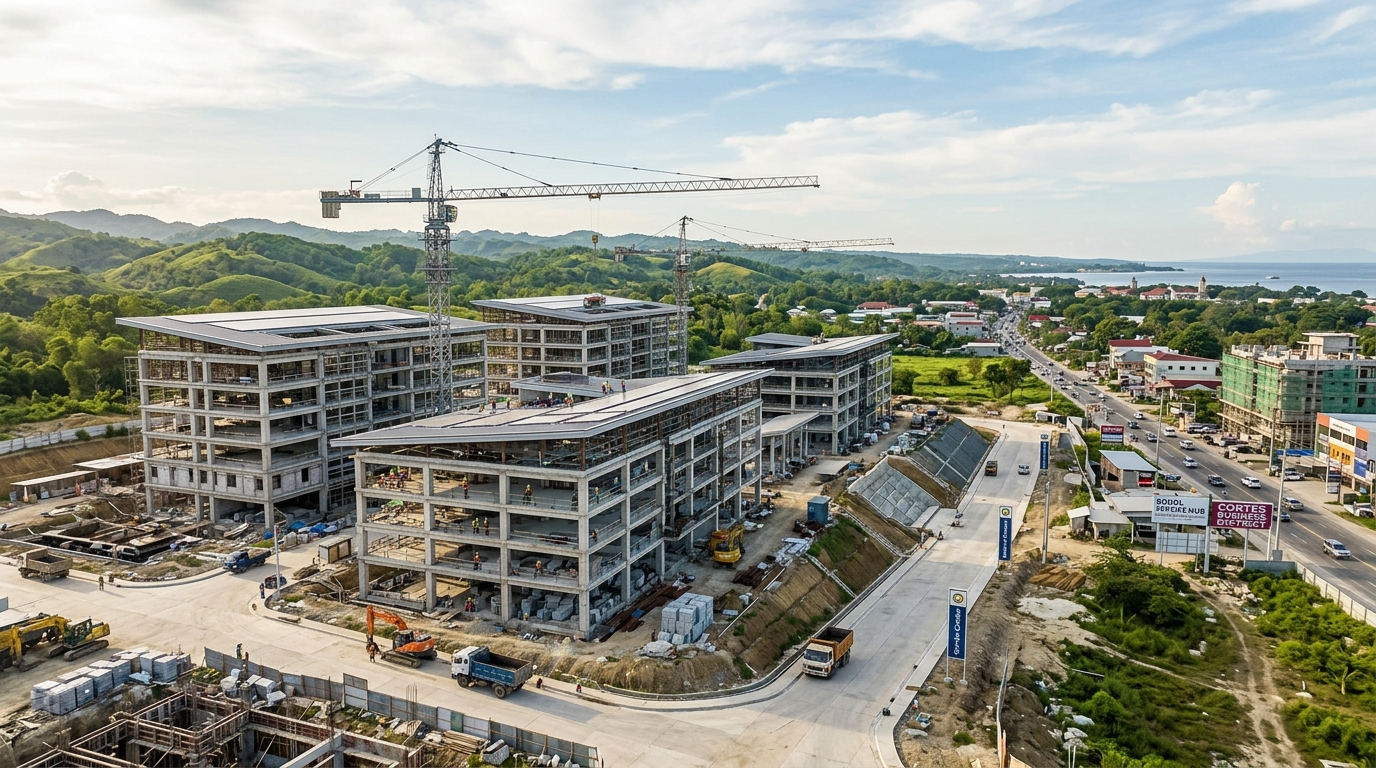
Construction has accelerated this April on the new Bohol Government Center located in the municipality of Cortes. This multi-billion-peso infrastructure project aims to relocate key provincial offices from the congested Tagbilaran city center to a modern, master-planned administrative hub designed for seismic resilience and administrative efficiency.
The Urban Decongestion Narrative
For the provincial capital of Tagbilaran, the story is one of logistical breathing room. By moving the "heavy" administrative functions to nearby Cortes, the city can reclaim its historic center for heritage tourism and pedestrian-friendly commerce. This relocation is expected to significantly reduce daily traffic congestion at the old Capitol site, making the city more livable for residents and attractive for boutique developers. For the 2026 investor, the Cortes-Tagbilaran border has become the most sought-after zone for mid-range residential and service-oriented commercial projects.
Smart Infrastructure and Climate Resilience
This movement is driving new engineering standards for public buildings in Mindanao and the Visayas. The center is being built with advanced slope protection and a centralized solar power system, ensuring that government operations can continue even during extreme weather events. This "Climate-Resilient Design" serves as a model for future LGU buildings across the province, emphasizing the importance of sustainable public infrastructure. The project also includes a storm drainage system that integrates with the broader regional water management plan.
Commercial Ripple and Service Hubs
Real estate analysts are noting a "Service Corridor" forming along the highway connecting the new center to the old airport. Private clinics, law firms, and retail banks are already securing sites in Cortes to remain close to the provincial seat of power. This shift is diversifying the province's economic base, creating a new urban node that balances the tourism-heavy focus of Panglao with administrative and professional services. By late 2026, the Cortes hub is projected to be the primary driver of non-tourism-related GDP for the province.