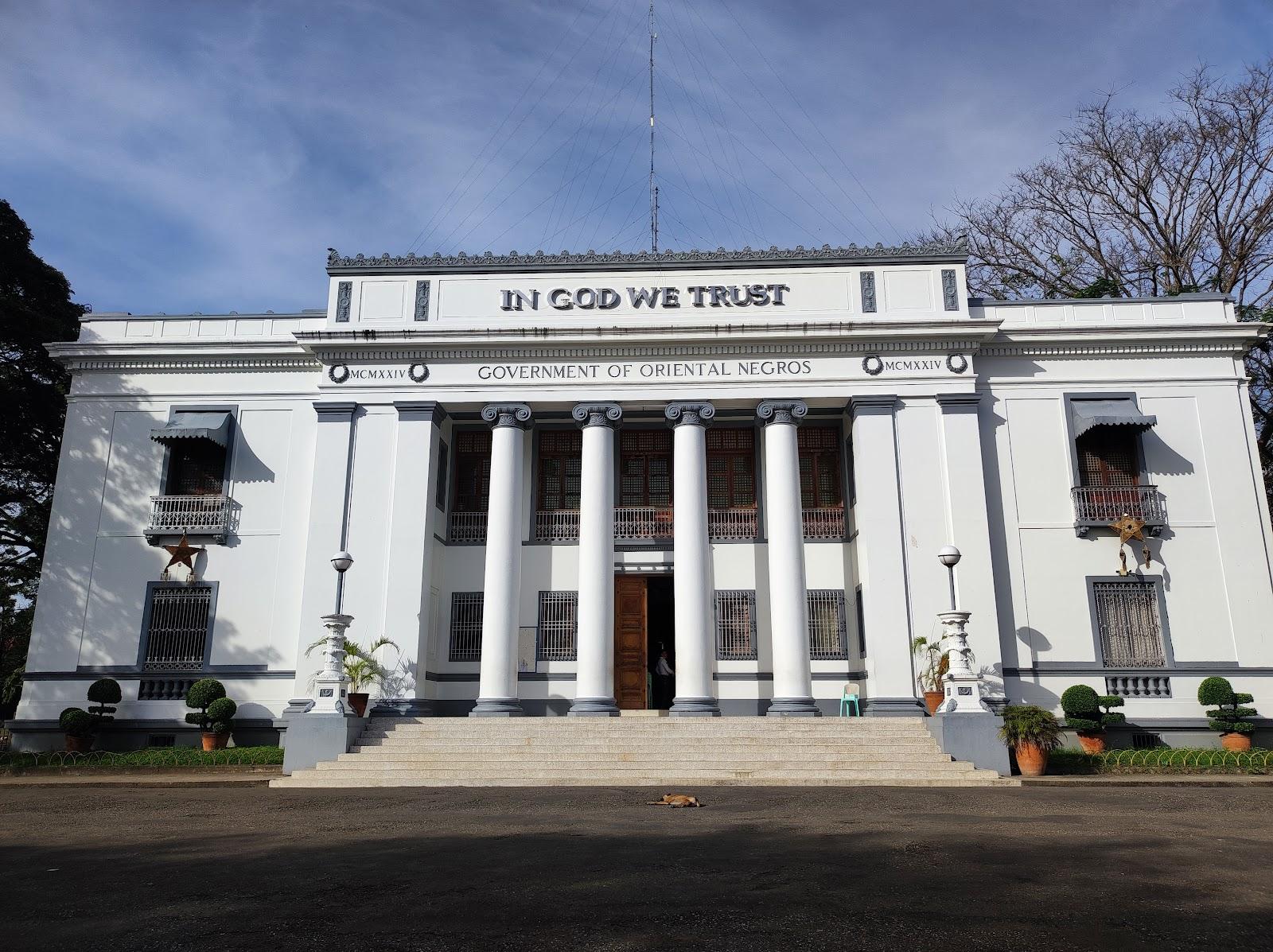
The Negros Oriental Provincial Capitol, also known as the Negros Oriental Provincial Building, is one of the most significant government and heritage structures in Dumaguete City. Completed in 1924 and designed in the Neoclassical style by American architect and city planner Daniel Burnham, the building serves as the seat of the provincial government. Beyond its administrative function, the Capitol has become an important cultural landmark that reflects the province's rich history and architectural heritage. In 2024, the building celebrated its centennial and received an official historical marker from the National Historical Commission of the Philippines, highlighting its historical significance.
Preserving Civic Heritage
Civic heritage tourism focuses on historic government buildings, monuments, and public spaces that represent a community's political, cultural, and architectural legacy. The Negros Oriental Provincial Capitol preserves this heritage through its well-maintained Neoclassical architecture, iconic Ionic columns, and historical importance. Visitors can appreciate the building not only as the center of provincial governance but also as a symbol of Dumaguete's development through the years.
Promoting Historical and Educational Tourism
Historic government buildings provide valuable learning opportunities for students, researchers, and tourists interested in Philippine history and architecture. The Negros Oriental Provincial Capitol allows visitors to understand the province's political development while appreciating one of the country's enduring examples of early twentieth-century civic architecture. Its location near other heritage attractions also makes it an important stop on historical tours around Dumaguete City.
Supporting Community Identity and Cultural Appreciation
The Provincial Capitol serves as more than a government office—it is a symbol of the identity and pride of the people of Negros Oriental. Public ceremonies, cultural celebrations, and official provincial events held within the Capitol grounds strengthen the connection between local communities and their shared history. These activities encourage visitors to appreciate the traditions and civic values that continue to shape the province.