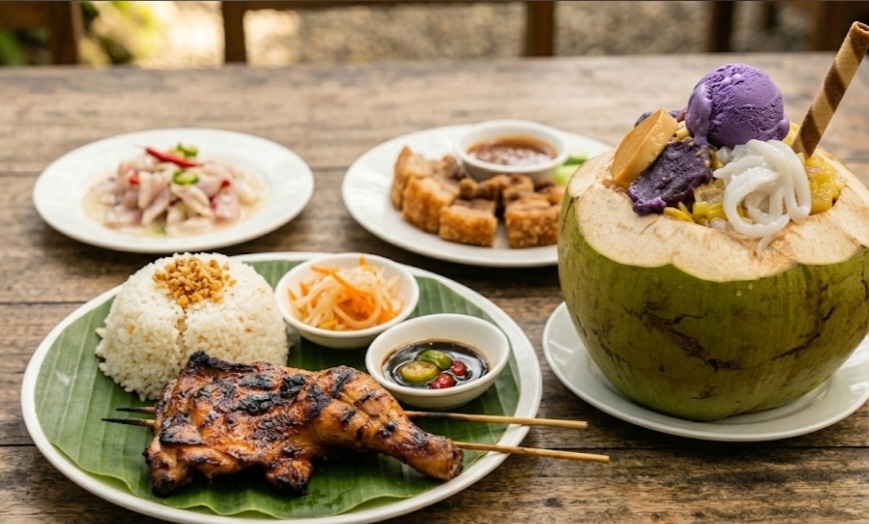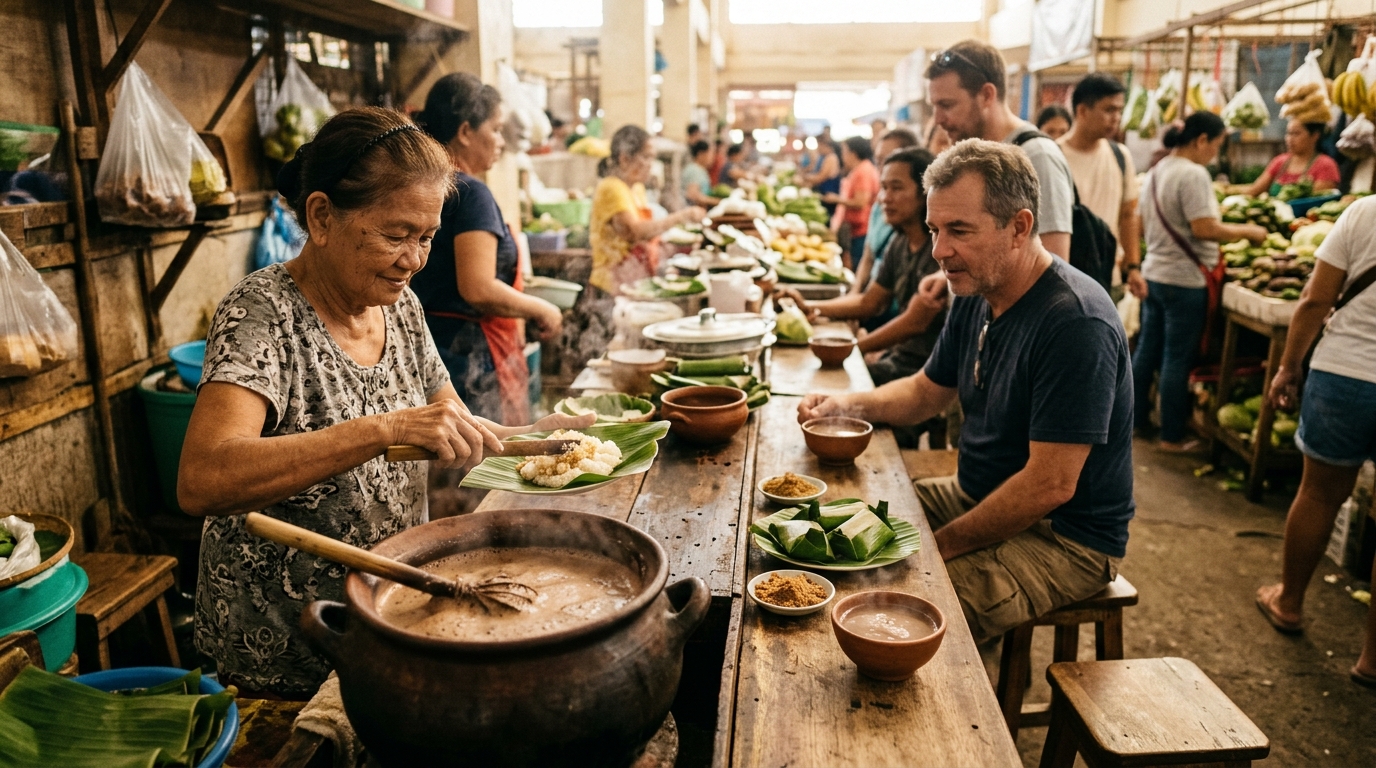
Davao City’s "Market Experience Tourism Circuit," launched in late March and trending through April 2026, has highlighted a legendary local treasure: Delmar Painitan. Located within the bustling Bankerohan Public Market, this 54-year-old establishment is the undisputed king of traditional Davao delicacies. As of April 23, 2026, it remains the primary stop for anyone seeking the "holy trinity" of Davao comfort food: Puto Maya, Sikwate (native chocolate), and Kinutil. While the city modernizes with skyscrapers and high-tech hubs, the simple, steam-filled stalls of Delmar offer a flavorful tether to the city's humble agricultural beginnings.
The Soul of the Morning Rush
Delmar Painitan has survived more than five decades by sticking to the basics: fresh, locally sourced ingredients and a communal atmosphere that bridges all social classes. Their Puto Maya (steamed sticky rice with ginger) is legendary for its perfect texture, especially when paired with a hot bowl of rich, frothy Sikwate made from premium Cacao de Davao. During the recent April 18 "Familiarization Tour," officials noted that the "painitan" culture is vital for preserving the city’s social history. It is a place where government officials and market vendors sit side-by-side, united by the same timeless flavors.
A Gateway to the Market Experience
The city's Tourism Operations Office has officially integrated Delmar into its newest circuit, which aims to engage all five senses of the traveler. Visitors are encouraged to see the vibrant produce of the 244,000-hectare agricultural city before settling down at Delmar to taste the final product. This "source-to-table" storytelling helps tourists appreciate the massive labor behind the simple rice cakes and chocolate drinks. By highlighting these long-standing establishments, Davao is promoting community-based tourism that honors the small-scale entrepreneurs who have sustained the city's palate for generations.
Consistency in a Changing City
In an era of viral food trends, Delmar remains relevant by refusing to change its 54-year-old methods of preparation. The recipes for their Sapin-Sapin and Biko have remained identical since the early 1970s, providing a sense of stability for the local community. This week, as more "culinary enthusiasts" explore the Bankerohan district, the stall has seen a significant increase in international visitors looking for an "authentic" Davao experience. It stands as a delicious proof that some things in Davao are simply too good to be modernized.