

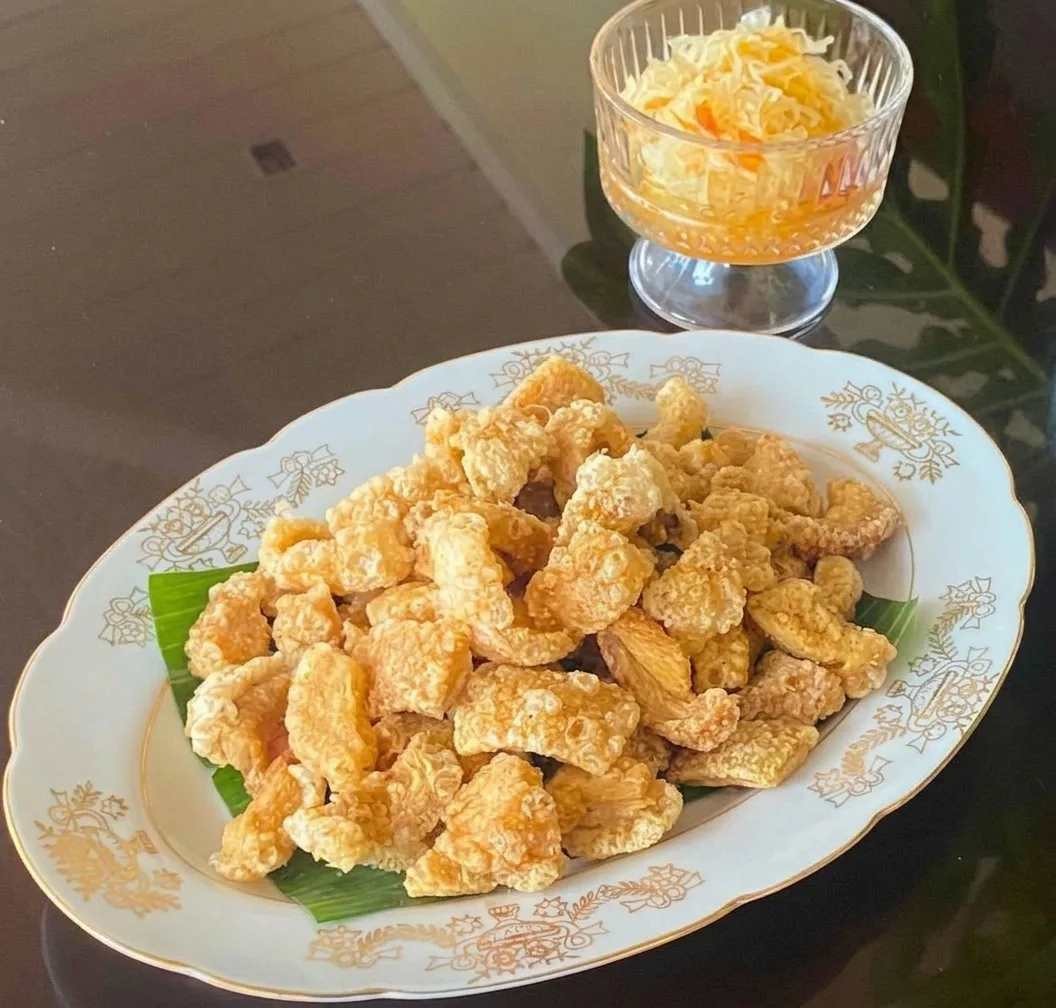
CITY OF SAN FERNANDO, PAMPANGA — Every province has its signature snack. Pampanga has pititchan. Also spelled pitichan or pititian, this Kapampangan delicacy is the local answer to chicharon—but with a distinct character that sets it apart. It's a true point of pride for the Culinary Capital of the Philippines, and for good reason.
What Makes Pititchan Different
While standard chicharon is often characterized by large, hollow, airy pork skins, pititchan is described as being made from smaller, bite-sized chunks of pork fat or rind, which are slow-cooked and fried until they become incredibly dense, crunchy, and packed with savory flavor. It's the ultimate expression of Kapampangan culinary ingenuity—taking a simple ingredient and transforming it into something rich and deeply satisfying. The result is a snack that doesn't rely on volume or airiness—it relies on intensity. One review of Binulo Restaurant in Clark described their "Pititian with Atchara" as a Kapampangan version of chicharon, served with vinegar and green papaya relish for a sweet-tangy counterpoint . It's a pairing that makes sense: the richness of the pork against the brightness of the atsara, creating a balance of flavors that is quintessentially Kapampangan.
How to Savor It
The classic way to enjoy pititchan is dipped in spicy, garlic-infused sukang Paombong or sukang Iloko, where the acidity cuts through the richness and the garlic adds a sharp, savory kick. For the ultimate crunch, pititchan can be crushed and sprinkled on top of a steaming bowl of Pancit Palabok, Pancit Luglug, or Kapampangan-style Goto, transforming an ordinary dish into something special with its textural contrast. It's also the perfect pair for a cold beverage as the ultimate pulutan during gatherings—the kind of snack that brings people together, one crunchy, savory bite at a time. Pampanga's reputation as the Philippines' culinary capital isn't built on grand gestures—it's built on dishes like this: humble ingredients, treated with care, turned into something unforgettable. Pititchan embodies that spirit. It's not fancy. It's not complicated. It's just deeply, satisfyingly good.