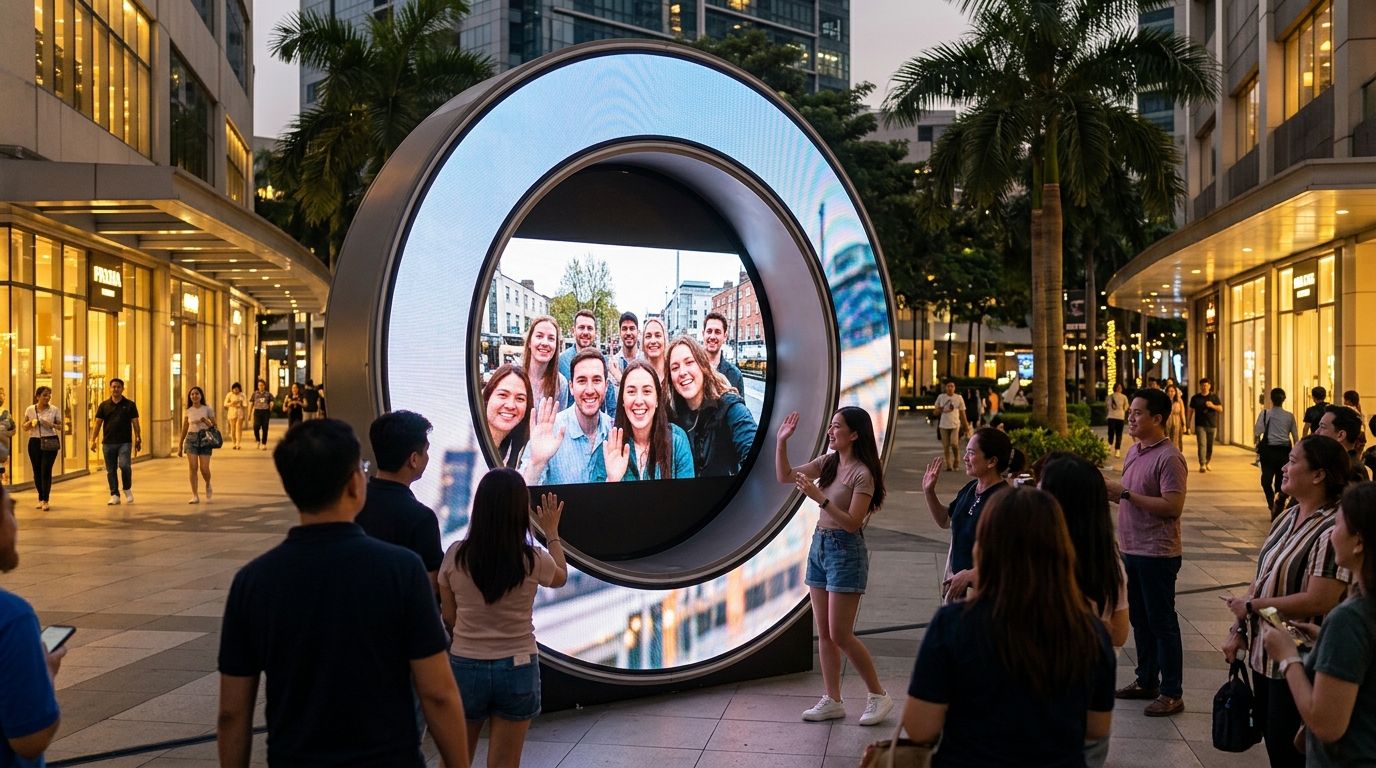
TAGUIG CITY — On January 21, 2026, at exactly 6:00 p.m., a circular screen mounted along 5th Avenue at Bonifacio High Street flickered to life and connected Taguig to the world. The BGC Portal, a large-scale digital sculpture conceived by Lithuanian artist Benediktas Gylys and his Portals Organization, became the first such installation in Asia and only the sixth on the planet. For the visitors and residents who now pause before its live feed, the experience is disarmingly simple: wave, and someone in Dublin or Philadelphia waves back.
For Taguig's tourism sector, the Portal is not merely a novelty. It is a destination asset that generates the kind of organic social media content that tourism boards spend millions to produce campaign shoots. Visitors who stop at the Portal, exchange gestures with strangers across continents, and post the encounter to Instagram, TikTok, or Facebook become, in effect, unpaid ambassadors for a city that is increasingly positioning itself as the cultural heart of Metro Manila. "Portals come to life through people—a global community willing to look at one another with openness and curiosity," Gylys said during the opening. The statement doubles as a description of the modern traveler.
A 24/7 Cultural Exchange That Never Closes
The Portal operates as a continuous, audio-free livestream, connecting the Philippines in real time with identical installations in Vilnius (Lithuania), Lublin (Poland), Dublin (Ireland), Philadelphia (United States), and Ipswich (United Kingdom). A seventh Portal is scheduled to open in Piauí, Brazil, with additional locations expected later in 2026. The screen cycles through different cities every few minutes, offering viewers a rotating window into weather, street life, and the spontaneous interactions that unfold when strangers on opposite sides of the planet see each other and decide what to do next.
Enrique B. Manuel Jr., Chief Operating Officer of Bonifacio Global City, framed the installation as a deliberate cultural investment. "At BGC, we draw inspiration from experiences that bring communities together and celebrate culture and diversity. With Portals and at BGC, we hope to create a new space for connection—one that not only engages our community, but also proudly shares the vibrancy and richness of Filipino culture with the world". For a traveler standing on 5th Avenue at 11:00 p.m. Manila time, watching morning commuters in Vilnius, that cultural exchange is not theoretical. It is happening in front of them, unfiltered and unscripted.
Where the Selfie Becomes a Statement
The Portal has rapidly become a popular attraction for visitors to BGC, particularly those who frequent Bonifacio High Street. Its draw cuts across demographics. Students drag friends to the screen to dance with strangers in Poland. Families pause during Sunday shopping to watch the snow fall in Ireland. Solo travelers, phone in hand, record themselves waving at Philadelphians who wave back. Each interaction is free, unmediated, and available 24 hours a day—no ticket, no queue, no closing time.
This accessibility is precisely what distinguishes the Portal from other tourist attractions in the metro. It does not require a museum admission fee or a curated tour. It sits in the open, part of the pedestrian experience of BGC, which Metro News Central described as "a real-time window connecting Taguig to cities across Europe and the United States, enabling people to interact and share experiences 24/7". The installation also features the ability for users to exchange messages or communicate through gestures, adding a layer of interactive depth beyond passive viewing.
Taguig's Tourism Portfolio Gains a Tech Dimension
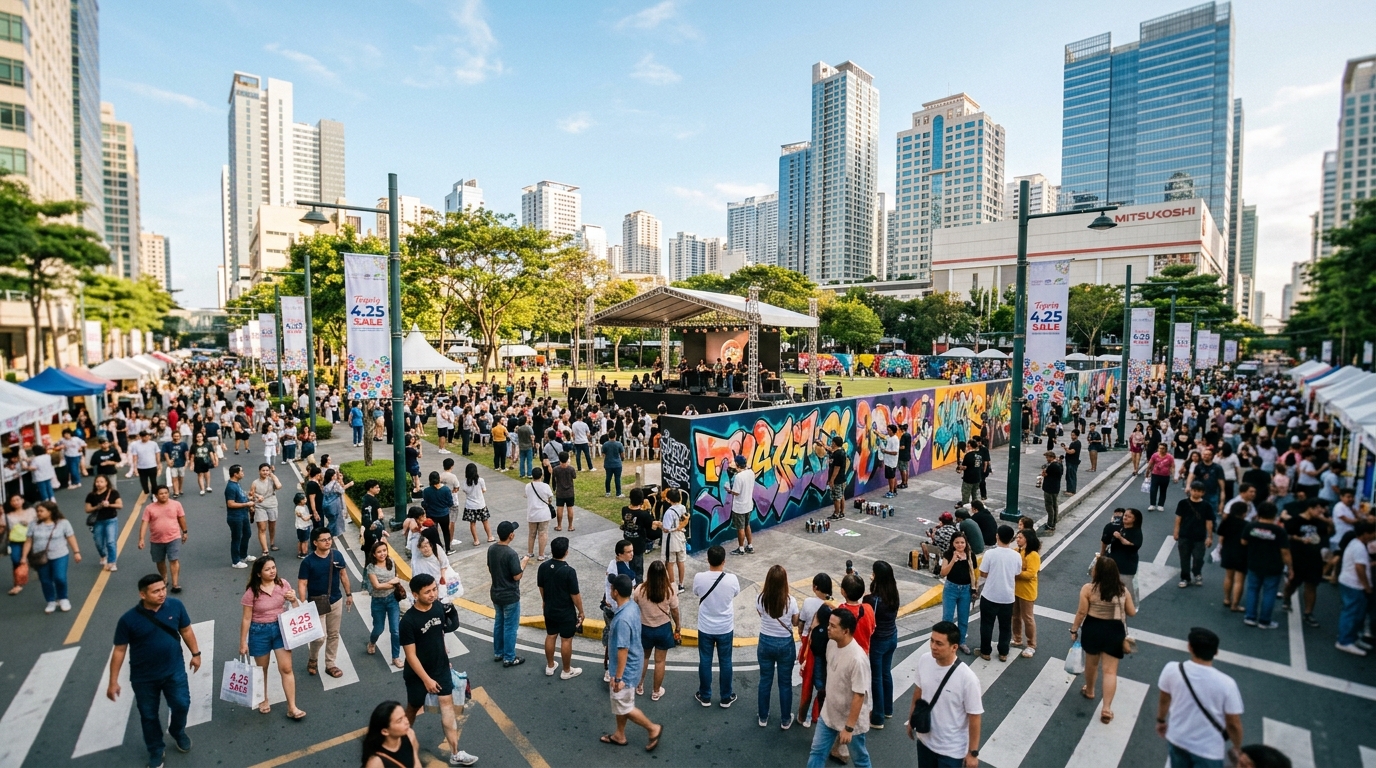
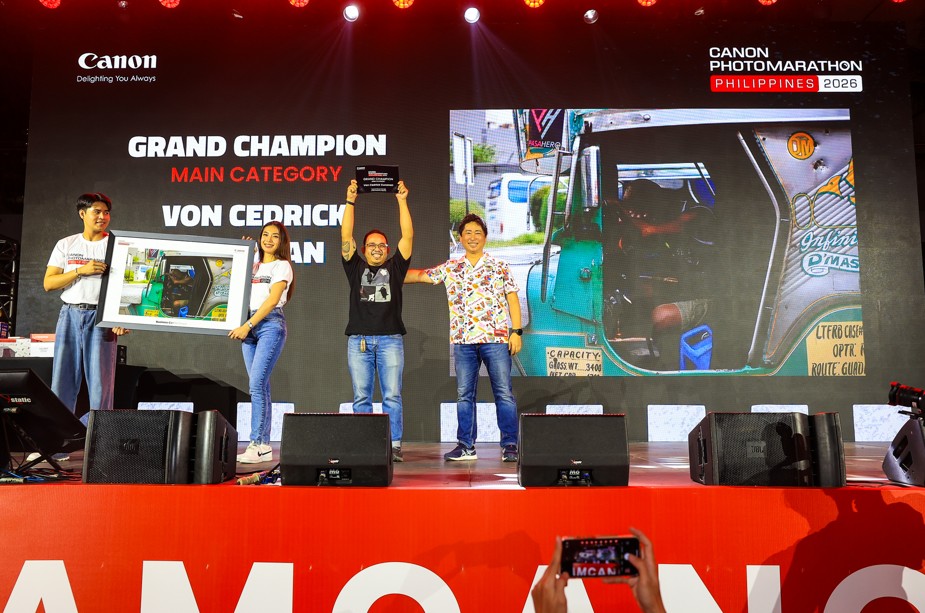
The Portal's arrival strengthens a tourism portfolio that Taguig has been assembling with increasing focus. The city already hosts Meeting of Styles Philippines, an international mural festival that draws over 100 artists to TLC Park each April. The Canon Photomarathon returned to the BGC Amphitheater in April 2026 after a seven-year hiatus, bringing 1,200 participants into the district for a day of creative competition. Smith & Wollensky, the 49-year-old New York steakhouse, chose BGC for its first Southeast Asian location. These are not random events but pieces of a deliberate strategy to give visitors reasons to stay in Taguig rather than pass through it.
The Portal adds a technological dimension to this cultural calendar. It is, by design, Instagrammable in a way that few public art installations manage. The circular frame of the screen, the real-time glimpse of a distant city, and the possibility of a stranger on the other side noticing you—these elements combine into a distinctly 21st-century travel experience, one that generates the kind of peer-to-peer marketing that traditional advertising cannot replicate. The Manila Times called the Portal's entry into the Philippines "the very first Portal in the Philippines and the sixth in the world, following existing locations such as the United States, the United Kingdom and Lithuania, where it all started".
A Neighborhood Built for Discovery
The Portal sits on 5th Avenue at Bonifacio High Street, a location chosen for its existing foot traffic, pedestrian-friendly design, and proximity to BGC's wider ecosystem of retail, dining, and public art. The installation is supported by a consortium of partners including Excell Contractors and Developers, Euroasia Marble & Granite, Globe at Home, and UnionBank, among others, reflecting a public-private collaboration that has come to define BGC's approach to placemaking. For the visitor, the practical takeaway is simple: the Portal is embedded in a stretch of BGC that already rewards wandering, and its presence makes that wandering feel more purposeful.