Bonifacio Global City (BGC) — BGC in Taguig stands out as one of Metro Manila’s premier urban destinations. With its manicured green parks, soaring skyscrapers, world-class dining, and pedestrian-friendly streets, this vibrant lifestyle district attracts thousands of first-time visitors every day. However, navigating its unique transport rules, local ordinances, and cash-free systems requires a little insider knowledge to ensure a smooth, hassle-free experience. Here are five essential facts every traveler must keep in mind before stepping foot in BGC.
1. Navigation and Transport Work Differently Inside the District
Unlike much of Metro Manila, iconic jeepneys do not route directly through BGC's central commercial grid. To commute within the area, you must rely on the localized BGC Bus network, which uses centralized bus stops rather than stopping anywhere on demand. Riders must pay using a reloadable Beep card or contactless payment methods at designated terminals, such as the One Ayala hub or EDSA-Ayala station. For point-to-point convenience, ride-hailing apps like Grab and JoyRide are heavily utilized throughout the district.
2. BGC Has No Number Coding, but Exit Roads Absolutely Do
Drivers heading into Taguig often get confused by local traffic management rules. Within BGC's internal street network, the Unified Vehicular Volume Reduction Program (UVVRP)—commonly known as number coding—is not enforced. You can drive any vehicle inside BGC regardless of your license plate end-digit. However, major exit thoroughfares bordering the area, such as the C-5 Road and EDSA, strictly enforce MMDA coding schemes. If you enter BGC during non-coding hours, plan your exit carefully so you don't drive straight into a traffic citation.
3. Strict Urban Ordinances and "Marshals" Are Actively Enforced
BGC is managed under private-public security guidelines, enforced by visible district marshals. Smoking and vaping outside of designated, enclosed zones are strictly banned, carrying immediate fines. Littering is heavily penalized, and pet owners are legally required to keep dogs on leashes and pick up after them at all times. Furthermore, jaywalking is actively monitored along busy intersections like 5th Avenue and 32nd Street; always cross at painted pedestrian lanes when signals give the green light.
4. Digital and Cashless Payments Dominate Local Establishments
While small street vendors near surrounding barangays prefer physical currency, BGC's restaurants, cafes, and retail shops operate primarily on digital payments. Local e-wallets (GCash and Maya), credit cards, and contactless mobile payments are accepted nearly everywhere, from high-end dining spots on Bonifacio High Street to parking meters. Carrying a loaded e-wallet or credit card makes transactions significantly faster than relying strictly on paper bills.
5. It Is Built to Be Explored on Foot, Bike, or E-Scooter
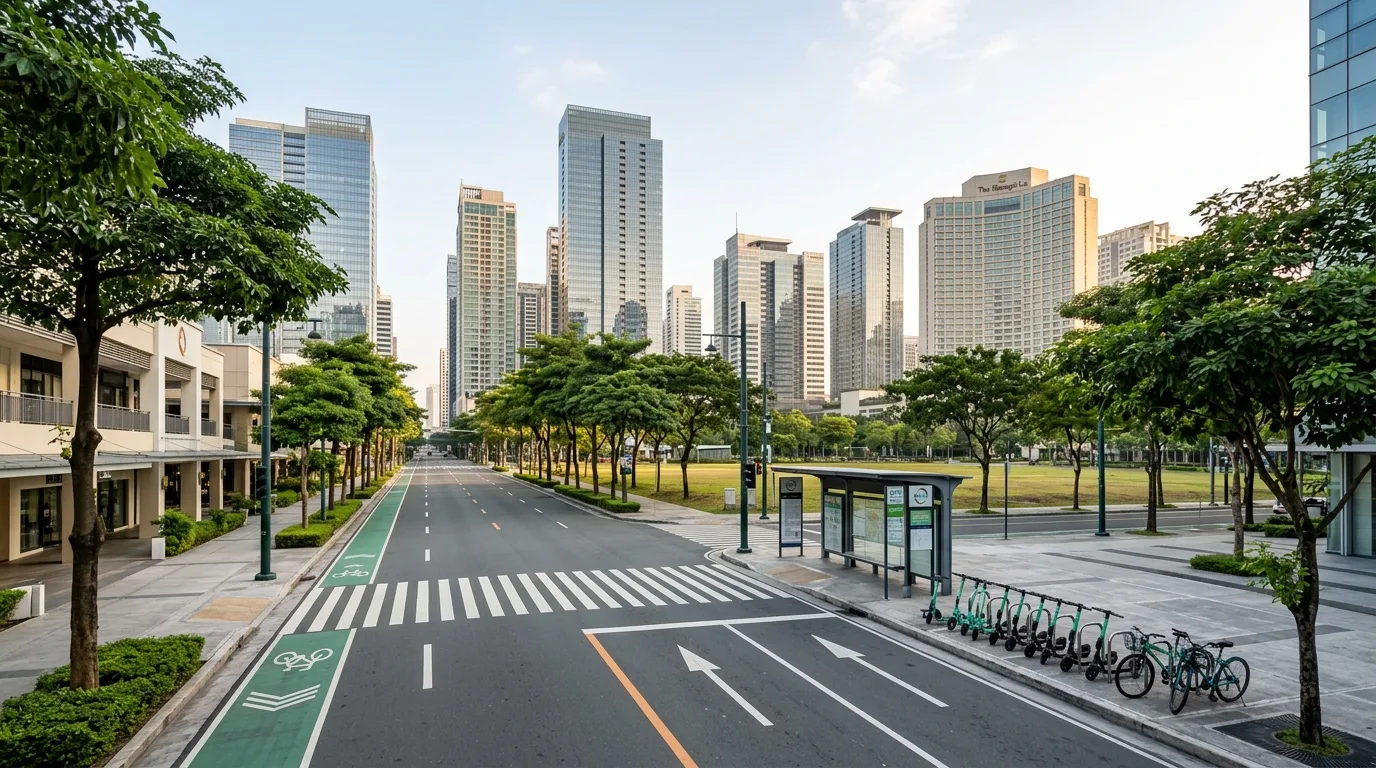
BGC is widely celebrated as Metro Manila’s most walkable urban center. Its grid layout features wide, tree-lined sidewalks, spacious pedestrian plazas, and dedicated bike lanes along major avenues. Visitors can easily rent bicycles and e-scooters using app-based micro-mobility stations scattered across High Street and Burgos Circle. Wearing comfortable walking shoes is highly recommended, as exploring the district’s public art murals, outdoor parks, and lifestyle malls is best enjoyed at a leisurely pace.