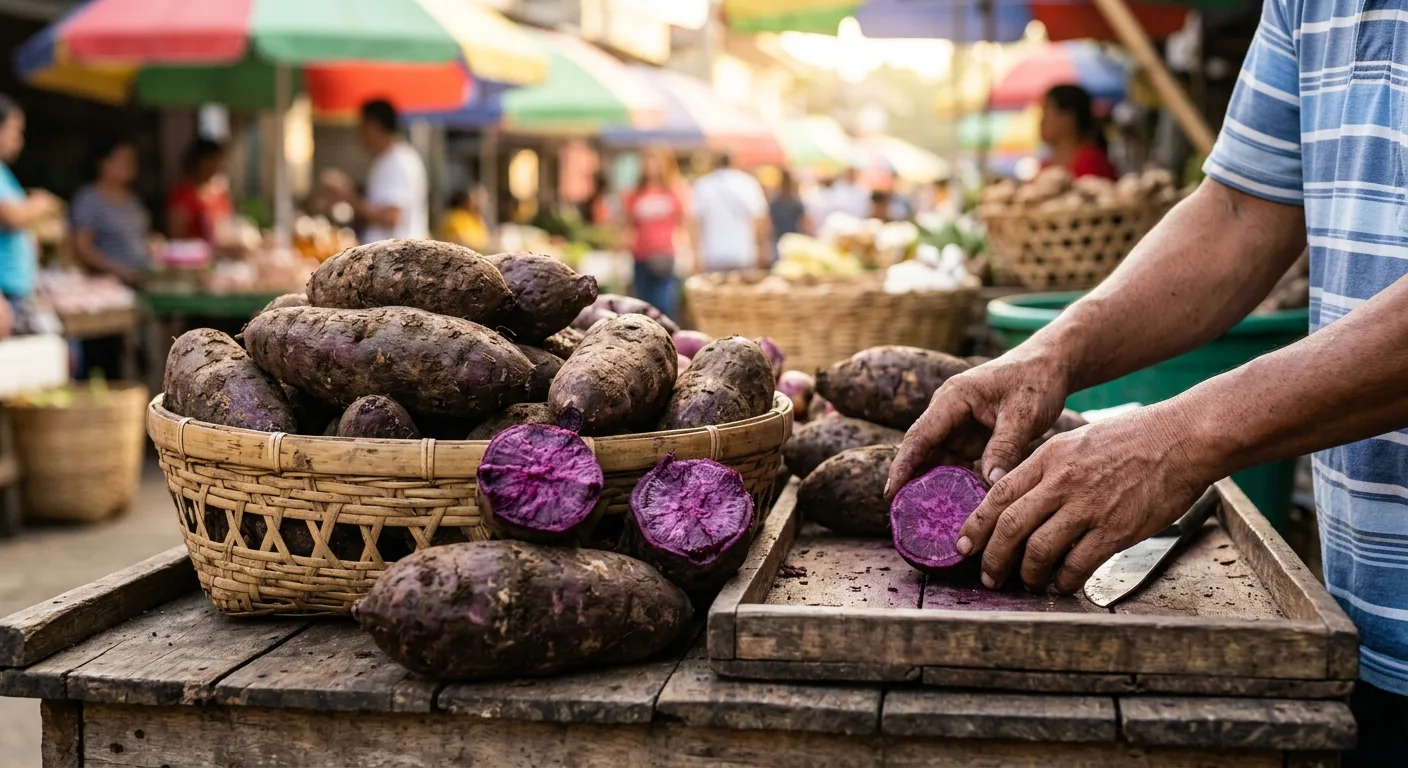
BOHOL — A vibrant purple yam prized for its aroma and velvety sweetness is at the center of a quiet revolution in Bohol. Ubi Kinampay, known as the Queen of Philippine Yams, is not only a staple on Filipino tables but also a cultural treasure that the province is racing to protect and revive.
A Global Craze, A Local Crisis
Across cafés in North America and Europe, ube has become a sought-after flavor, elevating Ubi Kinampay to international stardom. Yet the surge in demand masks a stark reality: national production has plunged from over 30,000 metric tons in 2006 to roughly 14,000 metric tons in 2020. Bohol, which produces about 35 percent of the country’s total purple yam, sees its harvests dwindle due to seasonal constraints, poor-quality planting materials, and rising costs.
Farmers struggle to meet orders, and by the final quarter of each year, authentic Kinampay supplies often run dry. The irony is sharp—the very global appetite that promises prosperity threatens to erode the heritage it celebrates. Without intervention, the Queen risks losing her throne.
Geographical Indication: A Shield for Heritage
To safeguard the yam’s identity, the Provincial Government of Bohol has filed for Geographical Indication (GI) protection. A GI is an intellectual property right that ties a product’s unique qualities to its place of origin. For Ubi Kinampay, that means Bohol’s limestone soil, its microclimates, and generations of traditional farming knowledge.
If approved, the GI label will prevent foreign and domestic companies from misusing the “Bohol Ubi” name. It will also give farmers a legal shield against market exploitation and help consumers know they are buying the authentic Queen. The initiative places Ubi Kinampay alongside other protected Philippine treasures like Guimaras mangoes and Aklan piña, and would make it Bohol’s second registered GI after the artisanal Asin Tibuok sea salt.
Science Steps In to Revive Production
Legal protection alone cannot fill the supply gap. Researchers from Visayas State University and Bohol Island State University are deploying advanced propagation techniques to boost yields. The “minisett” method, which slices a mother tuber into multiple pieces, can generate over 30 planting materials from a single kilogram—tripling what traditional methods allow.
Scientists are also breaking the crop’s seasonal dormancy, showing that off-season planting in February is possible. Tissue-culture technology is being refined to produce millions of disease-free plantlets. These innovations aim to stabilize supply and bring prices down from their off-season peaks of up to 300 pesos per kilogram.
Nourishment Rooted in Community
Ubi Kinampay is more than a commodity. It is woven into Boholano identity and recognized even in the province’s official hymn. Its preservation is as much about culture as it is about commerce. By supporting the farmers who tend the fields and the ecosystems that sustain them, Bohol ensures that every harvest carries the stories of the land and the hands that nurture it.
As the world falls in love with ube, Bohol is determined that the Queen will continue to reign—not as a fading memory, but as a living legacy.