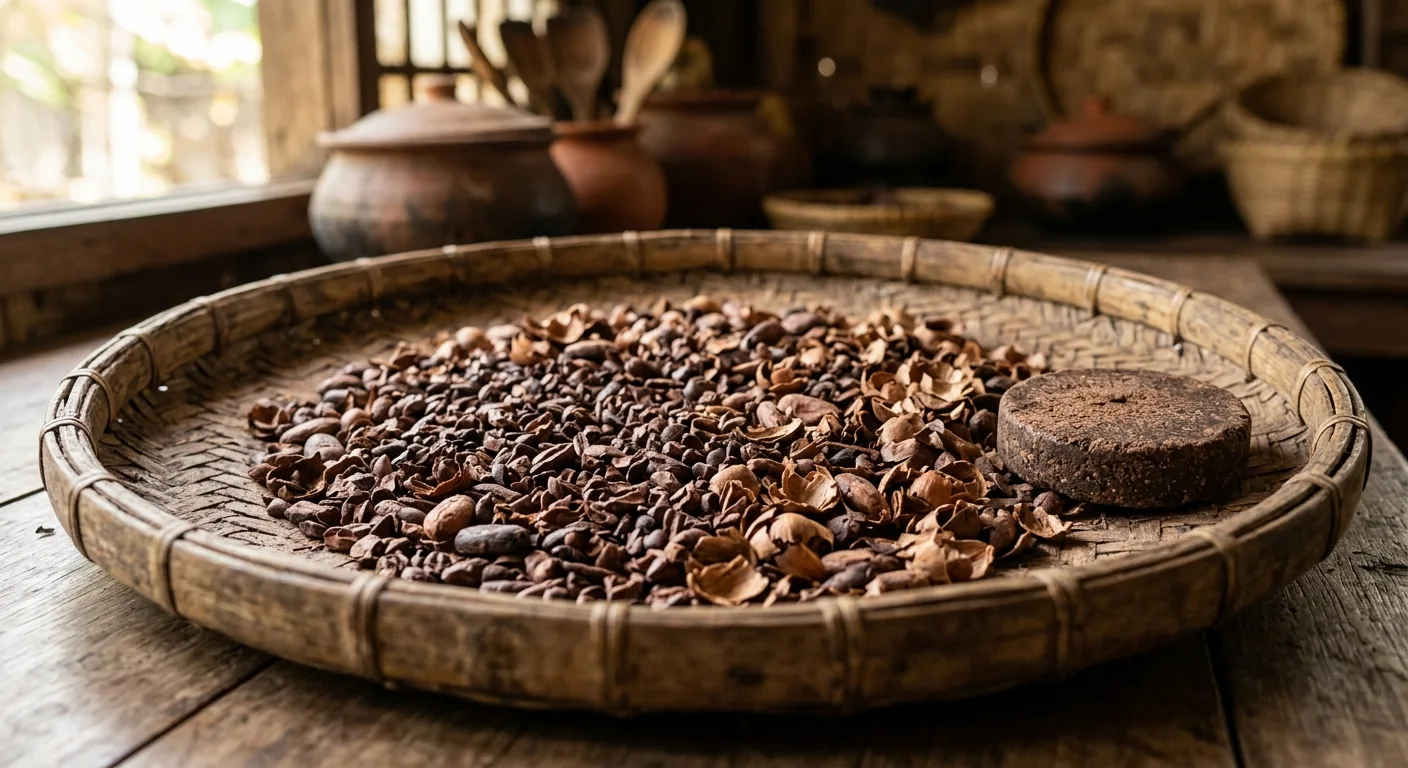
BOHOL, Philippines — Before the first sip of thick, frothy sikwate touches your lips, a quiet dance happens in the province’s rural kitchens. It involves a simple woven basket called the nigo, a tool that has guarded the purity of Bohol’s tablea for centuries, ensuring every disc carries the soul of tradition.
From Bean to Tray
The journey of tablea begins long before the nigo appears. Farmers harvest ripe cacao pods and ferment the beans under banana leaves, unlocking deep flavors. The beans are then sun‑dried, roasted over a gentle fire, and cracked to separate the nibs from the brittle husks. This cracked mixture, a jumble of dense nibs and papery shells, is what reaches the winnowing tray. Only after this step does the real artistry begin.
A Dance of Air and Skill
The nigo is a shallow, oval tray woven from bamboo strips. The artisan pours the cracked beans onto its surface and begins a rhythmic upward toss. With each gentle movement, the wind carries away the lighter husks while the heavier, oil‑rich cacao nibs fall back onto the tray. It is a motion refined over generations, a physical conversation between the maker, the material, and the air. No machine can replicate the care of a human hand that knows exactly when to flick, when to pause, and when to let the breeze do the rest.
Heritage in Every Disc
Once the nibs are clean, they are ground into a smooth, warm paste and molded into the dense, dark discs that Filipino families treasure. This is pure tablea—no additives, no shortcuts. The entire process, anchored by the nigo, embodies the zero‑electricity wisdom of ancestors. In a world chasing speed, Bohol’s tablea makers still choose patience, preserving a craft that links them directly to 350 years of Philippine cacao history.
A Taste That Welcomes Travelers
For visitors exploring Bohol’s Chocolate Hills and tarsier sanctuaries, a cup of sikwate made from these traditional discs offers a deeper connection to the island. The nigo is not just a tool; it is a cultural ambassador. Tourists can witness winnowing demonstrations, visit smallholder farms, and taste the difference that handmade care brings to a morning drink. The experience transforms a simple hot chocolate into a story of place, people, and heritage.
Keeping the Craft Alive
The Department of Trade and Industry in Bohol is actively supporting local cacao micro‑enterprises through programs that promote traditional methods like winnowing. By connecting tablea makers to wider markets, the agency helps ensure that the nigo does not become a relic of the past. Every sale of pure Bohol tablea strengthens the livelihoods of farming families and safeguards the intangible heritage that makes Philippine chocolate unique.