Preparing Calamay Requires Patience and Skill
BOHOL - Among Bohol’s well-known delicacies, calamay stands out for its sticky texture, sweetness, and distinctive coconut-shell packaging. Traditionally made from ground glutinous rice, coconut milk, and sugar, this specialty is particularly associated with Jagna, where calamay-making has developed into a long-standing local tradition. Preparing it requires more than combining ingredients. The mixture must be cooked over low heat and stirred continuously for hours until it reaches the desired thickness and consistency. The finished product is traditionally placed in polished coconut shells and sealed with characteristic red paper. This labor-intensive process demonstrates how simple agricultural ingredients can become a recognizable regional delicacy through patience, technique, and knowledge passed between generations.
Local Ingredients Give Traditional Delicacies Their Character
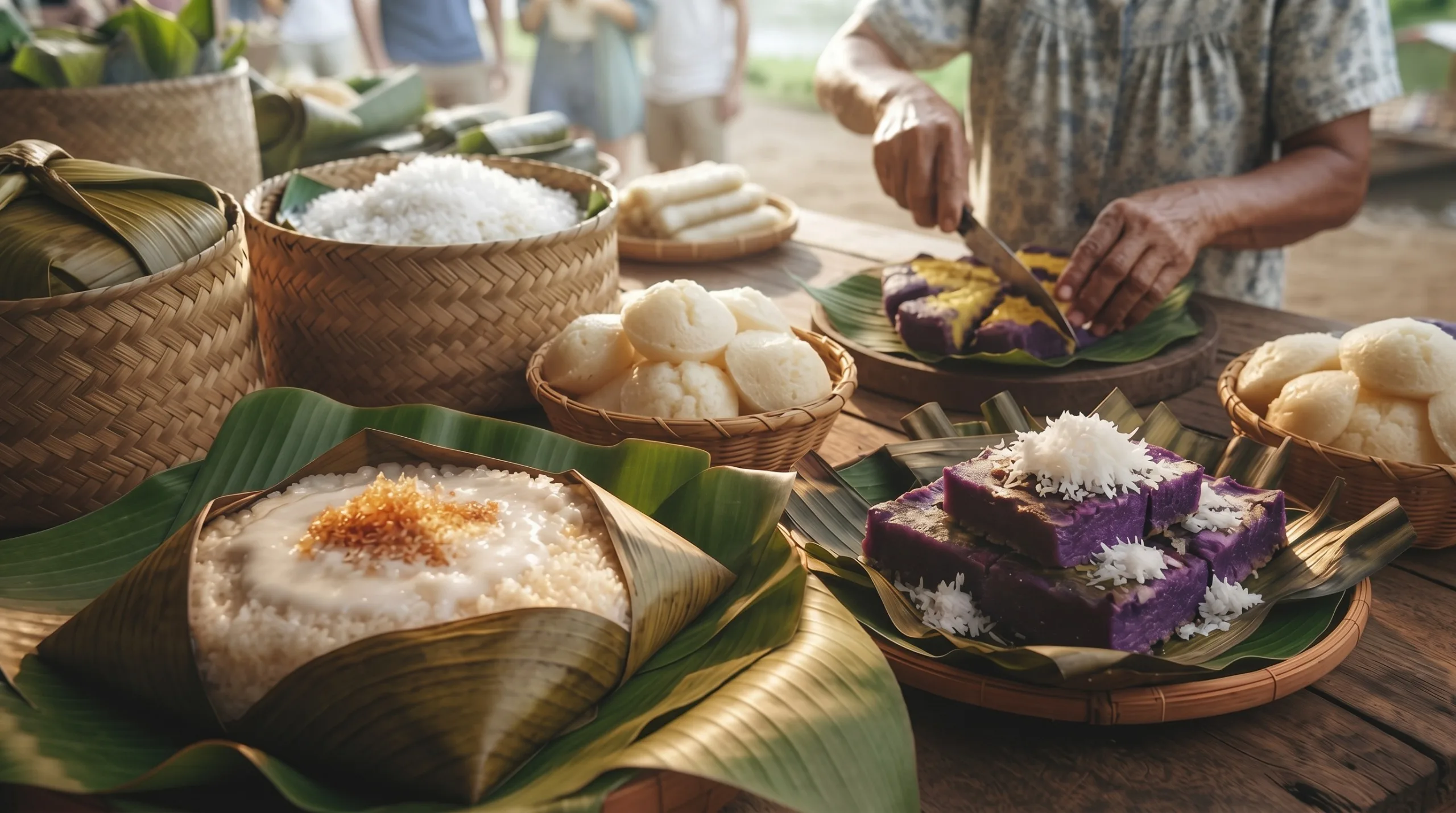
Bohol’s rice-based food traditions reflect the creativity of households and communities that transform familiar ingredients into distinctive snacks and desserts. Glutinous rice, coconut milk, sugar, and banana leaves are used in various preparations, while regional specialties such as budbud kabog offer a different take on traditional rice cakes by using millet known locally as kabog. The choice of ingredients, cooking method, wrapping, and serving style contributes to each delicacy’s identity. These preparations also reflect practical knowledge about texture, heat, moisture, and storage that home cooks and food makers develop through experience. Whether prepared for family gatherings, local celebrations, or everyday merienda, traditional delicacies help maintain connections between food, place, and community memory.
Preserving Food Traditions Supports Local Livelihoods
Traditional rice delicacies also create opportunities for small producers, home-based food businesses, market vendors, and local sellers. In Jagna, calamay’s reputation as a popular pasalubong connects culinary heritage with tourism and local commerce. Producers who maintain consistent quality, careful preparation, and appropriate packaging can introduce these specialties to visitors while serving residents who value familiar flavors. Documentation, cooking demonstrations, community festivals, and opportunities for younger generations to learn from experienced food makers can help keep traditional techniques alive. Supporting local delicacy makers also encourages appreciation for the agricultural ingredients and skilled labor behind each product. By preserving recipes and preparation methods while adapting thoughtfully to changing customer needs, Bohol’s traditional rice-based delicacies can remain part of the province’s cultural identity and everyday food culture.