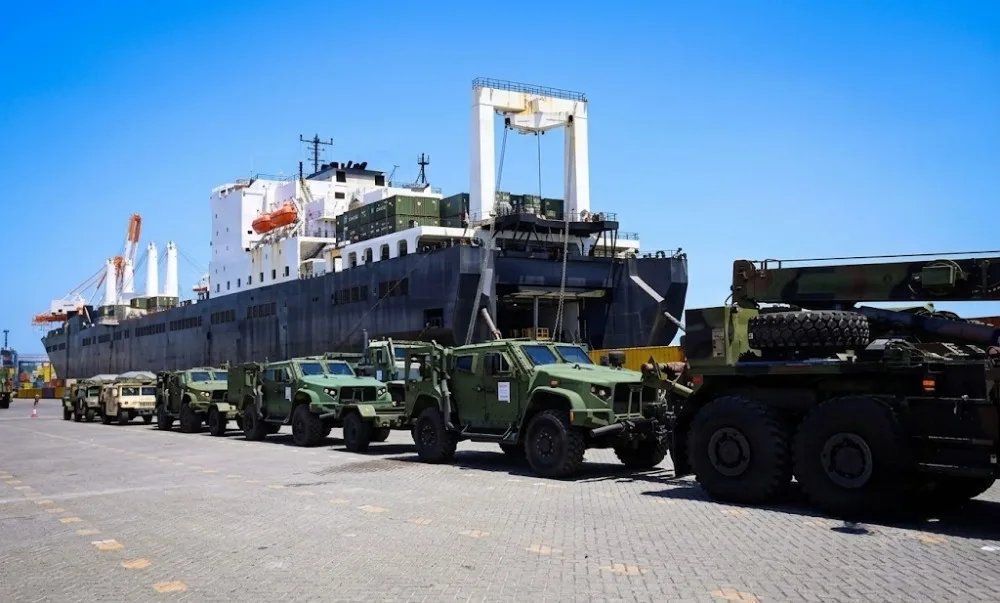
Cagayan de oro — The strategic pre-positioning of military equipment and supplies has emerged as a vital force multiplier, dramatically enhancing the capability of the Joint Force to respond to contingencies throughout the Indo-Pacific. By stockpiling essential gear—ranging from heavy combat vehicles to airfield supplies—in key locations, the United States and its partners can significantly reduce response times during humanitarian crises or regional security challenges. This logistical strategy allows military forces to transition from planning to action in a matter of days, ensuring that help arrives when it is needed most. As the region faces diverse terrain and vast maritime distances, these well-placed assets serve as a clear signal of long-term commitment to regional stability and collective defense.
Improving Response Times Through Afloat And Ashore Logistics
The military utilizes two primary methods to ensure equipment is ready: afloat pre-positioning, which keeps assets aboard cargo ships at sea, and ashore storage at secure, pre-arranged locations. Afloat pre-positioning provides immense flexibility, as these ships can be repositioned throughout the Indian and Western Pacific oceans to meet evolving demands. Meanwhile, ashore facilities—such as those recently expanded in Australia—house critical heavy equipment like tanks and artillery, ensuring immediate availability for troops arriving in the theater. By dispersing these stockpiles, the Joint Force avoids over-reliance on distant bases, creating a more resilient and agile network capable of sustaining operations until supply lines are fully secured.
Strengthening Alliances Through Shared Regional Defense Hubs
Strategic pre-positioning is deeply rooted in cooperation, as the U.S. works closely with long-standing allies like Japan, the Republic of Korea, and Australia to establish shared regional hubs. These partnerships do more than just store armaments; they foster closer military integration and streamline the ability of combined forces to perform joint training and contingency planning. For example, the agreement to store U.S. armaments in Australia enhances national security while reflecting a deep, unified commitment to protecting the Global Commons. Through these collaborative efforts, the Indo-Pacific region benefits from a more robust security architecture that discourages potential aggression and promotes long-term peace.
Cultivating A Landscape For Regional Peace And Security
Beyond the tactical benefits, the presence of these assets supports the overall security climate, allowing local communities near major ports and airfields to thrive amidst a stable environment. As logistics hubs grow, they often contribute to local infrastructure development, providing employment and secondary economic benefits to the regions hosting these critical sites. This dual-use potential demonstrates that military readiness and regional prosperity can go hand-in-hand, creating a safer space for travel, commerce, and tourism. Ultimately, a secure Indo-Pacific ensures that visitors can continue to enjoy the region’s renowned coastal resorts, vibrant cities, and diverse cultural attractions with absolute confidence.