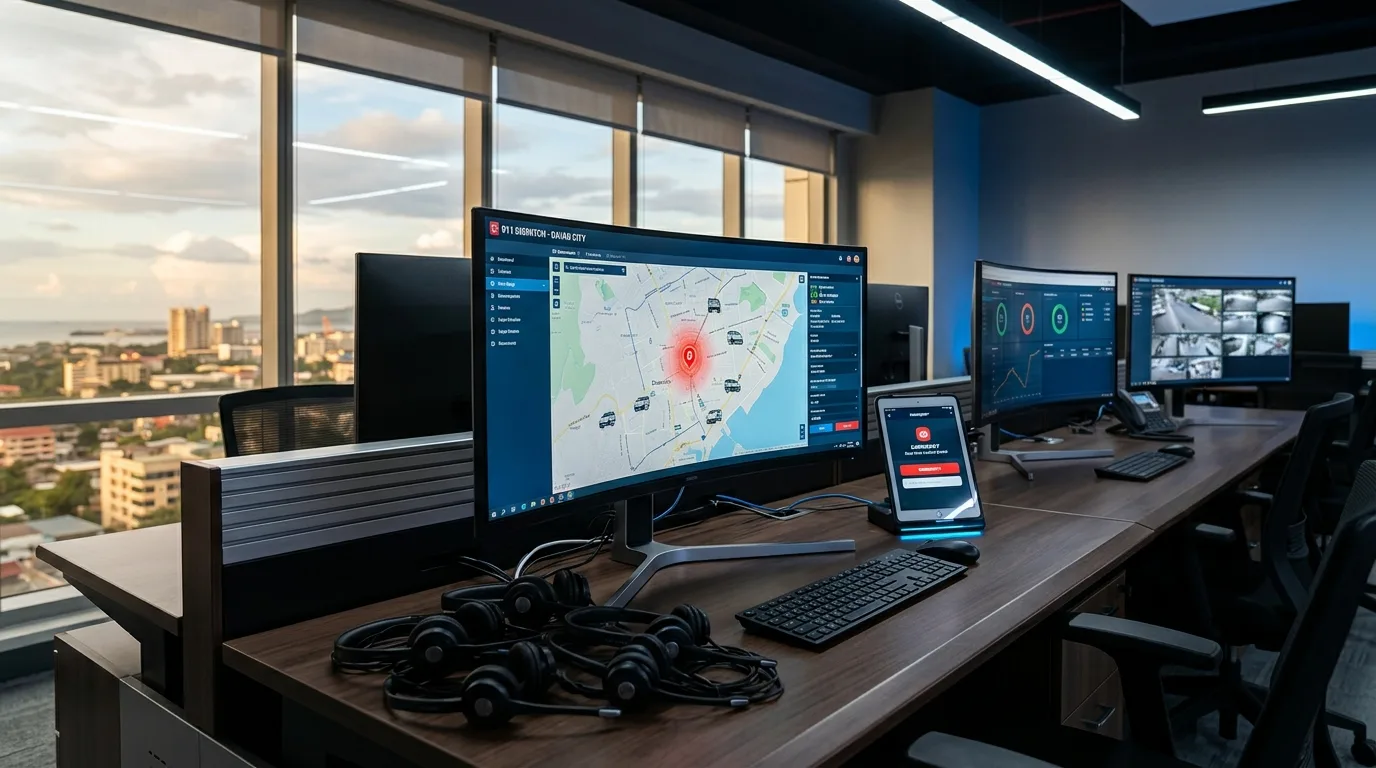
Davao — In a major leap toward a safer, more responsive city, Davao’s Central 911 is preparing to launch a state-of-the-art mobile application designed to modernize emergency services and eliminate dangerous delays. As the city grapples with the complexities of the national centralized 911 system—which has occasionally caused local emergency calls to be misrouted to other regions—this new technology promises to bring help directly to the doorstep of every Dabawenyo. By integrating cutting-edge GPS tracking and real-time data, the city government is not just upgrading its infrastructure; it is fundamentally transforming how it protects its residents in their most critical moments.
Solving the "Misrouted Call" Crisis
Since the implementation of the country's nationwide 911 hotline, Davao City has faced intermittent issues where local emergency requests were mistakenly routed to other regional centers, leading to unacceptable response lags. Acting head of the Central 911 Division, Lyndon Leovic Ancajas, has been working closely with telecommunications companies to fix these routing errors while training call takers to use more adaptive scripts to gather information faster. The upcoming mobile application acts as a digital bypass, allowing residents to trigger an emergency alert that automatically transmits their precise GPS coordinates to the local dispatch center. This ensures that even if voice lines are congested or misrouted, the system can pinpoint the caller’s location instantly, drastically reducing the "discovery" time for ambulances and rescue teams.
Features for a Smart, Secure Future
The app is a cornerstone of the broader "Smart Emergency Response and Locator–Computer-Aided Response and Emergency Dispatch" (SERAL-CARED) system, which was approved by the 21st City Council. Beyond simple location tracking, the platform allows users to upload photos or videos of the incident, giving responders a "first-person" view of the situation before they even arrive on the scene. The system also includes a "Barangay Geo-Tagging Registry" that maps out narrow interior roads and hidden landmarks, helping emergency vehicles navigate through traffic and complex neighborhoods with ease. By requiring digital verification for reports, the city aims to curb the influx of thousands of daily prank calls, ensuring that limited resources are focused on genuine life-saving missions.
Building a Culture of Digital Resilience
While the city works toward an end-of-2026 launch date, the initiative is already being backed by new legislative efforts to impose stricter penalties on those who misuse the system. Local officials are also preparing for a "whole-of-society" rollout, including public information campaigns to help residents get familiar with the app's interface before an emergency occurs. By pairing high-tech dispatching with a deeply trained workforce of medical technicians and urban search-and-rescue teams, Davao is setting a high bar for urban safety in the Philippines. As these technological layers come together, the city moves closer to a future where help is not just a phone call away, but a seamless, accurate, and rapid digital connection.
No people